
Can Opelousas Afford to Spend Millions on Sports?

NOTE: This editorial was originally published on the St. Landry Now website on December 6, 2024.

Opelousas faces a daunting future as funds for food, health care, housing, infrastructure, and education are expected to dwindle. It’s time for the city to batten down the fiscal hatches and prepare for future challenges, starting with paring down plans to turn South City Park into a high-end sports complex.

The Opelousas Downtown Development District (ODDD) is to be commended for its efforts to upgrade sports facilities in South Park. The all-volunteer seven-member board invested substantial time and money and arrived at an ambitious Conceptual Master Plan that transforms the park into a modern team sports playground.

However, it’s unlikely that many people have seen the details because the plans aren’t posted online for public review and input. So don’t feel bad if you’re unfamiliar. 

The proposed first phases include stadium upgrades that call for paving several acres of green space to install impermeable, toxic, heat—and injury-inducing artificial turf and constructing a new multipurpose gym large enough to accommodate two full-size basketball courts. The football stadium updates incorporate a new regulation running track and numerous facility improvements. 

Construction bids for the stadium ranged from eight to twelve million dollars. The multipurpose gym is yet to be bid, but is estimated to cost another three to five million dollars. Thus, the two facilities’ total cost ranges from eleven to seventeen million dollars.

If completed, either project would be the largest non-infrastructure public investment in Opelousas’s history.

The city’s Parks and Recreation Commission, a thirteen-member body legally responsible for overseeing all aspects of park management, has been unappointed since 2019. Thus, too few people contributed to the development of the plans. 

The City of Opelousas and ODDD are eager to spend on these minimally researched plans, not only without the oversight of a Parks and Recreation Commission but without conducting thorough feasibility studies on operational, staffing, and long-term maintenance costs, park user surveys, or assessing potential demand and unintended pitfalls.

The ODDD website says its mission is “serving as a catalyst for economic growth and development in Downtown Opelousas” and that it will “plan and develop the designated commercial district to its potential, through economic development and historic preservation.” Dedicating more than a decade of ODDD’s anticipated sales tax revenue to high school sports-oriented park improvements during these uncertain times is a departure from that mission and from the city-adopted Downtown Master Plan. As it stands, this investment could lead to future financial stress for decades to come. 

Thanks to the new tax codes set by the Louisiana Legislature, in 2025, the top sales tax rate in the special taxing districts of Opelousas will hit an astronomical 11.75%, one of the highest sales tax rates in the nation. The big question is why the ODDD focuses so much of its time and future revenue on South Park and not on the business corridors it’s taxing and designed to help. 

We could save millions by working with the existing stadium, professionally restoring the natural turf field, and updating the scoreboard, lighting, lockers, and general facilities. Additionally, we should identify long-term funding strategies to establish a system for better field maintenance.

To put it plainly, for a poor community with crumbling infrastructure and struggling schools to invest future sales tax revenue in multimillion-dollar, limited-access amateur sports facilities that require the demolition of historic structures and the loss of green space is an unlikely path to community economic prosperity.

Parks should serve all people, no matter their age or infirmity. The parks and people of Opelousas deserve investment, but first, the Parks and Recreation Commission should be reinstated to ensure the development of transparent and equitable plans that benefit everyone.

The ODDD is focused on South Park at the city’s behest. Now that you’ve learned more about these plans, how would you direct the spending of millions of your sales tax dollars? Now is the time to let the mayor, council, and ODDD know.
Artificial Turf Sports Fields are Unhealthy for Children and Other Living Things

A thinly researched, more than eight-million-dollar plan to significantly modify Gardner Stadium in Opelousas, Louisiana, calls for artificial turf, a product developed for indoor fields that, when installed outdoors, creates a potentially deadly mix of heat, impact injuries, and toxic chemical exposures that threaten the health of players, coaches, fans, and the environment. 

Construction bids exceeded eight million dollars, so the Mayor’s office is working to lower costs. Natural turf is a good place to start since it is more affordable and, in the long run, produces a healthier facility that is less likely to cause injury, heat stroke, and future legal liability for the city, the Opelousas Downtown Development District (ODDD), and the school district.

An artificial turf field is basically an asphalt parking lot overlaid with thin layers of plastic carpet. Initially developed for the world’s first large indoor stadium, the Astrodome, “astroturf” was created out of convenience, not scientifically designed to improve the game but to make sports possible on an indoor, paved surface. It was not crafted (and has not successfully been improved) to reduce injuries or enhance performance; it was designed to endure. 

A natural turf field is a living surface of soil and plants that cushions athletes and exposes children to a healthy mix of microbes, moisture, and oxygen. The grass and soil of a natural field absorb and filter rainfall; when it lands on paved, plastic grass landscapes, it becomes a poisonous soup that contaminates streams and groundwater.

Artificial turf exposes players to impact injuries, extreme heat, and toxic chemicals that outgas into the air and are directly absorbed by their bodies via inhalation and scrapes and scratches known as “turf burn.” This abrasiveness is why many professional football players wear fabric tape over their elbows.

Globally, the deadliest weather phenomenon is heat, which kills more people annually than storms, floods, or cold. In a rapidly warming world, artificial turf fields put children, coaches, and fans at greater risk for heat stroke that can permanently damage brains and other vital organs. These fields can easily reach deadly temperatures of 130 to 150 degrees or higher on a ninety-degree day, creating a potentially fatal scenario. Last August, there were thirty-five emergency calls for heat stroke at a single UL-Lafayette football game. 

It should come as no surprise that heat-related deaths of high school football players are happening, with five fatalities in just three southern states since July 2024. Those teenage boys died simply because they wanted to play football; they were failed by adults who had the responsibility to protect them.

Adding to heat risk is the fact that because the plastic turf is underlaid by asphalt, injuries like concussions, blown knees, and shattered ankles occur at a much higher rate than on natural grass. This rate of injuries is the primary reason why ninety-two percent of the members of the NFL Players Association voted last year to demand that all thirty NFL stadiums install real grass. Professional soccer players agree, and the World Cup is played on natural turf.

The health threats of synthetic turf fields are myriad. Plastic grass is flammable and impregnated with fire retardant, often a “forever chemical” proven to cause cancer. Shredded tires are spread over the turf to keep the “blades” up and add additional cushion. This infill also contributes to airborne microplastic pollution and yet more potential for cancer, lung and liver damage, and other developmental problems.

Because these harms are now more commonly known, the city could face future lawsuits by parents whose children become permanently impaired because artificial turf was chosen as a convenience even though professional footballers reject it as dangerous. 

The decision by the mayor and the ODDD to stick with the current plans is guaranteed to end the careers of high school athletes randomly for decades and add the potential for cancer and other diseases later in life. In the years to come, those teenagers who suffer concussions, blown knees, shattered ankles, and failing health will find that their suffering might have been prevented if the city and ODDD had done their research and listened to the science and the professionals.

Sports like football, baseball, and soccer were invented outdoors, where weather and field conditions add their wildcard impacts to the game. Children need contact with grass and soil to build their immune systems, and they deserve to play in as much safety as science, budgets, and our loving care allow. Keeping the grass in Gardner Stadium is a simple way to save money and protect future generations, and that’s what we should all expect from our public leaders. 

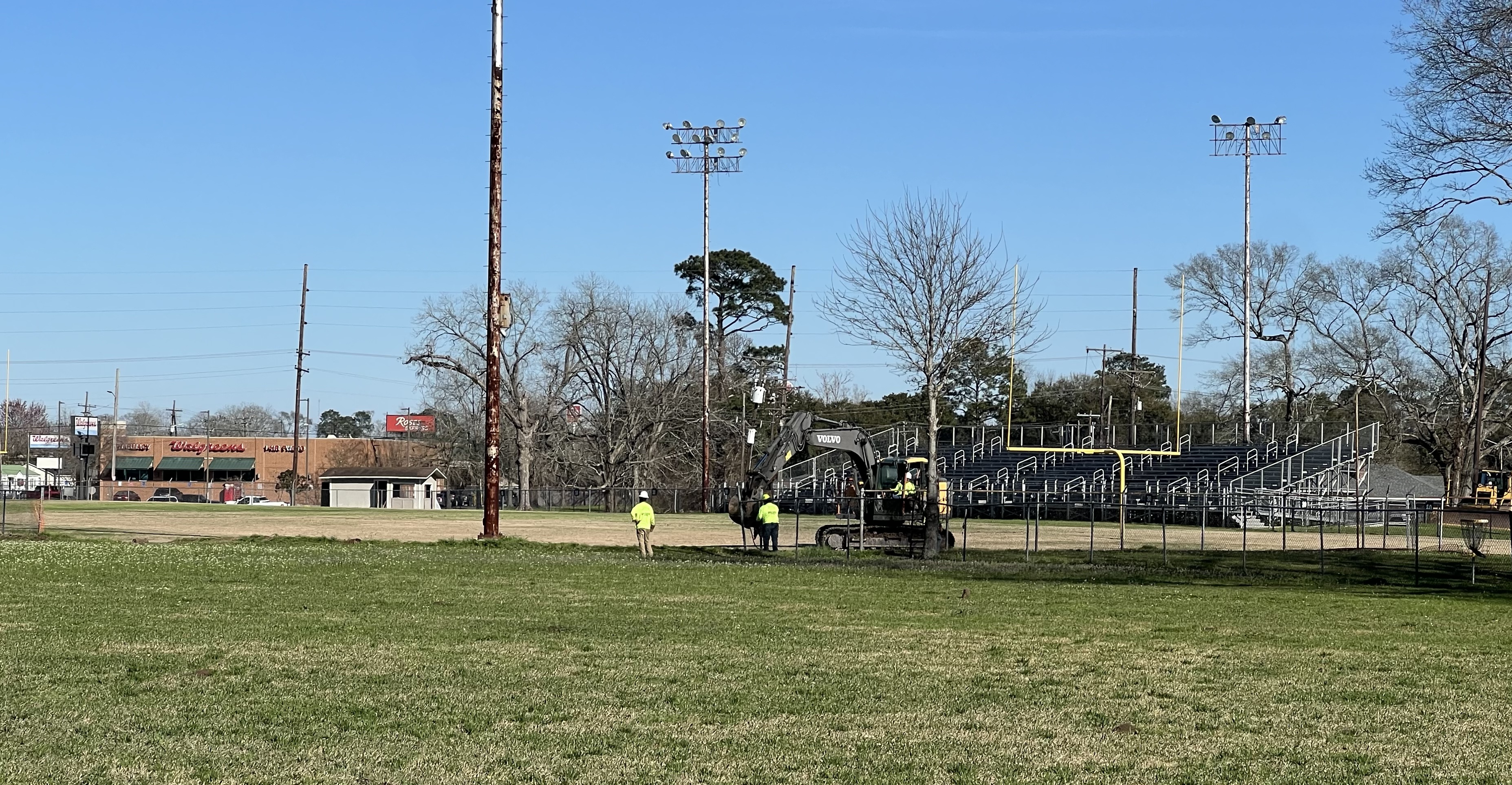
Workers removing fencing as construction begins on Gardner Stadium in Opelousas, LA, Feb. 17, 2025.

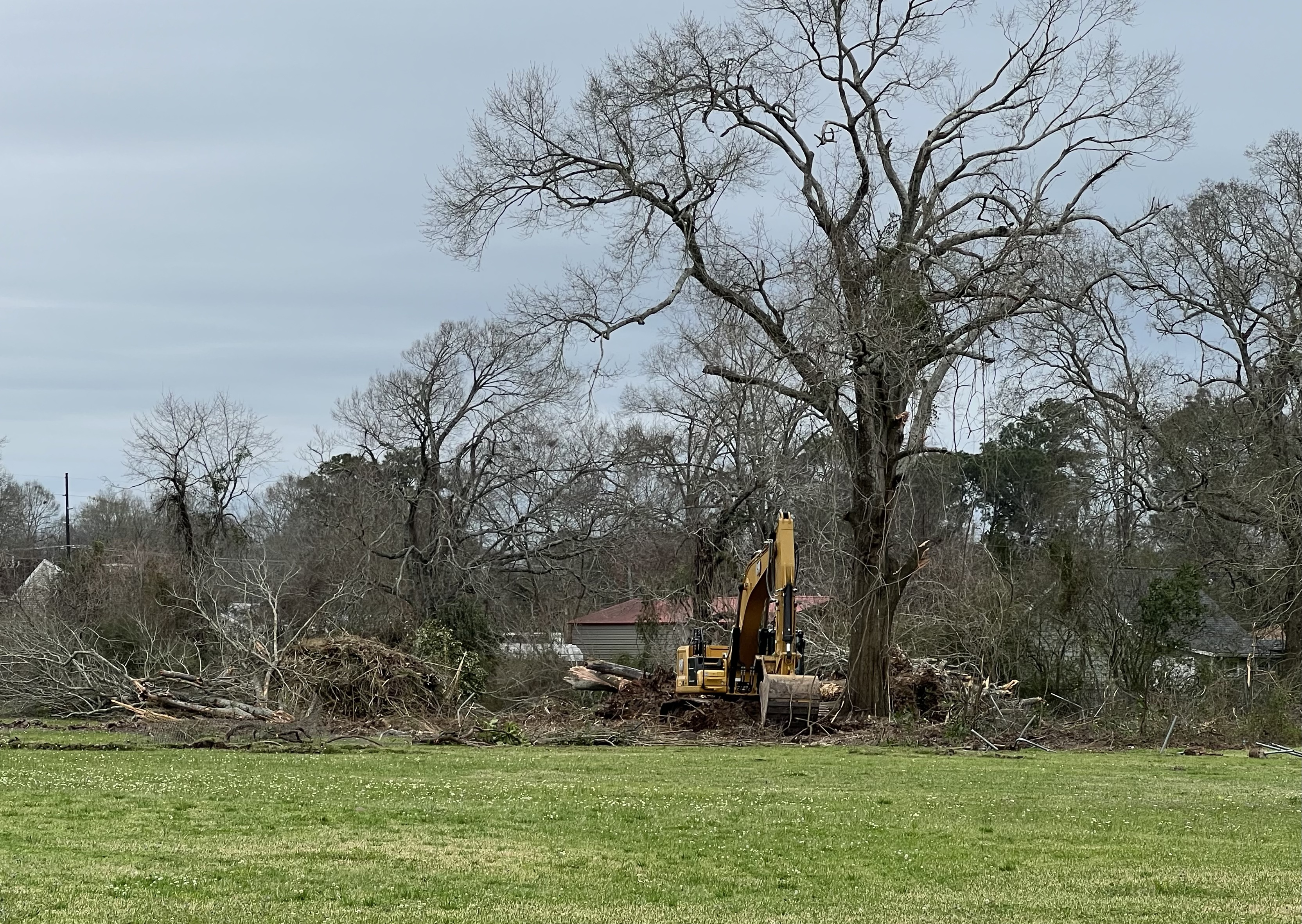
The first step always means loss of greenery. A stand of mature trees being destroyed by the construction at Gardner Stadium on Feb. 18, 2025.