State of Louisiana Continues to Fail to Support Music

dunce-cap
LMC Executive Director Ponders What Went Wrong

Ok, it’s time for me to re-visit a festering splinter. I apologize to readers who are bored with this subject. But here goes….

The basically non-existent Louisiana Music Commission (LMC), operating as a very minor component of Louisiana Economic Development (LED), continues to fail miserably at it’s mission “to promote and develop the popular, commercial music industry” in Louisiana (as per LA R.S. 25:315-317).

Under the administrations of two governors and two different leaders at LED, the state tossed 14 years of leadership by the impeccable and experienced Ellis L. Marsalis Jr.,  and the LMC was eviscerated. In 2006 they disposed of all the office computers and data, failed to maintain and renew the agency’s 8 years of web presence via louisianamusic.org and buylouisianamusic.com (and lost the URLs) and reinvented the LMC as a do-nothing entity–still with no website–that occasionally holds meetings and apparently produces nothing in the way of action.

Of course there’s no budget specifically for music; and, with the state obsessed with Hollywood, chicken plants and sports, it’s no surprise that music continues to suffer.

As one of Louisiana’s signature natural assets–and one of the few industries here that continues to influence the world–this failure: to lead, to market, to support, and to recognize the importance of this irreplaceable and immeasurably valuable citizen-resource, is inexcusable.

The latest attempt to quantify Louisiana’s music resources reveals the depth of misunderstanding by economic development staffers, and represents another squandering of money on out of state “experts” who gather readily available data and then call it a study. Economics Research Associates in February released a state-funded report (anyone know the cost?) on Louisiana’s entertainment industry. It is a very revealing and, regarding music, deeply flawed document.

The music section begins with a lengthy overview (5 pages of 11) of the music industry using data readily available to anyone (even the LMC’s current director). The report then uses federal labor statistics and other industrial data to surmise that Louisiana’s business of music ranks well below 30+ other states, a patently ridiculous conclusion. And it is obvious that ERA did not fully understand, nor seek to document, the many facets of Louisiana’s unique music landscape.

What’s truly sad is that were the LMC fully funded and staffed with imaginative people, this study could’ve produced something worthwhile.

Back when we worked to gather this information, we used a combination of resources, including tourism data, staff researchers at LED, the Louisiana Music Directory and more. Since much of tourism is generated by music, that industry’s ups and downs are directly tied to music’s economic impact and contributed to our studies–this component was analyzed, by the way, by LED’s own highly qualified research staff. And, the only proper study ever done–by Dr. Tim Ryan of the University of New Orleans in the late 1980s–was not conducted by an out of state entity.

To continue to believe that only companies based out of state are capable of telling us who we are is a lingering problem in Baton Rouge and at LED.

The experts we need to help us analyze our music resources are readily available here in Louisiana. Utilizing this talent keeps money flowing between state government and higher education, helping to grow a new crop of experts and future businesspeople. In other words, it’s ECONOMIC DEVELOPMENT to first use your university resources to conduct studies.

Louisiana Economic Development fails at its mission when it fails to utilize readily available in-state resources within universities, nonprofits and businesses.

But I digress. When Ellis Marsalis, Bernie Cyrus and I were in charge of the LMC, we produced many reports on the state’s music industry. We posted these reports on the web for all to see. We distributed this information to the Office of the Governor and the Louisiana Legislature. And we determined that music’s impact on Louisiana was in the range of nearly $3 billion! Yet according to ERA, film is bigger than music in Louisiana. Really?

Of course Louisiana is spending more than $115,000,000 in cash money as tax credits to buy the friendship of the film industry here. And that money is giving lots of people work, many people from here–including some of my friends–and who knows how many from out of state. The data and the state’s “experts” have not quantified exactly how much of that money and those jobs stay in Louisiana.

But back to music, for that is our world renown, immeasurably valuable, historically significant, naturally occurring and most neglected asset. At a time when it is obvious that the recording industry is the component in the worst free-fall, both the state and ERA focused on the sound recording  business as a measure, and as the only recipient of a little-used tax credit system.

Having done some of the earliest research of the state’s recording industry when this tax system was proposed–and kept out of the final drafts by a few nefarious folks, one of whom is headed to the pokey–I strongly believe that the current tax credit system is not what is truly needed. In my research–which involved me calling studio owners and asking them what their biggest problems were and what they though the state could do–I learned that studios sought sales tax relief and felt that the budget-oriented credits would both be little-used and have little effect.

ERA’s data certainly proves the little-used aspect, as only a handfull of projects have tapped into the credits. Of course the lack of staff at the LMC to process these credits is also partly to blame. But, as national data and the ERA report indicate–and anyone in the studio and music business can tell you for free–the recording industry is not doing well. Nevertheless, that segment is the focus of the state and of ERA.

The only apparent good news in the report is that music credits do better than film in the report’s cost-benefit analysis, supposedly generating $6.78 for every dollar in tax credits compared to $6.64 for film. However, since only $340,000 in spending was tallied for credits, the data says only a couple of jobs were generated. The study also notes that in 2008, $816,800 in productions applied for nearly $204,000 in credits. It’s encouraging to see the numbers rising. But it’s also frustrating to see the emphasis be only on this one aspect of the business. As a musician, I liken this approach to giving the cotton companies a tax credit during the waning days of slavery. What does this credit do for the musicians who are truly Louisiana’s musical gold?

Admittedly a few musicians have been hired to work on subsidized projects. And I don’t want to disparage the intention behind trying to support our vitally important recording studios, they need all the help they can get. But it’s almost like we’re subsidizing buggy manufacturers after the automobile was introduced. And studios, like every other aspect of music, won’t survive if musicians aren’t thriving.

Live music, which we determined in previous LMC reports has a multibillion dollar economic impact statewide, is given one short paragraph in the study–with no economic impact numbers. There are no inputs, no data, no charts, no information on taxes generated or jobs created in this live music paragraph.

Then the music aspect of the report ends. A total of 11 pages in a 90 page report.

There is no doubt that this report provides valuable data for state leaders. The study presents a very informative review of film incentives nationally. This will help people understand the landscape of film and media industry tax credits. And I’m sure this was the intent of all concerned in producing and funding this report. But, music is much bigger than this study says.

Louisiana music is a brand, unlike every other component of the report. And that brand has a worldwide value and recognition factor that needs to be tallied and supported.

The failure of the State of Louisiana–whether it is Louisiana Economic Development and/or the Lt. Governor’s Office of Tourism–to fully understand and support our vital music resources, is one of the great tragedies of mismanagement in the history of this state.

The power of our musical genres, of our music history and of our musical stars has never been fully or properly understood, valued, promoted or nurtured. What is even sadder is that everyone knows this and yet nothing substantial is done.

Were it not for the continued efforts of the many nonprofits such as Tipitina’s Foundation, the New Orleans Musicians Clinic, the N.O. Jazz & Heritage Foundation, Louisiana Folkroots, WWOZ, NARAS/MusiCares the Louisiana Music Hall of Fame, KRVS and many other wonderful organizations, Louisiana music would be nothing more than an afterthought, a component of our tourism advertising that presents an image of love and support that in reality does not effectively exist within the institutions producing these promotions.

We convey an image to the world that our music matters. But it’s all just smoke and mirrors. We can do better.

Sidenote: Here’s a report we generated in 2002. It’s the kind of report that covers analysis of the industry both internationally and locally and includes all our projects, accomplishments and interactions for the year. Will the current LMC ever produce anything even remotely similar?

What Does Pres Kabacoff Have Against the Master Plan Process?

puzzled

UPDATE Thursday June 25: Zombies live in Legislature: SB75 briefly returned from the dead, attached as amendment to SB104 in manipulative move to revive it. See the story here on the T-P website. It ultimately was stripped from the bill in conference committee and finally died. However, the powers behind the bill evidently were determined and influential. Several politicians risked their reputations, including the lead author, Ed Murray, by pushing this bill. As evidenced by several postings on the T-P comments, Murray’s mayoral aspirations are now greatly weakened by his stance on the Master Plan. The fallout will become evident in the coming months as city election season gets underway in the next few weeks. It should be interesting.

UPDATE: Today (June 24) the House voted against SB75 and the bill is now dead.

So, thanks to sleuthing by “Celebrated blogutante” We Could Be Famous, the powers behind the attempt to mess with the City of New Orleans Master Plan process have come to light. Pres Kabacoff’s company HRI, bought the ad in the Times-Picayune pushing support for SB 75 which seeks to usurp the existing Master Plan process by adding yet another pubic vote. As a supporter of the Master Plan who voted in favor of giving it the force of law, I am disturbed by this effort, apparently driven by developers with ulterior motives, to change the policies and procedures for implementing the long-sought planning process for New Orleans. Red herrings, race baiting and misleading motives by proponents of SB75 make this a particularly ugly situation. My senator, Ed Murray, introduced the bill and my rep, Juan LaFonta supports it. I believe if this bill passes, not only will there be expensive taxpayer funded legal challenges, but the plan may never become law. Having participated in the process and read much of the current draft of the plan, I am saddened by the misdirection and misleading arguments offered by SB75 supporters. Current development “systems” in New Orleans have hurt the city and kept businesses and future-thinking developers away. The new plan will codify strong green/sustainable development guidelines and will help make it easier for everyone to interact with zoning processes. It will ensure that a level playing field is available to all.

The bill is now facing a House vote on Monday. I urge everyone to contact members of the Louisiana House of Representatives and let them know that the people of New Orleans already voted in support of the Master Plan process and that this bill will delay and possibly prevent New Orleans from ever having a Master Plan that helps both businesses and the public have a healthy, well-designed environment in which to do business and live.

Here’s New Orleans City Councilmember Jackie Clarkson’s thoughts on why we must defeat SB 75

Here’s New Orleans CityBusiness’ editorial against SB75

Motorcycle Brains to Remain in Buckets in Louisiana

A senate committee today killed the bill to repeal the helmet laws in Louisiana. It appears to be dead for the session. However, bills don’t die easily and this one might find a way to resurrect. So, the next post in this blog is only half-correct.

Congratulations to the legislators who realized what hypocrisy it is to require seat belts but not helmets. This still doesn’t salvage the overall session, though. Too many hateful, stupid bills by ill-informed leges seem to be making it to the finish line. As always, lots of good news/bad news when the Legislature is active.

motorcycle_helmet_ears

Cancer and Carnage Big Winners in Louisiana Legislature

SmokingDeath-1
Smoking will take you places you've never been before.

In what is turning out to be one of the ugliest legislative sessions in my adult lifetime, the Louisiana Legislature seems bent on further eroding both our reputation and our wellbeing. After passing a bill requiring rear seat passengers to wear seatbelts, the leges kowtowed to the will of former governor–and mentor/benefactor of current Gov. Jindal– Mike Foster’s wishes and passed a bill that allows motorcyclists to go helmet-less, guaranteeing an increase in death and carnage–and higher medical bills that will cost taxpayers. Additionally, the House soundly defeated an attempt to ban smoking in bars and casinos, ostensibly to ensure freedom of choice. But that freedom only extends to smokers–a minority–and ensures that any nonsmokers–the majority–who wish to work in bars and casinos, or merely hear live music, drink a beer or gamble must breathe the toxic outgassing of smoking addicts.

Thanks, Louisiana Legislature! I’m no longer worried that my “right” to kill or maim myself or to personally pollute the air around me while smoking in confined spaces with nonsmokers will be taken away. Who cares that taxpayers will pay my bills if I smash my head in a minor motorcycle accident? And who cares if  I make service workers sick or if nonsmokers don’t want to breathe my smoke? It’s freedom of choice–for me! I don’t want the government telling me what I can’t do to your lungs! That’s an invasion of my pursuit of happiness. So screw all you nonsmokers. How dare you use government to tell me what to do with your health!

motorcycle_no_helmet_1-300x300
Actual skull damage after no-helmet motorcycle accident

Louisiana is truly a leader. We have 2 cities in the Top 10 for murder. We are the Number 1 per capita state for carbon emissions. We incarcerate a larger percentage of our population than any other state. And now we “protect” the “rights” of smokers and soon-to-be-brain-injured motorcyclists. Maybe we’ll become one of the top organ donor states when the helmet law becomes effective.

Just don’t get caught in the back seat without your seatbelt on. We wouldn’t want you to hurt yourself. Because we care about your wellbeing.

NOTE: As of 3pm June4, all 3 of these bills await final passage if any of you care to get involved and contact your elected officials. See the Comments for this posting for specifics.

Credit Card Bill Needs Support

IMG_0343-1
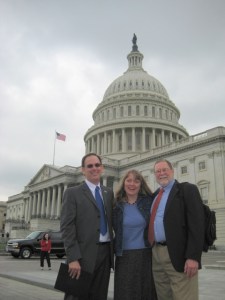
Citizen Lobbyists

OK, I went to Washington and lobbied for S. 414, the Credit Card reform bill. Here’s what happened. We started the day at Sen. Mary Landrieu’s office, so I was up first. The staffer (I don’t recall his name but will update this when I get it) we met with was a bit cynical. I was disappointed. I tried to emphasize that the banks were harming Sen. Landrieu’s strongest supporters and that it was time for her to stand up for the poor people who vote for her. He basically dismissed that line of thinking since the next election is years away. He claimed that Sen. Landrieu wasn’t afraid of angering the bankers (not that we said anything like that, though she is the recipient of more than $2 million in banking lobby money) because she had supported a credit union bill vehemently opposed by banks. We tried to get him to admit the banks were screwing us with these rate hikes, fees and other onerous new burdens. But he never seemed to sympathize.

Next we met with Travis Johnson, a legislative assistant with Sen.  David Vitter. We we engaged by a smart, civil staffer who challenged us, debated us and gave us an opportunity to rebut and refine our arguments. We might not have changed the way Vitter will vote. But we had an intelligent and satisfying discussion with his staffer.

We also visited with very receptive staffers in the offices of Virginia Senators Mark Warner and Jim Webb.

We were a small group, me, 2 from Virginia and 1 from Connecticut. We were led by representatives of Consumers Union, the Pew Charitable Trusts and the Center for Responsible Lending.

Despite the fact that Sen. Landrieu’s opposition might be enough to stop the bill, there is a sense of optimism that credit card reform will pass. We were promised that if there is a signing ceremony with President Obama, that we’d be invited back!

I’m grateful to Consumers Union and the Pew Charitable Trusts for this amazing opportunity. It was amazing to see how accessible our federal delegation is to visits. I would advise anyone seeking to be heard to take the time to visit Washington and make an appointment. A staffer will be assigned to meet with you and give you the chance to be heard. Whether they listen is another story all together. But the experience is worth it because if you don’t try, nothing is guaranteed to happen.

Please call Sen. Landrieu’s office at 202-224-5824 and Sen. Vitter at 202-224-4623 and tell them you support credit card reform and want the senators to support their constituents and rein in the banks. The vote could happen this week or early next week,  so call ASAP!

Heading to Washington to be a Citizen Lobbyist for Credit Card Reform

smith_goesConsumers Union called Friday afternoon to offer me the opportunity to join them in the Capitol this week to lobby for passage of S. 414, the Credit Card Accountability and Responsibility Act. It seems that my participation in advocating for passage via http://creditcardreform.org caught their attention. My story was “one of the more credible ones” they’ve gathered and they want me to be a citizen lobbyist on Monday and Tuesday (May 4-5). They are covering the cost of the trip thanks to the support of the Pew Charitable Trusts.

I’m stoked, because Sen. Mary Landrieu is one of only 2 Democrats sitting on the fence regarding S. 414. She unfortunately voted to defeat the mortgage relief bill last week, saying that “my community bankers could be hurt.” Uh, Sen. Landrieu, your community is being hurt and we are the ones who elect you–by very slim margins each election–not the bankers.

FYI, Bank of America recently raised the rate on my credit card to 28% for no other reason than I have a fairly high balance. I have not missed a payment on any of the many cards I have and my credit is good. I’ve been quite outraged about this and sent emails to all my elected officials in Washington via the Consumers Union site. That’s what produced the phone call.

I’m going to be part of a team of citizen lobbyists working with Consumers Union this week. We’ll be calling on senators (the bill already passed the House) and their staffers, telling our stories and demanding passage of S. 414.

If you don’t already know, S. 414 protects consumers from unreasonable rate increase, bans marketing credit cards to people under age 21, sets clearer guidelines for gift cards (not allowing fees or expiration) and provides for higher deposit insurance levels–a component that also helps banks. The banking industry is squealing because the card limits hit their profit margins. But, had these despicable, greedy institutions done a better job of running fair businesses, they wouldn’t be complaining and we wouldn’t be rebelling against their usurious and unreasonable rates. What banks are doing to customers, young and old, is morally reprehensible.

You cannot escape from credit card debt, thanks to a bill passed by a bipartisan Congress during the Bush years. And now, there is blood on their hands. People are comitting suicide and murder over their indebtedness. (See Maxed Out, the 2006 documentary that exposes how banks and government created this mess.) We have to do something.

So, my advice to you is to become a member of Consumers Union, the nonprofit arm of Consumer Reports, and any other reputable organization fighting for the rights of the people. You never know, you might get to go to Washington, too.

A Proud Legacy

This is a rather primitive path in a park out west:

Redwood Path
Redwood Path

This is what the N.O. City Park Improvement Association, park directors and contracted designers consider a modern path:

N.O. City Park Path
N.O. City Park Path

Don’t you feel better knowing that people on the public payroll showed their wisdom in the management of one of the world’s great municipal parks by designing, reviewing and approving nearly a mile of polluting, impermeable, heat-inducing asphalt eight feet wide? This really brings New Orleans into the 21st Century! Heck, now you can even drive a car in places you couldn’t before. We sure are in good hands.

I want to thank all the wonderful people around the world who continue to contribute to our renewal. I know you will be impressed when you see how we’ve become such good stewards of our landscape in the aftermath of Katrina. Come to think of it, we might even make a few more bucks showing the world how we do this.

I don’t know about you, but I’m so proud right now I could cry.

Permeable Pavement Workshop Link

What Louisiana Loves: How to Get Rich in the Bayou State

I’ve decided on a new career that I know will make me rich. I’m going to be a chicken plucking, film making, sports team owning, wood pulping for export, drug testing entrepreneur! Yes, that’s the key.

Since it’s increasingly obvious the state doesn’t care for its arts, music, environment, mental health or safety, I figured I’d put my thinking cap on and ponder: What does the state really support? And, voila, I got the answer!

We’re spending $114 million buying the friendship of the movie industry, we’re putting up $50 million for a chicken plant near the Arkansas border and $20 million for a chicken freezer next to the French Quarter, we’re annually handing professional sports teams dozens of millions, we’re giving tens of millions to speed up the cutting of our mixed hardwood forests for things like wood pellets to be burned for fuel in Europe and landscape mulch, and we might put our money where the piss is by drug testing 20,000 welfare recipients.

Those are the businesses in Louisiana’s future!

On the other hand, we’re doing nothing to support music, cutting the arts, still don’t fully understand how to restore our environment, are closing and cutting mental health facilities and even have a bill ready for the upcoming session that allows guns on campuses… Hey wait, I just thought of something: bulletproof vests for teachers and students!

Hell, I almost missed a big one that could pay for my second Hummer. Yeah, it’s a great time to be in Louisiana, no foolin’…IF you know what you’re doing.

Paving N.O. City Park

As I write this, N.O. City Park (NOCP) is laying 4800 linear feet of 8 foot wide impermeable asphalt pathways in its Big Lake construction project. Also, construction crews are demolishing old parking and tennis courts between the Peristyle and Botanical Gardens to install yet more, polluting, impermeable, heat-inducing asphalt.

With all that we know about permeable paving and better stormwater management, this old fashioned, 20th century, car-oriented thinking is mind boggling. And to watch all this happen in one of the most precious places in the world, utilizing money donated from people who surely hoped we’d do the best we could to build with a strong sense of ecological awareness, is an abuse which I can find no diplomatic words to describe. I leave it to you to express, exclaim and accuse. As with so many things in the public realm–and NOCP is a public park whose staff is on the state payroll–we all share some of the blame.

I sent the following letter to Sally Perry, VP of the board of the New Orleans City Park Improvement Association (NOCPIA). I encourage readers to contact the NOCPIA and elected officials and demand that NOCP be the most innovative, sustainable park it can be.

Hi Sally:

So glad to reconnect and also happy that you were at the hearing. I’m not a golfer; but I don’t want to turn City Park into a feral landscape, either. There is a balance. A win-win can be achieved. However, I believe the plans as they now stand reflect outmoded thinking; an almost Eisenhower era-style of planning where development is done the way it always has been with cars and “drainage” as primary considerations.

Regarding NOCP drainage, the question starts with “to where?” And the dominoes of watershed realities expand outward for many, many miles. These realities must be understood and built-into all design considerations for our region, not just NOCP. David Waggoner knows so much about this thanks to his personal mission to interact with and learn from the Dutch. Is he part of the design team?

The current attitude seems to be the old “it’s too expensive” brush-off based on little research. We know so much more about ecological management, watersheds, and how to make design regenerative rather than just durable. What the park team needs is a change of thinking. And impervious asphalt and concrete need to be perceived as counterproductive.

We desperately need sustainability/green leadership to help redesign all plans to maximize innovation. City Park would then become a center for excellence in sustainable park design and implementation, something I believe would not only make the park more economically feasible and attractive to the world; but, something I also believe the world expects us to do with their contributions of time and money. And such a turn of thinking would open many more doors of support from myriad foundations and organizations.

The park has no green leader. It apparently has no strong green connections to the rapidly growing body of local professionals available to research, develop and implement best practices for sustainable, low impact design. And with nobody on the staff or board demanding innovation, how can anyone be expected to innovate?

Imagine if NOCP were to become a world leader in sustainable park design and operations, a true community partner in the education, health and well-being of the region. A place where people gathered not only for peaceful beauty but to learn how to live better, how to grow food, how to implement landscaping principles that healthily interact with the surrounding watershed, how to make a park thrive while maintaining its ecological balance and reducing the negative impact of parking, buildings, recreational facilities and golf courses. Now that would be an economic driver that could lead to sustaining the fiscal future of NOCP!

And sustainable is as much about the green of money as it is the green of the landscape. NOCP could be the best municipal park on the planet.

Mistakes we make now will not be ours to live with, they will be faced by our children and theirs. But, when we kill an ancient oak because we added too much impervious asphalt and concrete, or kill a cypress because we failed to maintain fresh water systems by assuming high saline water from the bayou was good, we commit two crimes: we assault our history and we steal from the future. Adding more heat-inducing, polluting, impermeable asphalt and concrete is a crime against the future. The cost must be measured in more than just today’s dollars.

It’s time to stop and look at what we’re doing. It’s time to make sustainable, low impact design the highest priority of planning.

Look at the makeup of the board and staff. Where is the diversity of thought, age and race that reflects New Orleans? Where are the young innovators who will lead us tomorrow? It will be their park, sooner than you or I want to admit.

I would be thrilled to be of assistance in any and every way possible in helping make NOCP the greenest park on earth. However it will take the leadership of the NOCPIA board to make anything happen. Feel free to call upon me at any time, and to share my thoughts with the rest of the board.

Respectfully yours,
Steve Picou

Additional Links:

N.O. City Park Master Plan

Board of Commissioners of N.O. City Park Improvement Assn (a state agency, list needs updating)

State Invests $100 Million in Film and Damned Near Nothing in Music

OK, so the numbers are in and, as reported today in the Shreveport Times, in 2007 Louisiana invested $100,000,000 in film (after recouping $14m in taxes) on $429,000,000 of film spending. Of course verifying these numbers, particularly the spending by film companies, is a fuzzy math situation in which we remain dependent upon the film companies themselves to report their spending, so I have my doubts as to the accuracy.

Can you imagine that if you were an investor in the film industry, say in a film fund, how much of a long term return your money might be getting? You’d be getting checks for the rest of your life and that of your heirs if you had spent $100 million in a film investment vehicle that spread your investments around the industry. But what does Louisiana get? One time, poorly validated “spending” by these companies that results in short-term jobs averaging $32,000. But we look good on camera!

If this is such a good investment, why don’t we do it for music? In fact, why don’t we do it for every business in Louisiana. If the state can directly spend a dollar and get back four, why not spend on restaurants, grocery stores, construction companies, or any business? Because it defies the laws of physics and economics. You can’t create a perpetual motion machine and you can’t use public money to create perpetual economic engines. For the public to benefit, any expenditure needs to produce more in tax revenues than it spends. Just as too many calories make you fat, too much spending makes you broke. No matter how you extend the numbers to “secondary spending” you cannot ignore the fact that more money is being taken from public coffers than is being replenished.

I’ve said it before and I’ll say it again: where’s Louisiana’s share? If individuals invested this much money in the film business, they’d be getting a a piece of the action, a return on investment. Why is this not possible for public investment?

Music is our true asset. Though we welcome Hollywood and the movie industry, it is not one of Louisiana’s naturally occurring assets. Music is our calling card to the hearts, minds and wallets of the world. Yet we continue to allow it to flounder, leaderless, budget-less and without accountability for what little is being done. The press and public remain silent about the ongoing tragedy that is the Louisiana Music Commission.

Here’s the kind of readily available information that used to be produced by the LMC and which was publicly available on the web until 2006 when the years of undermining by a small, avaricious group empowered by soon-to-be-jailed former Louisiana Economic Development (LED) Entertainment director Mark Smith and other cohorts finally prevailed in destroying the LMC:

Economic Impact of the Louisiana Music Industry Analyzed by City

LMC Summary Report 1992-2003

In fact, let me state this: former LED secretaries Don Hutchinson and Mike Olivier, along with Gov. Kathleen Blanco and the aforementioned Mark Smith were to music what the US Army Corps of Engineers was to flood protection in New Orleans in 2005–a massive disaster with ongoing consequences that will affect future generations.

Of course, I could be wrong. In fact, I hope I am. Someone, please convince me that I’m wrong about all this and that Louisiana is better off because of these things. I’m a reasonable person.