The Most Predictable Crime — And How We Stop It Together

(Originally posted December 12, 2025. Updated Dec. 27)

NOTE: Thank you to the Opelousas Police Department for releasing a statement of warning and guidance for the public on their Facebook page that was shared as an online story by KLFY TV in Lafayette. The St. Landry Parish Sheriff’s Office responded to my email and prepared a Crimestoppers video admonishing people not to shoot guns in celebration and to report occurrences. Kudos to both agencies, but they need to create shareable links on their main webpages. The Sheriff’s page has no News or Press Release option in its menus, and OPD is similarly lacking in easy-to-find, shareable press releases.

Meanwhile, stupid people firing guns know no bounds. I’ll update this section with this year’s stories as I find them. See more information and stories at the end of this post under For more information.
December 26: Oklahoma man doing target practice in his backyard accused of fatally shooting woman blocks away

For 35 years, I’ve been doing a job I hate, a job I shouldn’t be doing, a job that rightfully belongs to someone else—one that, because it deals with the most predictable crime of the year, should be part of our public health, safety, and justice systems: warning the offenders, appealing to the public, monitoring the responses, and tallying the bullets fired in celebration on New Year’s Eve. Here we are again, on the brink of another New Year, and the public safety systems of Acadiana are not fully engaged.

I really don’t want to do this job; it’s sad to know that every holiday season, I’ll spend time popping everyone’s happy holiday bubble by explaining how one shot fired in celebration can destroy an innocent life, miles away. But that’s exactly how it happens.

In the first minutes of 1994 in New Orleans, as fireworks lit the sky over the river, a bullet fired in celebration from who knows where smashed through the top of the skull of Amy Silberman, a young publishing professional from Boston, killing her instantly. Here is her friend’s eyewitness account.

How happy she must’ve been, celebrating the New Year in the City of Dreams. For her friends and family, that moment of joy was instantly transformed into a nightmare because of a stupid fool firing a gun for fun. It’s sickening to reimagine the horror of her friends, the shock and pain of her family, and how their trauma resurfaced every New Year for the rest of their lives. But every year, that’s what I think about and why I’m writing. It doesn’t assuage my trauma to do this.

For two years prior, I warned that such a horrible thing would happen, and my pleas fell on mostly deaf ears. I tried to get local media to recognize that a story needed telling. I called the popular radio talk show, the local news media, the police. Until Amy died, nobody took me seriously.

That morning, when I woke up to the news (and the media that had ignored me in the prior weeks flocked to my doorstep with microphones and cameras), it was one of the worst days of my life. I cannot describe the helplessness and shame that washed over me as I felt responsible for failing to raise awareness and spark action. That feeling haunts me as I write this and see the same thing happening here.

I’ve spent half of my adult life warning that falling bullets kill. And I have seen in New Orleans how consistent public messaging, civic leadership, and community reporting can reduce this most predictable crime. In the years after Amy’s death, we lowered the gunfire rate by more than 70 percent. By 2000, the effort was so effective that I stopped recording shots altogether because so few were happening. It took a coalition of families, faith leaders, police, media, and citizens to make that happen.

Since 2023, I’ve lived in Opelousas, and I’m hearing the same chaos I experienced in New Orleans decades ago, compressed into a smaller city with far fewer people, yet with a much higher rate of gunfire per capita than in some of America’s largest cities.

Because so few people believed me and treated me like Chicken Little, in 1991, I began counting gunshots. That first year, I counted more than 1,500. I counted more than 3,300 shots in an hour and a half the night Amy Silberman died. I heard more in some of the years before.

Last New Year’s Eve, from my home near South City Park, I counted nearly 400 shots in only thirty minutes, with 300 fired in a ten-minute window between 11:58 p.m. and 12:08 a.m. That is a rate of 30 shots per minute — the equivalent of a small town turning into a free-fire zone every New Year’s.

For perspective, consider this: New Orleans, a city 23 times larger, now averages under 500 shots across the whole city on New Year’s Eve. Adjusted for population, Opelousas now experiences nearly 20 times more celebratory gunfire per resident than New Orleans ever did, even at its worst. Per square mile of audible area, Opelousas’ gunfire density is more intense than Kansas City, Washington D.C., or Oakland.

This is not a little problem in a small town. This is one of the highest per-capita rates of celebratory gunfire in America — and it is happening right here, in Opelousas neighborhoods, above Opelousas homes, and over Opelousas children.

It only takes one bullet to kill. I have said that line countless times, and I mean it literally. One shot. One angle. One moment of stupidity. We don’t get a second chance.

Why This Keeps Happening

Celebratory gunfire is not a “gun control issue.” It is a self-control issue. It is also one of the most predictable crimes in the world. Midnight. Every time zone. Every year. And yet, we still treat it as though nothing can be done. That is false — dangerously false.

What We Learned in New Orleans

New Orleans didn’t change because people magically became responsible. It changed because the community mobilized: civic leaders, the mayor, the NOPD, regional media, churches, neighborhood groups, and most importantly, ordinary citizens

We flooded the city each December with a simple message: Falling Bullets Kill! Citizens were urged to call it in. Report what you hear. Do not let this pass as “tradition.” People listened. The numbers fell; lives were saved. Here’s a link to a poster we created that told stories of people impacted by celebratory gunfire.

What Opelousas Must Do Now

If citizens do not report gunfire, there is little that the government and law enforcement can do. Opelousas cannot wait for the sheriff or the police department to solve this on their own. Every one of us must participate.

Here is what you can do — starting this year:

1. Call 911 when you hear gunfire.

Don’t assume someone else will do it. Don’t wait until it’s over. If you know the street, address, or the general direction, say so.

2. Talk to your neighbors before New Year’s Eve.

Let them know you’re calling in any shots you hear. Let the word spread that Opelousas is not looking the other way.

3. Share the message:

Falling Bullets Kill! One shot can end a life. Every bullet fired has an innocent destination.

4. Demand that our civic, religious, and neighborhood leaders speak up and take a stand.

This is not political. This is not controversial. This is basic public safety. (The sheriff of Caddo Parish stepped up in 2024.)

5. Demand that city and parish officials treat this as a real, annual public safety event.

It is predictable. It is preventable. And the plan should be announced every year, well before December 31.

What We Cannot Do

We cannot wait for tragedy. We cannot pretend this is normal. We cannot let another community bury a child, a visitor, or a passerby because someone wanted a few seconds of thrill and noise.

A Community Resolution

Let’s make a resolution — as a city, as a parish, and as neighbors:

This year, Opelousas will not accept a rain of bullets as the price of celebrating the New Year. We can fix this. And with enough voices, enough reporting, enough public pressure, and enough community resolve, we can make sure that Opelousas begins 2026 with something it has not had in years:

A truly safe and happy New Year.

Screenshot of a logo we created in 1994 for the New Year Coalition, an organization I co-founded in New Orleans that significantly reduced celebratory gunfire after the death of Amy Silberman. This image appeared on billboards around town.

For more information:

A Bullet and the Story of New Orleans’s Dangerous New Year’s Celebrations: A bullet found in an HNOC couryard sheds light on a Nwe Year’s Eve tradition with a deadly history (Historic New Orleans Collection, December 30, 2019

Falling bullet goes through boy’s face on New Year’s Eve (WWL TV, New Orleans, January 2, 2022)

A dangerous tradition: retrospective analysis of celebratory gunfire-related injuries in three tertiary hospitals (NIH, research in Turkey) https://pmc.ncbi.nlm.nih.gov/articles/PMC11065979/

Past incidents show falling bullets can still kill or injure someone (South Bend Tribune, July 2, 2025)

What goes up, must come down: The dangers of celebratory gunfire (Baylor College of Medicine, December 31, 2019)

Virginia boy’s death from falling bullet prompts search for culprit, scrutiny of celebratory gunfire (AL.com, Aug. 10, 2013. July 4 incident, shows how the problem is not limited to one holiday season.)
DON’T PAVE OUR PARK!

Opelousas Deserves a Voice Before the Bulldozers Roll Again

UPDATE December 1: The groundbreaking is yet to be scheduled.

Any day now, the City of Opelousas is planning to hold a ceremonial groundbreaking for the proposed “multipurpose community center” in South City Park. I plan to be there, but city leaders already know where I stand.

What matters now is whether you will be there, and what message they see when they look out at the crowd.

Because unless we speak up, Opelousas is on the verge of making an irreversible mistake: demolishing a historic WPA-era pool complex and paving over green space without public input, without transparency, and without meeting federal requirements that are supposed to protect communities from exactly this kind of reckless decision.

1. DEMOLITION WITHOUT REQUIRED FEDERAL REVIEW IS NOT LEGAL

The bathhouse and pool were built in 1939 by the Works Progress Administration—a historic public asset over 80 years old.

Any federally funded project that affects a historic structure must go through:

  • Section 106 review1 under the National Historic Preservation Act
  • Public notice and public comment
  • Consultation with the Louisiana State Historic Preservation Office2
  • Evaluation of alternatives (including sites that don’t require demolition)

None of this was done.

No public notice.

No hearings.

No historic review.

No alternatives analysis.

That is not just bad practice—it violates federal law attached to the funds they are using.

2. THE CITY CHOSE THE MOST EXPENSIVE AND RISKY SITE

If the goal is to build a gym or community center, there are multiple city-owned parcels that could host it with:

  • no demolition costs
  • no hazardous materials
  • no historic review
  • no environmental review
  • better drainage
  • lower site-preparation costs

Instead, the City chose:

  • a site requiring demolition of a sturdy WPA building
  • the removal of healthy, mature trees
  • potential drainage issues for surrounding areas and Bayou Tesson
  • more expensive foundations and earthwork
  • legal risk under federal environmental laws that could cause clawback of funding
  • a more costly construction path

Under federal law 2 CFR 200.404, all federally funded projects must demonstrate “reasonable costs.”3 Since this project is monitored monthly with payments disbursed via invoices rather than upfront, an audit six months from now could identify issues and halt funds, potentially requiring the return of spent funds.

As of today, the city has received no money from the state. The process for payments to the contractor will hinge on the city’s acceptance of invoices for work done, followed by the state agency’s approval and verification of work. With this system, checks to the contractor are issued by the city after the state disburses funds. It’s often a slow and complicated process with many approval and verification speed bumps. I have post-Katrina experience as a contractor on federally funded programs administered by the state to municipalities, and this multi-step process can lead to slow payments. I hope the Lafayette-based contractor realizes this.

3. THEY NEVER ASKED THE PUBLIC WHY WE USE SOUTH PARK, WHAT WE WANT OR NEED

There has been:

  • No park user survey
  • No citywide needs assessment
  • No analysis of youth sports demand
  • No demographic or enrollment trend data
  • No public workshops or listening sessions

Opelousas is making multi-million-dollar decisions without one shred of unbiased research. I’d refer you to the construction manual and bid documents that describe the project in detail, but the city never posted the request for proposals on their Advertisement for Bids page.

A project built on assumptions, whim, and envy for what wealthier communities have rather than evidence is destined to fail—and to cost taxpayers even more in the long run.

4. THE PARKS & RECREATION COMMISSION—REQUIRED BY LAW—HAS NOT MET FOR FIVE YEARS

The city charter requires an independent Parks & Recreation Commission to guide decisions on:

  • park investments
  • all planning and new facilities
  • public processes and input
  • setting annual budgets, programming and policies
  • maintenance and upkeep

This body has been dormant since 2019.

Instead, decisions impacting the future of our parks—and millions of dollars—are made by a small, insular group of people, with no citizen oversight, no transparency, and no accountability.

5. ALL OF THIS IS HAPPENING WHILE THE CITY FACES A $1.85 MILLION HOLE IN ITS BUDGET

The city lost $1.85 million in revenue due to a four-month lapse in sales tax collection—an internal control failure because no one on the city’s payroll read the Legislative Auditor’s report for 15 years.

Instead of correcting course, tightening spending, or creating a public plan to stabilize finances, city leaders are:

  • taking on new long-term operational costs
  • committing to expensive facilities
  • draining half of ODDD’s sales tax revenue for 10 years
  • ignoring the budget crisis

This is not resilience.

It is not planning.

It is financial mismanagement at the moment we can least afford it.

WHAT YOU CAN DO: SHOW UP!

At this month’s ODDD meeting, a ceremonial groundbreaking “hopefully on December 2 at 10am” was discussed, but I’ve seen no announcements, and it’s not happening on that day. Ideally, they’ll post the plan. Then again, I suspect they only want to alert the news media and the small group of city and regional leaders who want to pave South Park into a plastic grass sports complex like Youngsville’s. Watch Historic Opelousas and Opelousas Downtown Development District Facebook pages for an announcement, and if I learn more, I’ll update this post.

In the meantime, city leaders need to see that this community values:

  • parks
  • green space
  • historic places
  • fiscal responsibility
  • the input and voice of the public

This is not about politics.

This is about our home—our most beautiful and inviting neighborhood park—our future.

Post comments on social media. Talk to your friends and neighbors. Show up. Bring a sign. Bring friends. Bring your voice.

Here are some simple sign ideas:

“DON’T PAVE OUR PARK”

“SAVE SOUTH CITY PARK”

“NO DEMOLITION WITHOUT PUBLIC INPUT”

“WHERE IS THE PARKS & REC COMMISSION?”

“LISTEN TO THE COMMUNITY”

“HISTORY MATTERS”

“THIS IS NOT COST-EFFECTIVE”

Stand quietly, but talk to the people there. Stand respectfully. Stand firmly.

Let them see that Opelousas is about all the people, not just a select few. That parks are for people of all ages and abilities. Natural spaces and learning about nature and gardening are the prerequisites for children’s health and well-being, and are more critical to developing life skills than indoor competitive sports.

Let them see that decisions made about our parks must include the people who actually use them!

If we don’t show up, they will say no one cared.

But we do care.

And this is the moment to prove it!

  1. https://www.achp.gov/protecting-historic-properties/section-106-process/introduction-section-106 ↩︎
  2. https://crt.state.la.us/cultural-development/historic-preservation/section-106-review/index ↩︎
  3. https://www.ecfr.gov/current/title-2/subtitle-A/chapter-II/part-200/subpart-E/subject-group-ECFRea20080eff2ea53/section-200.404 ↩︎
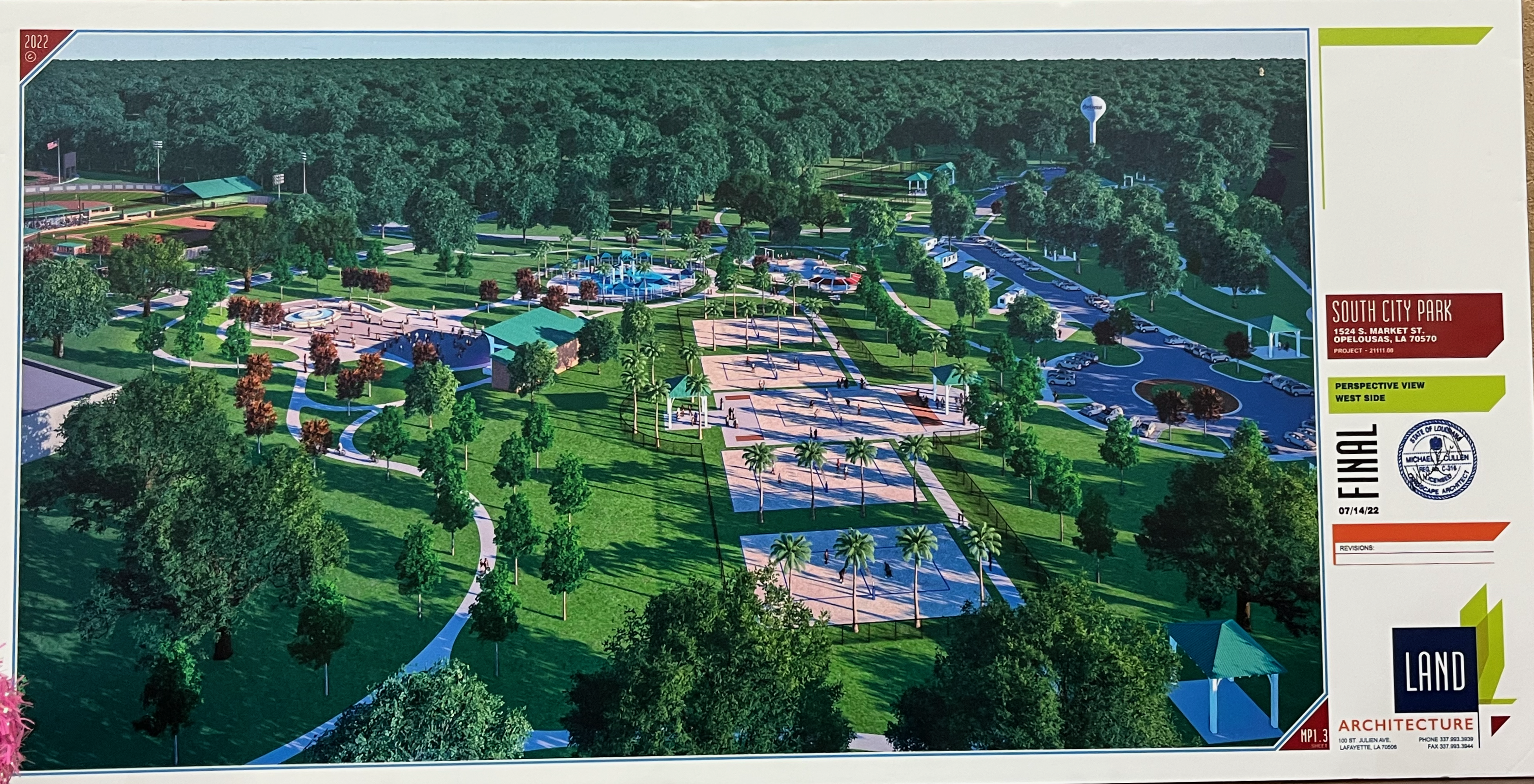
A photo by the author shows a south-facing rendering of the Conceptual Master Plan, created in 2022, which the city and ODDD continue to use while spending more money than ever in Opelousas’s 300-year history on non-infrastructure projects. This plan has never been published on the city’s or ODDD’s websites. To see it, you must visit the offices of St. Landry Economic Development on the I-49 Service Road, three miles from downtown. The plan proposes paving a large portion of the park’s natural green spaces for poorly researched sports facilities. Since no unbiased studies have been conducted, all decisions are based on whim and opinion rather than facts, surveys, or guidance from the legally mandated but unappointed Parks & Recreation Commission, the citizen-led “board of directors” for all public parks. This excessive spending and exclusionary planning reflect a severe neglect of duty by the city and ODDD.

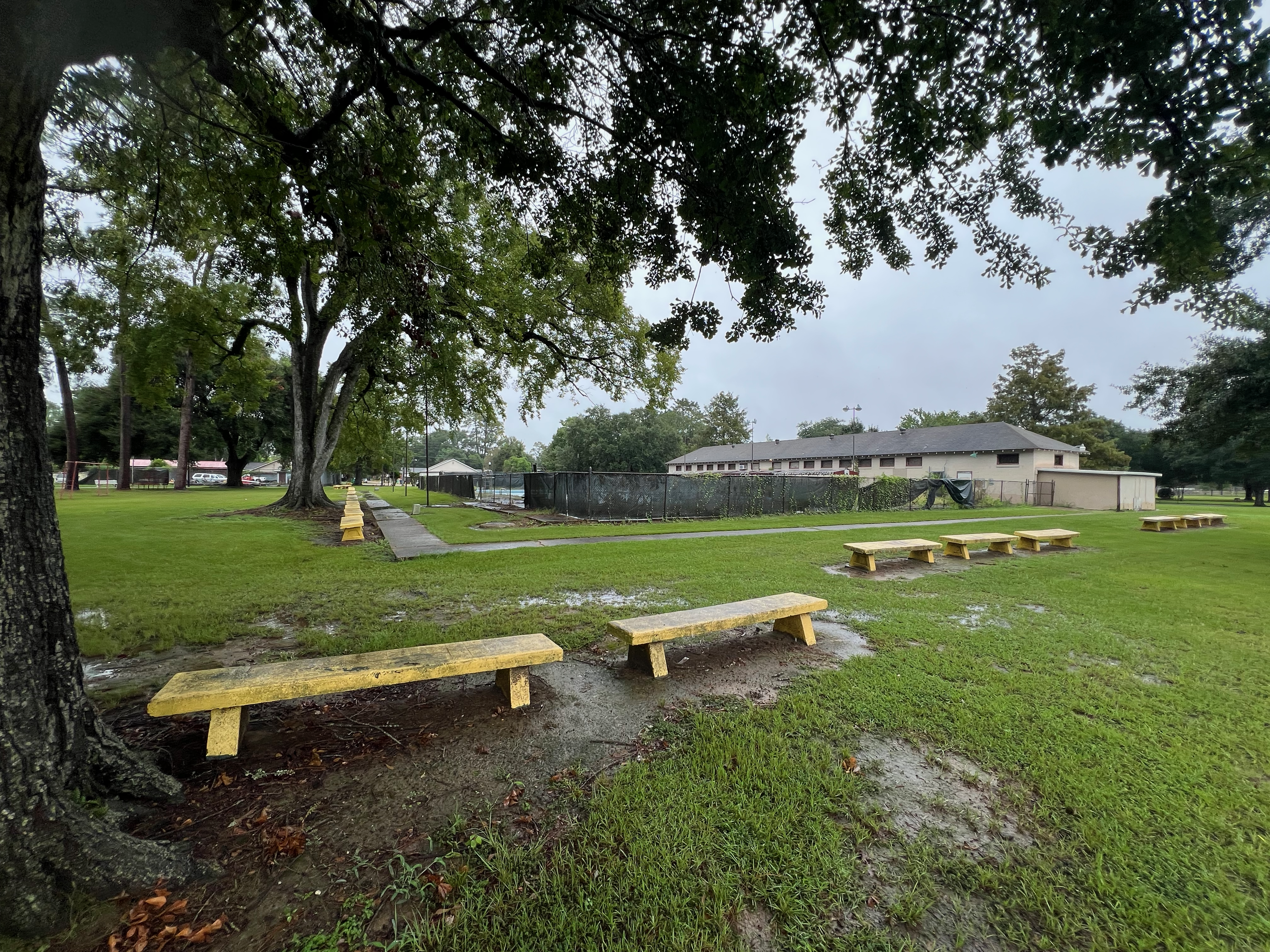
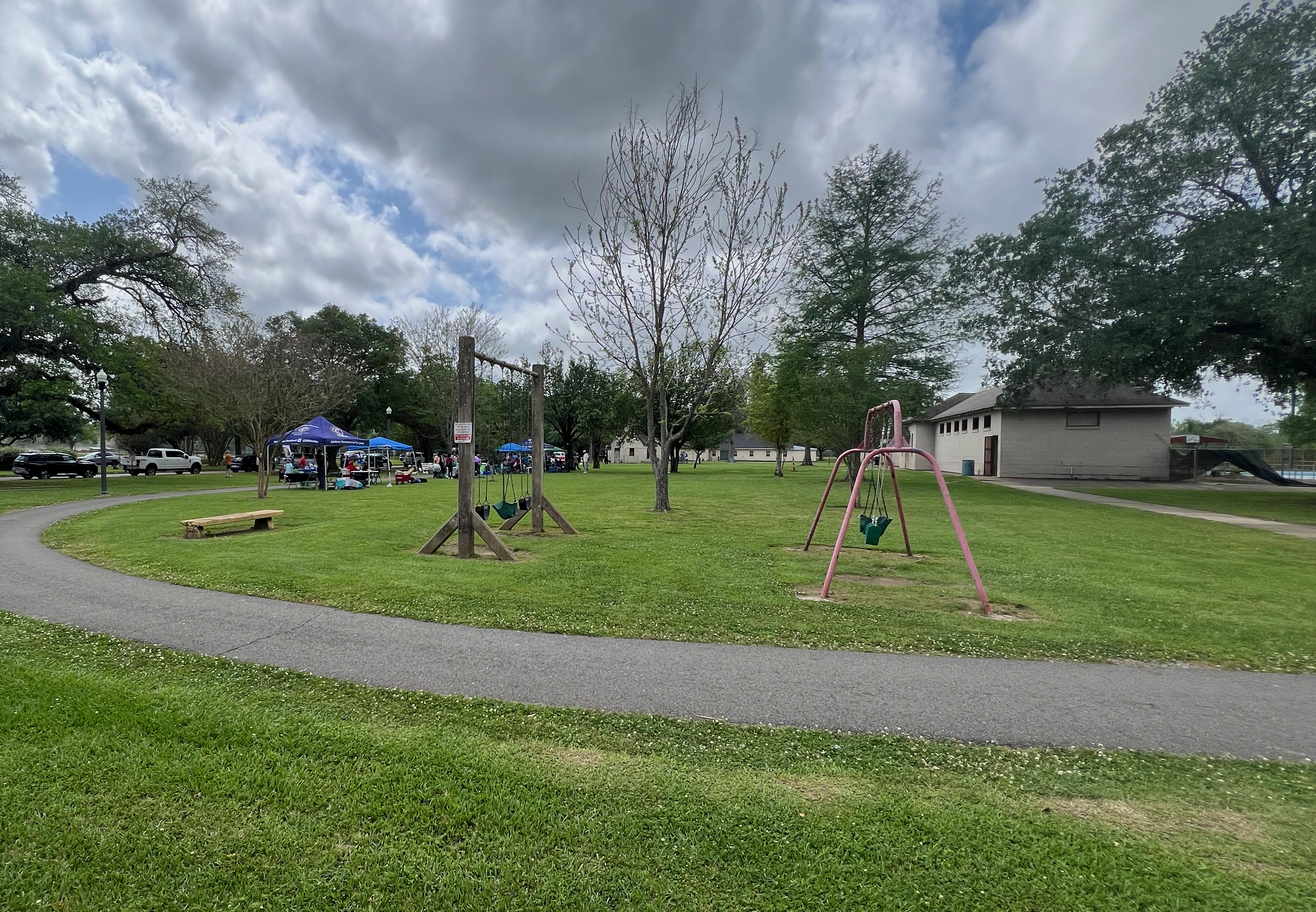
This part of the park is one of the most popular and well-utilized areas. These swingsets are for kids only, and the one on the left was built in 1939. Everything you see in this photo will be demolished.
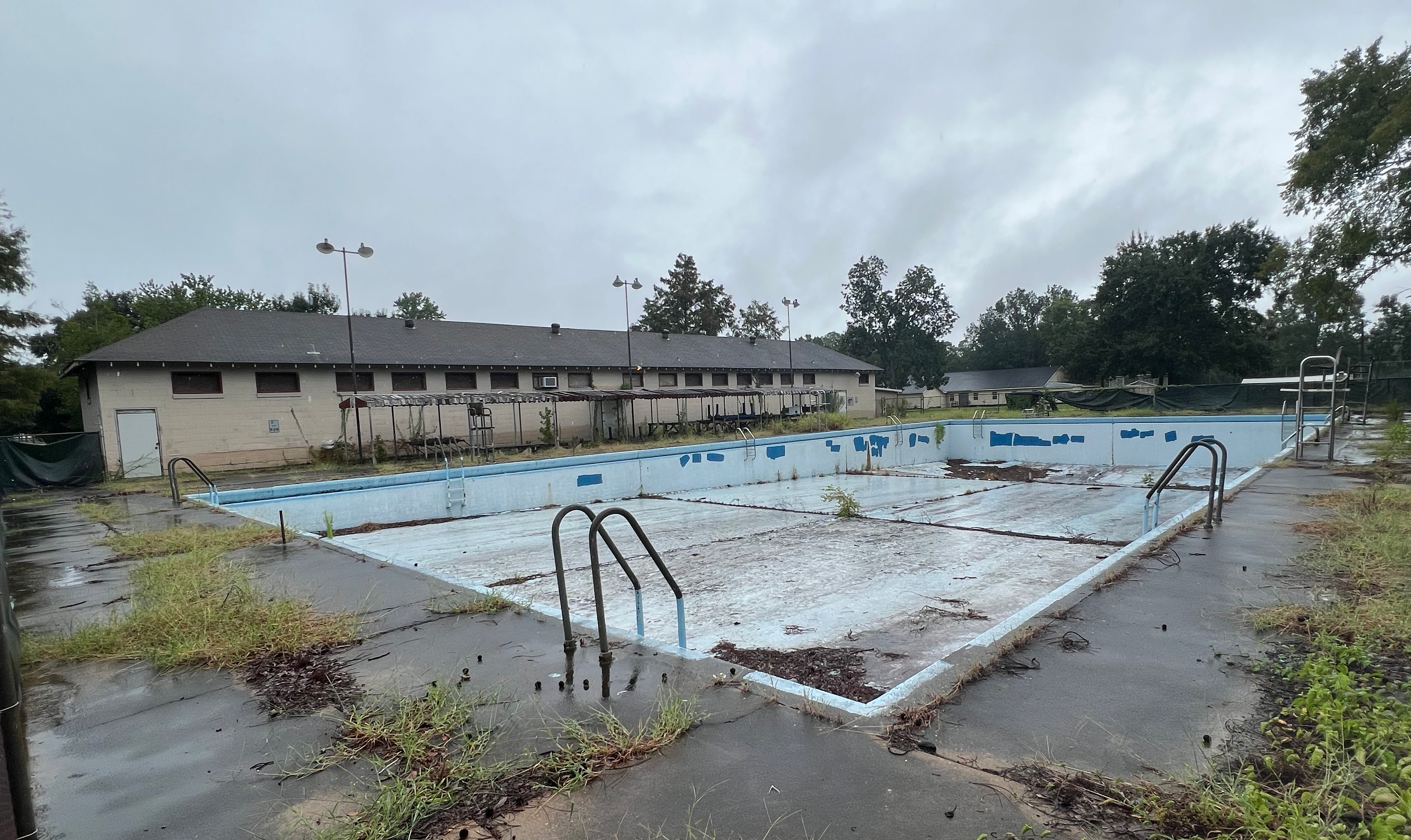
View of the current state of the pool. It’s in remarkably good shape, and there is no publicly available research indicating what it would cost to restore it. It is the largest pool in the city, and when it was constructed, it had its own well. The building is sturdy and in good condition. It was built with old-growth lumber and cinder blocks that are stronger than those available today. If demolished, it should be deconstructed and the materials salvaged.
Rear view of the pool complex. Everything in this photo will be demolished.
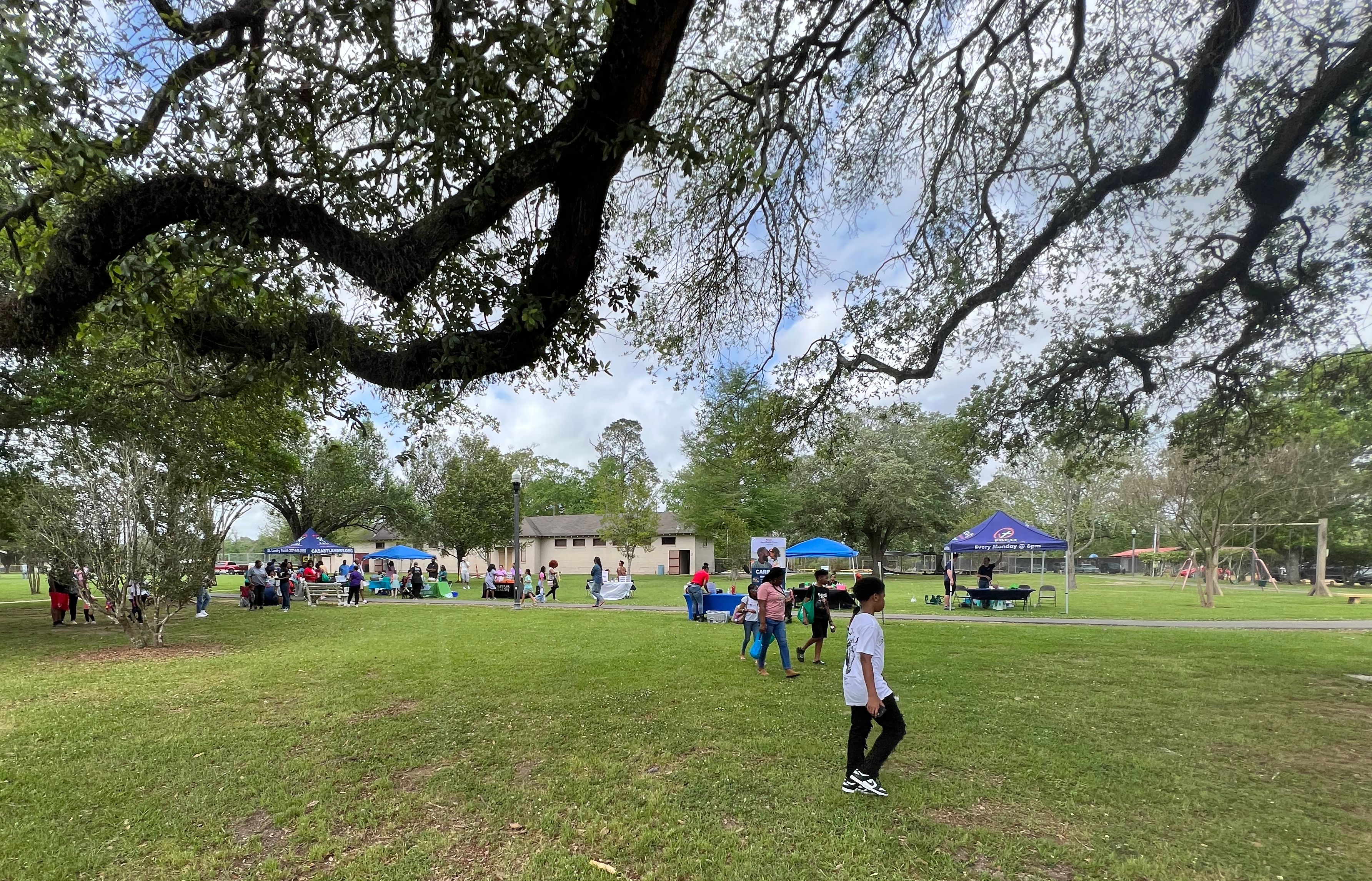
The site is popular for events and quiet contemplation. The walking path has become the most used feature in the park, attracting hundreds of walkers of all ages daily, many from nearby communities.

A City Run from Afar: Why Opelousas Needs Leaders Who Live Here

Opelousas is a once grand old city rooted in grit, creativity, decay, and resilience. However, our potential is limited by a pattern too few confront: the people in city government making many of the most important decisions and earning the highest salaries don’t actually live here.

Our city attorney’s office is located in Lafayette. And, according to my sources, the Chief Administrative Officer, Public Works Director, Fire Chief (and his top assistant), as well as the head of parish economic development, all live outside the city and parish.

Exactly how many Opelousas public servants live elsewhere is yet to be fully disclosed. At the most recent Special City Council meeting, questions were raised, and answers are slowly leaking out. Comprehensive transparency remains elusive.

Some of these administrative leaders take home city vehicles. Some have special monthly car allowances. Some have both. All of them take home city or parish-funded paychecks. What they drive away from is a commitment to a fully vested stake in the well-being of Opelousas.

This is what you might call “administrative colonization”: a model in which public leaders extract salaries from a struggling, poor city while investing their lives and dollars elsewhere in a wealthier, better-run community. It’s not just problematic, it’s corrosive.

These are essential jobs, and we need the best people for them. But when those individuals don’t live in Opelousas, it disrupts the feedback loop that keeps local government accountable. They don’t commute on our streets every day. Their children aren’t enrolled in our schools. Their property taxes don’t support our parish or community. Their lawn signs aren’t visible during local elections. 

That distance signifies a disinvestment in the community they serve. It represents a lack of faith in the people whose hard work and taxes fund their paychecks.

This isn’t about punishing individuals. It’s about exposing a system that rewards disconnection and undermines our progress. The fact that some of our highest-paid public servants don’t live here isn’t just a staffing problem; it’s a crisis of confidence and trust.

Would Lafayette tolerate this? Would any self-respecting city allow its leadership to be so externally rooted?

There are ways to change this. We can prioritize local residency in our hiring practices. We can offer assistance in helping city staff relocate. We can invest in leadership pipelines that lift up local talent. But first, we have to admit that it’s a problem.

We say we want Opelousas to grow, but growth doesn’t happen when we outsource belief. It occurs when people who love this place step up and make a commitment to living in the city they’re paid to lead.

If the highest-salaried positions in city and parish government are held by people who live, pay taxes, vote, and send their children to schools elsewhere, Opelousas taxpayers are unknowingly double-burdened and on the hook for supporting another community and parish. That kind of leadership results in fiscal and moral slippage, regardless of the qualifications of the people involved. 

It is often said that if you want others to love you, you must first love yourself. Opelousas is the same way. If we want people to love our city, we need to love living here, and so do our highest-paid leaders. As we face an increasingly daunting future, this situation represents yet another investment that falls short of what is needed in the moment. We can and must do better. 

We are all in this together, at least those of us who live here!

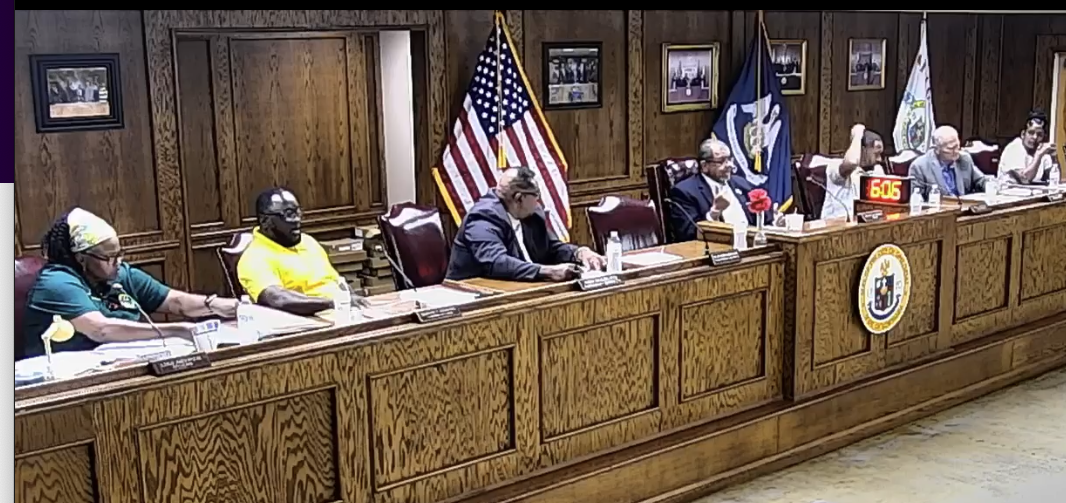
City of Opelousas, August 28, 2025, Special Council Meeting to discuss the budget. Screenshot from Historic Opelousas Facebook webcast.

My Response to the May 10 “Statement from State Representative Dustin Miller (District 40)”

Yesterday, Rep. Dustin MIller released a statement on his Facebook page regarding funding for South City Park and other projects in Opelousas. The following is my reply.

We wish the South Park plans only cost the million dollars allocated from COVID relief funds. That would be reasonable and responsible. However, this is only a token of the full cost of this extravagant plan that you and a small group of insiders have developed without proper public input.

You state, “No local city government tax dollars are tied to the Donald Gardner Stadium improvements, the Community Center, or library renovations.” That’s misleading. Every dollar beyond the COVID funds comes from sales taxes paid by people who live, shop, and work in Opelousas. That is public money administered by local government. And if transparency is your goal, where is the full accounting of South Park spending—past, present, or proposed? To date, none has been provided.

The stadium renovation alone is projected to exceed $10 million, primarily funded by the Opelousas Downtown Development District (ODDD) through an additional one-cent sales tax collected at big-box stores. The ODDD issued municipal bonds to finance this, locking us into 15 years of debt, plus nearly $2 million in interest and fees, costs that are omitted from public statements. And if transparency matters, why are these decisions being made without the legally required oversight of a Parks and Recreation Commission, which the mayor has failed to appoint since 2019?

Then there’s the choice of location. The community center is planned for the site of the WPA-era pool—an area that requires destroying popular greenspace, major construction demolition, and subsequent fill that must meet engineering standards, all costly and unnecessary when vacant land is available nearby at a fraction of the cost.

Here’s an idea: Why not build the community center in the center of the community, where it could anchor downtown revitalization and support library programming? That’s the kind of impactful investment the ODDD is supposed to be making.

Meanwhile, the project lacks even the most basic financial planning. No published operations or maintenance budgets exist for the stadium or the proposed community center. Who will pay for utilities, insurance, staffing, janitorial services, or long-term upkeep? Artificial turf fields require specialized maintenance equipment and must be replaced every 6–10 years, at over $1 million per replacement cycle. Where is that money coming from?

Other communities have learned the hard way: these facilities are expensive and rarely break even. The original private funder walked away from nearby Pelican Park because annual costs were too high. That should be a cautionary tale, not a model.

All this unfolds while the city teeters on the edge of a fiscal cliff. On May 31, Opelousas will lose the source of 29% of its annual revenue due to the overlooked expiration of a long-standing one-cent sales tax. At the same time, our core infrastructure is in crisis. After this week’s rains, raw sewage is spewing from manholes, flowing onto residential streets, and into waterways that empty into the Vermilion River. Brown water continues to pour from our taps. Experts estimate that repairing our water systems alone will take $20–30 million. Securing funding for those repairs should be everyone’s top priority, because we are one incident away from a significant public health crisis. 

Yet, your focus—and the ODDD’s—has remained fixed on a flashy, limited-use stadium and recreation complex, not the urgent needs of a city with crumbling infrastructure, an aging population, and one of the highest poverty rates in the nation.

This isn’t just poor fiscal management—it’s misfeasance.

If you want the public’s trust, stop issuing misleading statements that justify these lavish and poorly researched plans. Opelousas needs investment in water, streets, housing, and jobs, not in distractions dressed up as progress.

Lavish Dreams, Empty Coffers: A Reckoning in Opelousas

By Stephen C. Picou (May 1, 2025) For over a generation, Opelousas has relied on a one-cent sales tax to fund nearly a third of its annual operating budget. That tax expires on May 31, 2025, and reinstatement requires a yet-to-be-scheduled public vote. This week, the mayor called for a special meeting of the City Council to continue public notice in support of a ballot initiative to renew the tax. But it’s a classic scenario of too little, too late to stop the cut, because this situation should have been addressed years ago.

How did we end up in this position? It’s not complicated. All city leaders had to do was read the Legislative Auditor’s annual financial report, which plainly states that the tax will expire in 2025. However, those entrusted to plan responsibly repeatedly overlooked this fact.

Over the past fifteen years, under the heading of Sales and Use Tax, the audit shared the following: “Proceeds of the 1% sales and use tax was initially levied by authority of a special election held on April 5, 1975, and was extended through May 31, 2025.” This statement does not hide in footnotes or small print; it is part of the main body of the report. Yet, until March of this year, no one at City Hall flagged it as an urgent concern.

One glaring reason for this oversight is clear: for the past three years, city leaders have been consumed by an ambitious and costly plan to transform serene and bucolic South City Park into a busy, commercially supported, paved-over, high-end sports complex. Fueled by city funds and special sales tax revenue from the Opelousas Downtown Development District (ODDD), this project became their fixation, while more pressing fiscal responsibilities were neglected. 

Some of us expressed serious concerns early on, warning that the plan was overpriced, poorly justified, and pushed forward with little transparency or public input. Instead of addressing our concerns, officials dismissed them—and us.

In November, as it became clear that substantial cuts to federal funding for social safety nets were imminent and could devastate Opelousas, the mayor rejected calls to prepare the city by reducing costs on South Park initiatives. He insisted on “staying the course” with the extravagant park development plans, the most expensive non-infrastructure project in the 300-year history of Opelousas.

In the days leading up to Mardi Gras, someone—whose identity remains unknown—must have finally reviewed the annual Louisiana Legislative Auditor report on the city’s finances and discovered the impending May 31 fiscal cliff. It wasn’t until April that the council could initiate the required public notice period.

When the tax expires on May 31, potentially severe cuts will soon follow. Who and what might be on the chopping block are issues that have yet to be discussed publicly.

Though I, too, was unaware of the looming expiration, my advocacy for fiscal prudence during these trying times was timely but insufficient. My analysis, rooted in extensive experience in government, community planning and outreach, economic development, and support for public parks and the environment, was that the city could not afford the costly plans for South Park, and that expenses to improve Gardner Stadium could easily be reduced by more than half while still meeting the needs of the schools.

For more than a year, I politely and professionally presented my questions and observations to the ODDD month after month. Initially, I was ignored. However, in recent months, as I uncovered and revealed details they kept from the public, I have faced scorn and derision. Last month, during an outdoor public event, a board member yelled at me, calling me negative, a liar, and an asshole, in front of city managers who chuckled like schoolyard bullies. I found the incident disheartening and unacceptable. That board member should resign or be removed.

Louisiana has the second-worst poverty rate in the continental US, exceeding eighteen percent. Nearly a million residents live below the poverty line. In Opelousas, the poverty rate is thirty-four percent, and in one Census Tract, home to more than 4000 people, the rate surpasses fifty percent. South Park is not in that tract; the much-neglected North Park is.

Due to special taxing districts like the ODDD, Opelousas has one of the highest sales tax rates in the country. The ODDD is mismanaging this revenue along with its responsibilities. They meet far from downtown at a location outside their district and operate with insufficient transparency and inadequate public input. Millions are being funneled into South Park without the legally mandated guidance of the still-unappointed Parks and Recreation Commission. What has transpired over the past few years, while they and the mayor were distracted by their envy and ambitions for a high-end sports complex like the one in much wealthier and fast-growing Youngsville, is nothing short of a travesty.

In his second term, the mayor is responsible for this situation and for failing to read the annual reports that clearly outline the pending sales tax expiration. Unfortunately, the phrase “the buck stops here” has taken on a new and painful meaning in his case. The bucks are stopping. What happens next is unclear, but we will all suffer due to the failure to prioritize investment in the basic functions of this needy, crumbling town. 

People in Opelousas are not clamoring for pickleball; they need food, affordable housing, clean water, good schools, healthcare, and job opportunities. Building state-of-the-art, limited-use sports facilities in a poor town with crumbling infrastructure, rather than investing in infrastructure and business development, is like putting a fur coat on a starving person dying of heat stroke.

Opelousas is a unique and special place. Our history, cultural mix, and location make it a desirable place to live. With the right infrastructure investment and leadership mix, this city can be a great place. However, this can only be achieved when the people elect city (and parish) leaders who strive for greater transparency, are guided by science and data, follow the law, read the audits, and incorporate the public’s voice. It’s up to all of us to do better! 

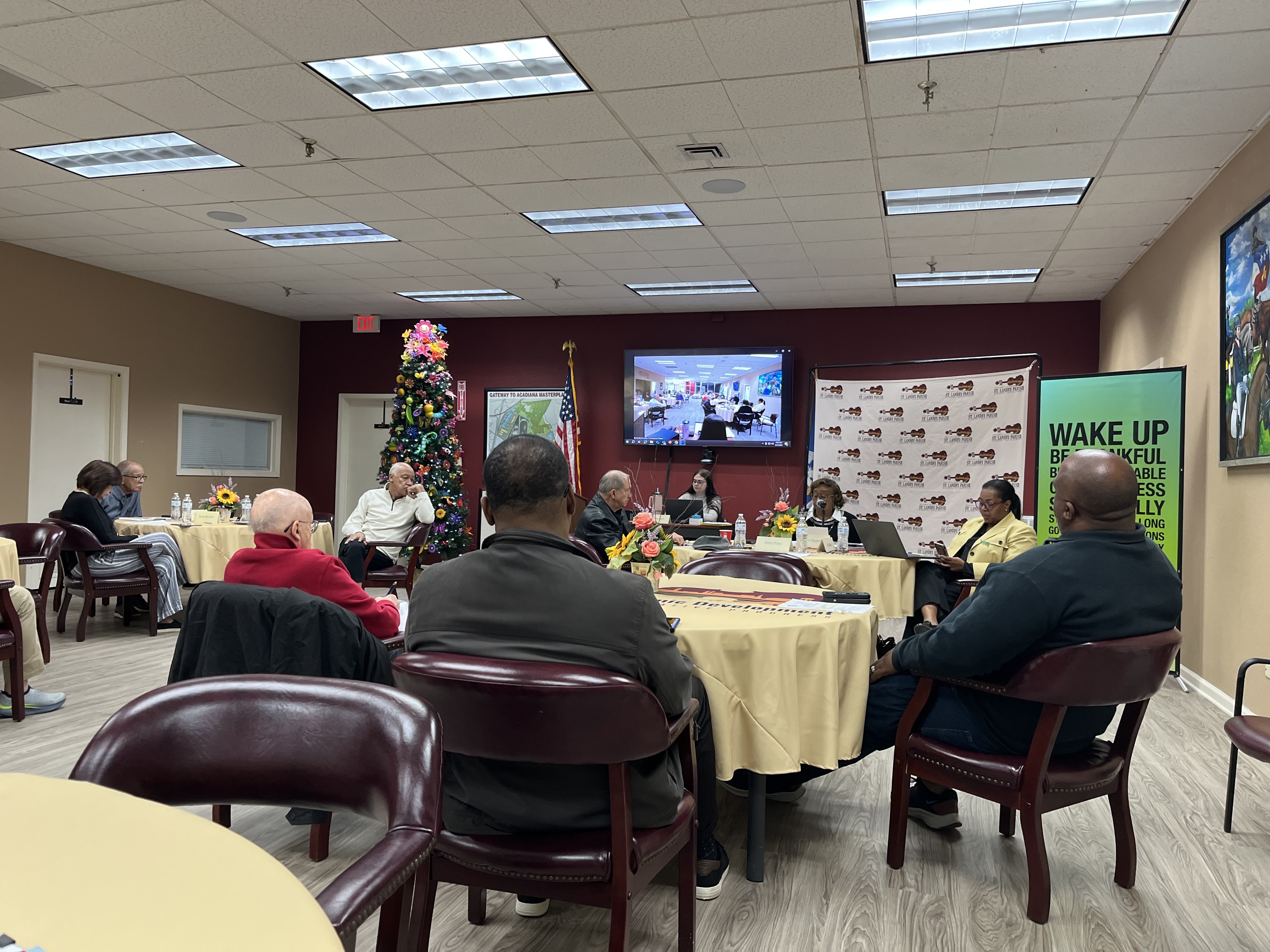
March 21, 2025, meeting of the Opelousas Downtown Development District. Held on the last Friday of the month at 9 am, outside the ODDD boundaries in the offices of the St. Landry Economic Development District (SLEDD), in the old Daily World building on the I-49 service road, nearly three miles by car from downtown.

Artificial Turf Sports Fields are Unhealthy for Children and Other Living Things

A thinly researched, more than eight-million-dollar plan to significantly modify Gardner Stadium in Opelousas, Louisiana, calls for artificial turf, a product developed for indoor fields that, when installed outdoors, creates a potentially deadly mix of heat, impact injuries, and toxic chemical exposures that threaten the health of players, coaches, fans, and the environment. 

Construction bids exceeded eight million dollars, so the Mayor’s office is working to lower costs. Natural turf is a good place to start since it is more affordable and, in the long run, produces a healthier facility that is less likely to cause injury, heat stroke, and future legal liability for the city, the Opelousas Downtown Development District (ODDD), and the school district.

An artificial turf field is basically an asphalt parking lot overlaid with thin layers of plastic carpet. Initially developed for the world’s first large indoor stadium, the Astrodome, “astroturf” was created out of convenience, not scientifically designed to improve the game but to make sports possible on an indoor, paved surface. It was not crafted (and has not successfully been improved) to reduce injuries or enhance performance; it was designed to endure. 

A natural turf field is a living surface of soil and plants that cushions athletes and exposes children to a healthy mix of microbes, moisture, and oxygen. The grass and soil of a natural field absorb and filter rainfall; when it lands on paved, plastic grass landscapes, it becomes a poisonous soup that contaminates streams and groundwater.

Artificial turf exposes players to impact injuries, extreme heat, and toxic chemicals that outgas into the air and are directly absorbed by their bodies via inhalation and scrapes and scratches known as “turf burn.” This abrasiveness is why many professional football players wear fabric tape over their elbows.

Globally, the deadliest weather phenomenon is heat, which kills more people annually than storms, floods, or cold. In a rapidly warming world, artificial turf fields put children, coaches, and fans at greater risk for heat stroke that can permanently damage brains and other vital organs. These fields can easily reach deadly temperatures of 130 to 150 degrees or higher on a ninety-degree day, creating a potentially fatal scenario. Last August, there were thirty-five emergency calls for heat stroke at a single UL-Lafayette football game. 

It should come as no surprise that heat-related deaths of high school football players are happening, with five fatalities in just three southern states since July 2024. Those teenage boys died simply because they wanted to play football; they were failed by adults who had the responsibility to protect them.

Adding to heat risk is the fact that because the plastic turf is underlaid by asphalt, injuries like concussions, blown knees, and shattered ankles occur at a much higher rate than on natural grass. This rate of injuries is the primary reason why ninety-two percent of the members of the NFL Players Association voted last year to demand that all thirty NFL stadiums install real grass. Professional soccer players agree, and the World Cup is played on natural turf.

The health threats of synthetic turf fields are myriad. Plastic grass is flammable and impregnated with fire retardant, often a “forever chemical” proven to cause cancer. Shredded tires are spread over the turf to keep the “blades” up and add additional cushion. This infill also contributes to airborne microplastic pollution and yet more potential for cancer, lung and liver damage, and other developmental problems.

Because these harms are now more commonly known, the city could face future lawsuits by parents whose children become permanently impaired because artificial turf was chosen as a convenience even though professional footballers reject it as dangerous. 

The decision by the mayor and the ODDD to stick with the current plans is guaranteed to end the careers of high school athletes randomly for decades and add the potential for cancer and other diseases later in life. In the years to come, those teenagers who suffer concussions, blown knees, shattered ankles, and failing health will find that their suffering might have been prevented if the city and ODDD had done their research and listened to the science and the professionals.

Sports like football, baseball, and soccer were invented outdoors, where weather and field conditions add their wildcard impacts to the game. Children need contact with grass and soil to build their immune systems, and they deserve to play in as much safety as science, budgets, and our loving care allow. Keeping the grass in Gardner Stadium is a simple way to save money and protect future generations, and that’s what we should all expect from our public leaders. 

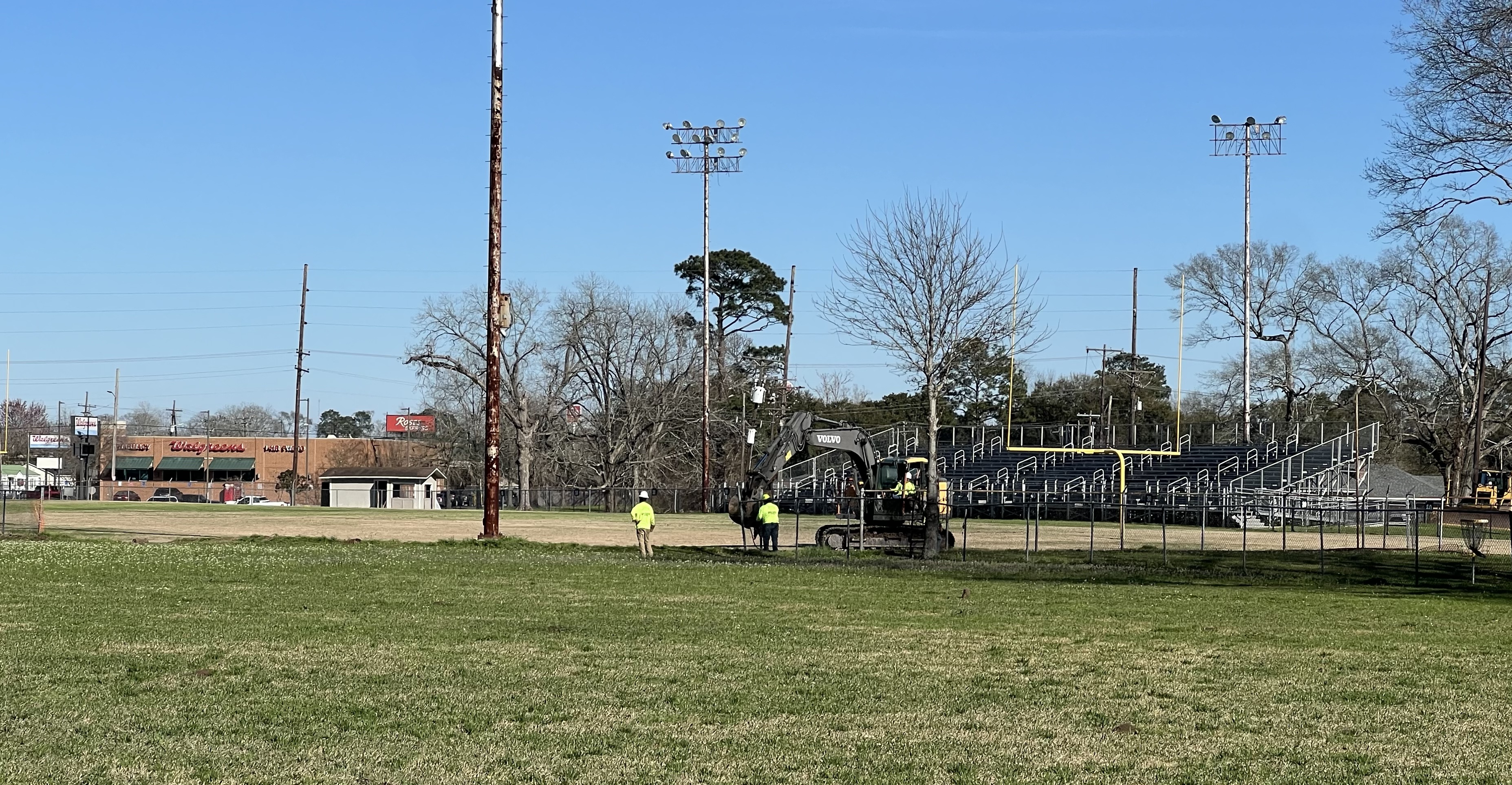
Workers removing fencing as construction begins on Gardner Stadium in Opelousas, LA, Feb. 17, 2025.

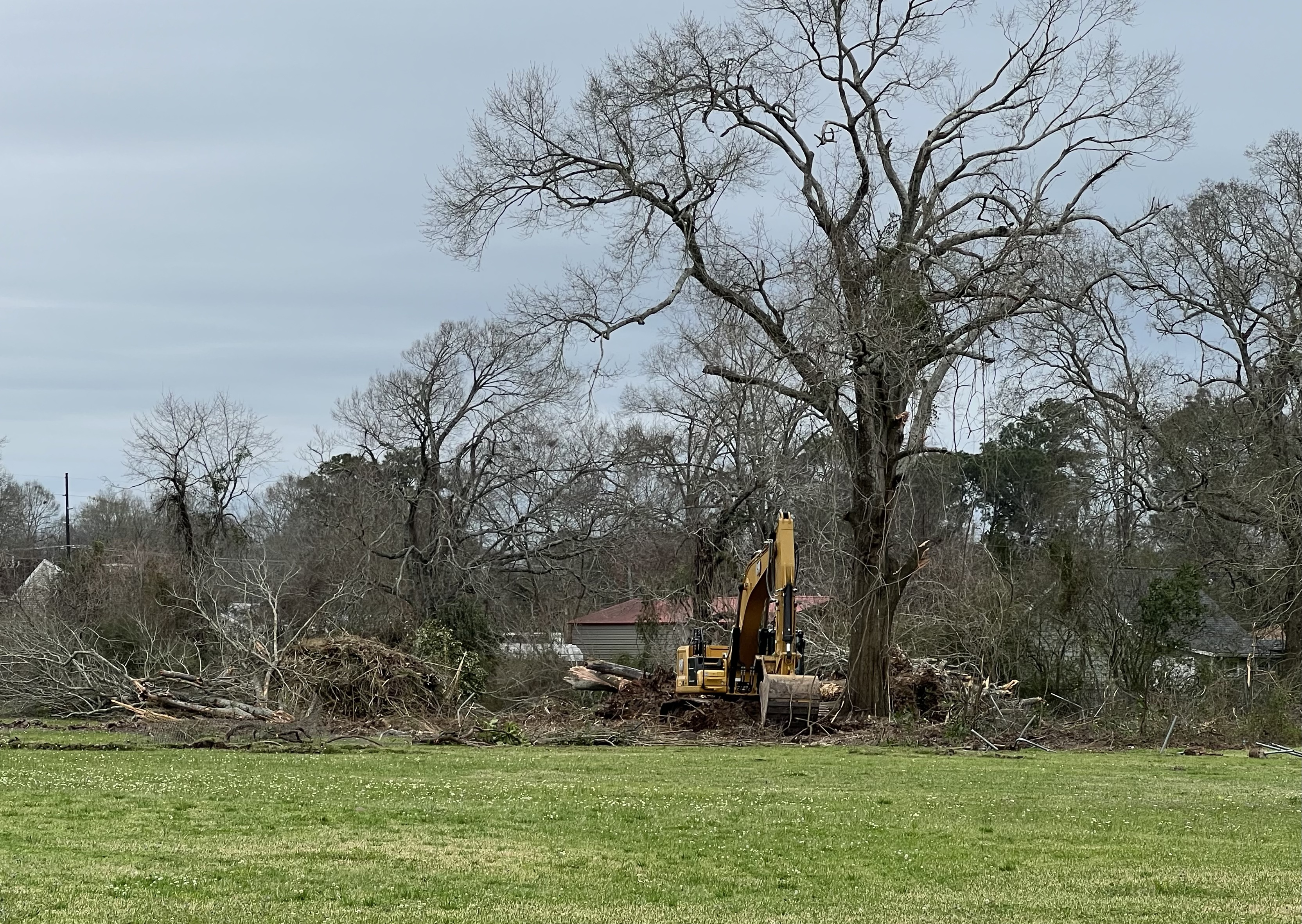
The first step always means loss of greenery. A stand of mature trees being destroyed by the construction at Gardner Stadium on Feb. 18, 2025.

Old Mandeville Oak Falls in the City and People Don’t Hear the Truth

A story in the Times-Picayune tells the sad tale of the death of yet another benevolent giant live oak in Louisiana. This time, it was a revered tree in Old Mandeville, killed by the usual suspect–humans. Yet the writer and the so-called expert got it all wrong. This tree did not die a natural death, it was a slow-motion murder by pavement and development. It didn’t have to happen, and it doesn’t have to continue to happen, but it will.

We lack the common sense to be responsible stewards of our landscape. To some, this isn’t a big deal. But the fact is, we will die if we continue to fail to address our ignorance. That tree is just one of thousands of ancient oaks lost to development. In too many cases, “tree coffins,” those concrete boxes in the sidewalk or parking lot in which we expect trees to “live” are ultimately the cause of their deaths.  You see it everywhere, from downtown streets to mall lots, older trees getting scraggly and dying in these small set-asides. It’s just plain stupid.

I’d love to do a documentary on this subject if anyone out there is interested in helping. It’s long overdue.

Here’s the article: http://www.nola.com/politics/index.ssf/2014/08/300-year-old_madisonville_oak.html

And here are the comments I posted:

It is clear that development under the canopy is what killed that tree. To have a concrete curb within mere feet of the trunk means that the root system was damaged, ripped up and smothered by paving. The number one cause of the death of urban trees is soil compaction. Older trees, that grew without interference for decades, are particularly sensitive to disturbance of their root zones. Think of a tree as a closed system where the roots recycle the fallen leaves and act like both lungs and intestines, processing nutrients, water and air in a metabolic system. Then imagine machines, shovels, people, digging, covering, and sealing this system. It often takes decades for these trees to die. 

Look at the large trees in Old Metairie, surrounded by pavement. They are spindly, which means the tree is shutting down branch systems in its attempts to adjust. Trees are like submarines or ships with watertight doors that close to protect the rest of the vessel. When you see dead branches, those branches are shut down and will not become leafy again. 

That tree in Old Mandeville was murdered by progress. It died a slow and public death. It did not die of old age. It died of ignorance, neglect, and by the assault of human development. 

The good news is that we know better and can do better. But it is too late for many of these sentient giants in whose branches we can sense the touch of the divine. Older trees need and deserve protection and that means public policies that honor their roles in the health and wellbeing of the land that supports and nurtures us. We need to give older trees space. The top 18 inches of soil where most of the life-giving aspects of biology give rise to not only trees, but us. We need to understand that soil is alive and that trees–and humans–need healthy, loose, alive soil if we are to thrive. 

Guidry is wrong. It was somebody’s fault, a very long time ago, when they failed to care about the space that tree needed, and put concrete and pavement over its roots, and began a process of starvation and strangulation that weakened it and caused it to die sooner than it should have. We killed this tree, probably generations ago, when we built the roads and sidewalks over its most sensitive space, its root systems.

But it’s not just about protection, if we are to have good public infrastructure and healthy communities to serve future generations, we need to understand that we must put the right tree, in the right place, planted at the right time. And that means a broader variety of native species, not more crape myrtles, and not live oaks planted in small spaces between sidewalks and roads and under power lines. This, too, is foolhardy.

Until we become better educated about tree biology and implement policies that protect older trees and guide future plantings, many more will die. And we lose something of ourselves every time.

And here’s a picture of a tree killed by development after Katrina, since this article needs a dead tree and I’m not going to use the T-P’s pic.

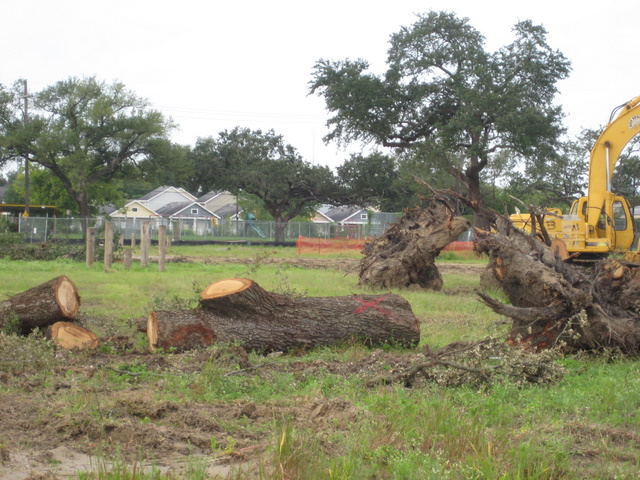
One of the more than 30 mature oaks destroyed by the redevelopment of the Lafitte Projects on Orleans Ave.

Bas Clas Releases New CD “Love Food Sex Peace” with Special Show at Chickie Wah Wah in New Orleans

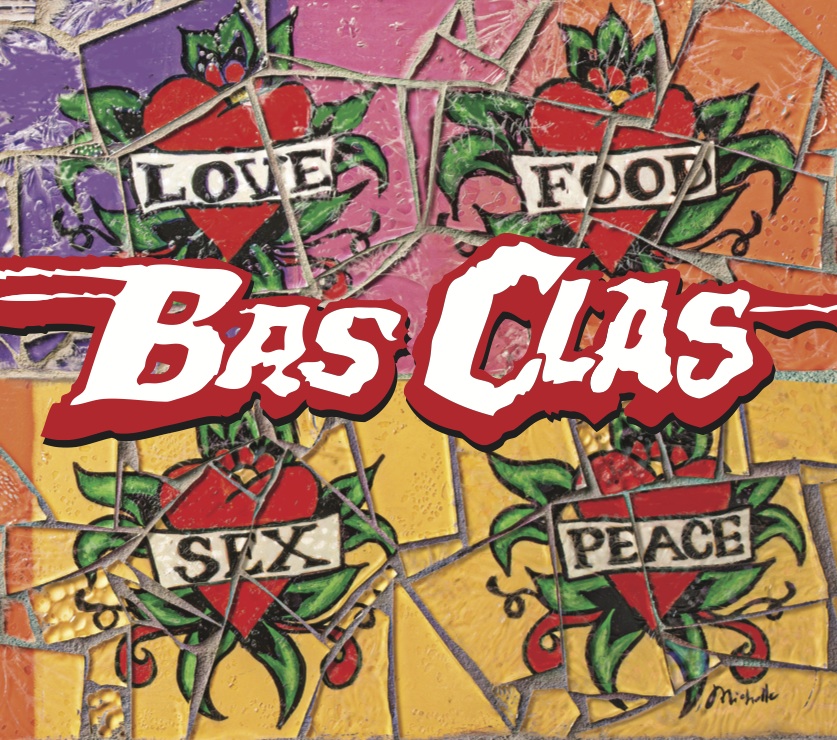
BasClas2013CDMainCover

Santa made the rounds early this week, delivering the latest Bas Clas CD Love Food Sex Peace to audiences in New Orleans. The 7 song disc features five new songs and two tunes familiar to longtime fans. As with the band’s previous release Big Oak Tree, an Offbeat Magazine Top 50 CDs of 2012 and a nominee for their Best of the Beat awards as Best Rock Album, “LFSP” was recorded at the legendary Dockside Studio and engineered by Grammy-winner David Farrell. Produced by Bas Clas, David Farrell and Steve Nails, the new CD features guest musicians Eric Adcock on keyboards, Jonno Frishberg on fiddle, Roddie Romero on accordion, and Dickie Landry on sax. Backing vocalists include Leslie Smith, Mike Picou, and on the song “Goodnight,” harmony ninjas Susan Cowsill, Alexis Marceau, and Sam Craft. The CD cover art is derived from a stained glass piece by the bassist Geoff Thistlethwaite’s wife Michelle Fontenot.

The band will make the disc available to the public at a special year-end show at Chickie Wah Wah in New Orleans on Friday, December 27. We’re blessed to be able to wrap up an eventful 2013 by releasing this CD at our last live gig of the year. The CD will be available at the Louisiana Music Factory, CD Baby and on iTunes in the coming days.

Bas Clas at Bayou Boogaloo on a Beautiful Saturday in NOLA

My band, Bas Clas, takes the Dumaine Street stage at 6pm Saturday, May 18 at the Mid City Bayou Boogaloo for a 90 minute set. Guest musicians include Leslie Smith on vocals, and a brief but very special guest appearance by Jonno Frishberg and Kevin Aucoin. We’re warmed-up and ready to rock, so it’s going to be a good show. Louisiana Music Factory will be there selling our CD and there’s tons of food, arts, crafts and more. This is one of the city’s finest festivals, on the banks of Bayou St. John, and we hope to see lots of friends and make new ones.

The band also spent the past couple of days working with David Farrell, one of the best audio engineers in the world, on our latest batch of songs. We plan on releasing more music in October, so stay tuned!

BCCDcovsticker5.18.13

Bas Clas to Rock the End of Daze

The End of Daze are upon us. Saturday, October 27, 2012 is the official date chosen by the Enlightened Ones of the Krewe of MOMS to open to the world the chance to join them in costumed revelry as they dance in the face of doom to celebrate the End of Daze. Bas Clas is one of the triumvirate of musical mystics chosen by the priests of pleasure to sound the alarm and sing the songs that will shake the foundations of the Temples of the Prudes.

Taking the altar at the start of the night, Bas Clas will begin the sacrificial rituals with music and dance at the musical temple of The Howlin Wolf in New Orleans.

Asked whether the music can indeed turn the tide at this late hour, a not-to-be-named mystic said, “These are dark times. We shall prevail, and if this is not to be, we shall dance until the end.”

MOMS Halloween 2012, the End of Daze will soon be upon us.