DON’T PAVE OUR PARK!

Opelousas Deserves a Voice Before the Bulldozers Roll Again

UPDATE December 1: The groundbreaking is yet to be scheduled.

Any day now, the City of Opelousas is planning to hold a ceremonial groundbreaking for the proposed “multipurpose community center” in South City Park. I plan to be there, but city leaders already know where I stand.

What matters now is whether you will be there, and what message they see when they look out at the crowd.

Because unless we speak up, Opelousas is on the verge of making an irreversible mistake: demolishing a historic WPA-era pool complex and paving over green space without public input, without transparency, and without meeting federal requirements that are supposed to protect communities from exactly this kind of reckless decision.

1. DEMOLITION WITHOUT REQUIRED FEDERAL REVIEW IS NOT LEGAL

The bathhouse and pool were built in 1939 by the Works Progress Administration—a historic public asset over 80 years old.

Any federally funded project that affects a historic structure must go through:

  • Section 106 review1 under the National Historic Preservation Act
  • Public notice and public comment
  • Consultation with the Louisiana State Historic Preservation Office2
  • Evaluation of alternatives (including sites that don’t require demolition)

None of this was done.

No public notice.

No hearings.

No historic review.

No alternatives analysis.

That is not just bad practice—it violates federal law attached to the funds they are using.

2. THE CITY CHOSE THE MOST EXPENSIVE AND RISKY SITE

If the goal is to build a gym or community center, there are multiple city-owned parcels that could host it with:

  • no demolition costs
  • no hazardous materials
  • no historic review
  • no environmental review
  • better drainage
  • lower site-preparation costs

Instead, the City chose:

  • a site requiring demolition of a sturdy WPA building
  • the removal of healthy, mature trees
  • potential drainage issues for surrounding areas and Bayou Tesson
  • more expensive foundations and earthwork
  • legal risk under federal environmental laws that could cause clawback of funding
  • a more costly construction path

Under federal law 2 CFR 200.404, all federally funded projects must demonstrate “reasonable costs.”3 Since this project is monitored monthly with payments disbursed via invoices rather than upfront, an audit six months from now could identify issues and halt funds, potentially requiring the return of spent funds.

As of today, the city has received no money from the state. The process for payments to the contractor will hinge on the city’s acceptance of invoices for work done, followed by the state agency’s approval and verification of work. With this system, checks to the contractor are issued by the city after the state disburses funds. It’s often a slow and complicated process with many approval and verification speed bumps. I have post-Katrina experience as a contractor on federally funded programs administered by the state to municipalities, and this multi-step process can lead to slow payments. I hope the Lafayette-based contractor realizes this.

3. THEY NEVER ASKED THE PUBLIC WHY WE USE SOUTH PARK, WHAT WE WANT OR NEED

There has been:

  • No park user survey
  • No citywide needs assessment
  • No analysis of youth sports demand
  • No demographic or enrollment trend data
  • No public workshops or listening sessions

Opelousas is making multi-million-dollar decisions without one shred of unbiased research. I’d refer you to the construction manual and bid documents that describe the project in detail, but the city never posted the request for proposals on their Advertisement for Bids page.

A project built on assumptions, whim, and envy for what wealthier communities have rather than evidence is destined to fail—and to cost taxpayers even more in the long run.

4. THE PARKS & RECREATION COMMISSION—REQUIRED BY LAW—HAS NOT MET FOR FIVE YEARS

The city charter requires an independent Parks & Recreation Commission to guide decisions on:

  • park investments
  • all planning and new facilities
  • public processes and input
  • setting annual budgets, programming and policies
  • maintenance and upkeep

This body has been dormant since 2019.

Instead, decisions impacting the future of our parks—and millions of dollars—are made by a small, insular group of people, with no citizen oversight, no transparency, and no accountability.

5. ALL OF THIS IS HAPPENING WHILE THE CITY FACES A $1.85 MILLION HOLE IN ITS BUDGET

The city lost $1.85 million in revenue due to a four-month lapse in sales tax collection—an internal control failure because no one on the city’s payroll read the Legislative Auditor’s report for 15 years.

Instead of correcting course, tightening spending, or creating a public plan to stabilize finances, city leaders are:

  • taking on new long-term operational costs
  • committing to expensive facilities
  • draining half of ODDD’s sales tax revenue for 10 years
  • ignoring the budget crisis

This is not resilience.

It is not planning.

It is financial mismanagement at the moment we can least afford it.

WHAT YOU CAN DO: SHOW UP!

At this month’s ODDD meeting, a ceremonial groundbreaking “hopefully on December 2 at 10am” was discussed, but I’ve seen no announcements, and it’s not happening on that day. Ideally, they’ll post the plan. Then again, I suspect they only want to alert the news media and the small group of city and regional leaders who want to pave South Park into a plastic grass sports complex like Youngsville’s. Watch Historic Opelousas and Opelousas Downtown Development District Facebook pages for an announcement, and if I learn more, I’ll update this post.

In the meantime, city leaders need to see that this community values:

  • parks
  • green space
  • historic places
  • fiscal responsibility
  • the input and voice of the public

This is not about politics.

This is about our home—our most beautiful and inviting neighborhood park—our future.

Post comments on social media. Talk to your friends and neighbors. Show up. Bring a sign. Bring friends. Bring your voice.

Here are some simple sign ideas:

“DON’T PAVE OUR PARK”

“SAVE SOUTH CITY PARK”

“NO DEMOLITION WITHOUT PUBLIC INPUT”

“WHERE IS THE PARKS & REC COMMISSION?”

“LISTEN TO THE COMMUNITY”

“HISTORY MATTERS”

“THIS IS NOT COST-EFFECTIVE”

Stand quietly, but talk to the people there. Stand respectfully. Stand firmly.

Let them see that Opelousas is about all the people, not just a select few. That parks are for people of all ages and abilities. Natural spaces and learning about nature and gardening are the prerequisites for children’s health and well-being, and are more critical to developing life skills than indoor competitive sports.

Let them see that decisions made about our parks must include the people who actually use them!

If we don’t show up, they will say no one cared.

But we do care.

And this is the moment to prove it!

  1. https://www.achp.gov/protecting-historic-properties/section-106-process/introduction-section-106 ↩︎
  2. https://crt.state.la.us/cultural-development/historic-preservation/section-106-review/index ↩︎
  3. https://www.ecfr.gov/current/title-2/subtitle-A/chapter-II/part-200/subpart-E/subject-group-ECFRea20080eff2ea53/section-200.404 ↩︎
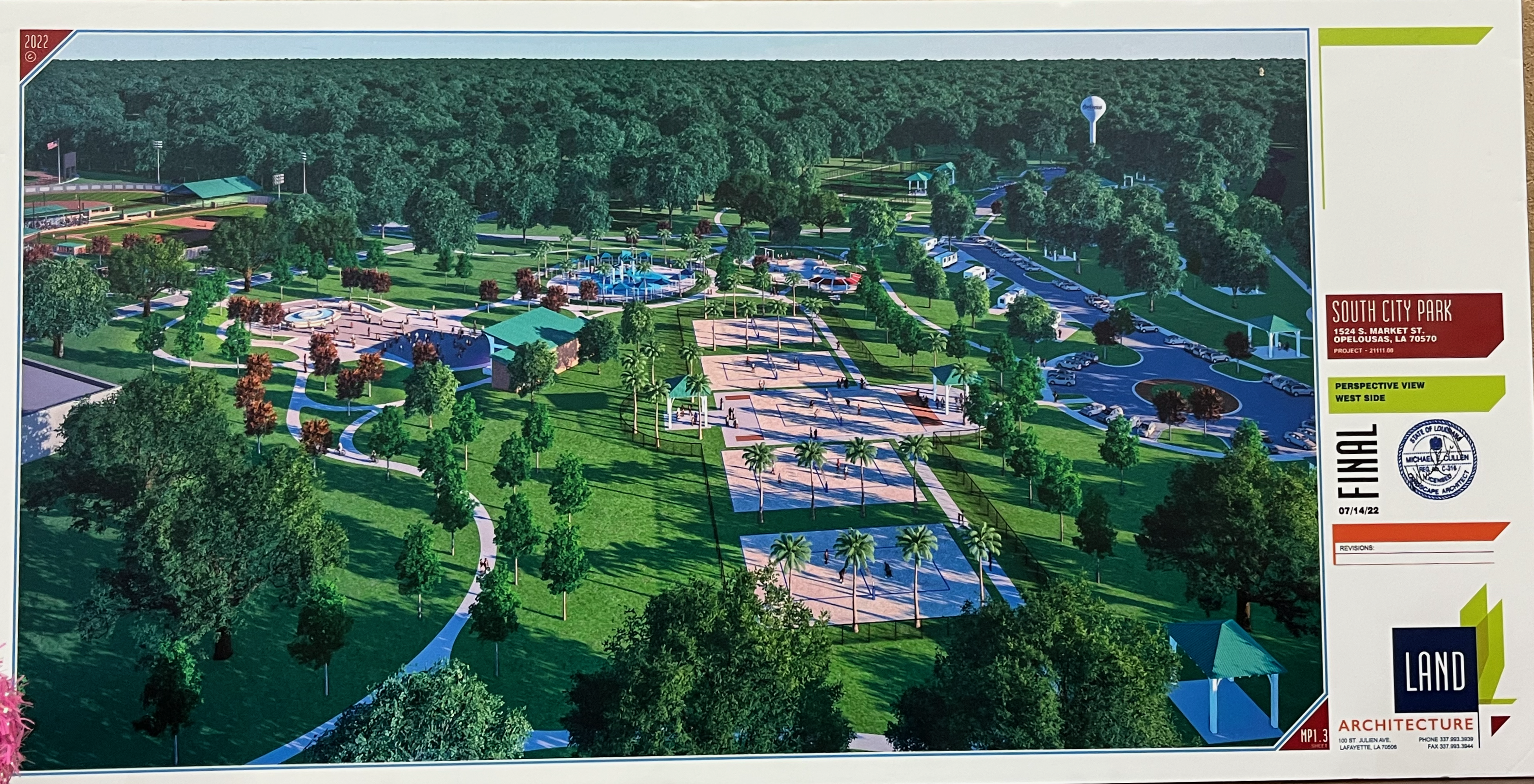
A photo by the author shows a south-facing rendering of the Conceptual Master Plan, created in 2022, which the city and ODDD continue to use while spending more money than ever in Opelousas’s 300-year history on non-infrastructure projects. This plan has never been published on the city’s or ODDD’s websites. To see it, you must visit the offices of St. Landry Economic Development on the I-49 Service Road, three miles from downtown. The plan proposes paving a large portion of the park’s natural green spaces for poorly researched sports facilities. Since no unbiased studies have been conducted, all decisions are based on whim and opinion rather than facts, surveys, or guidance from the legally mandated but unappointed Parks & Recreation Commission, the citizen-led “board of directors” for all public parks. This excessive spending and exclusionary planning reflect a severe neglect of duty by the city and ODDD.

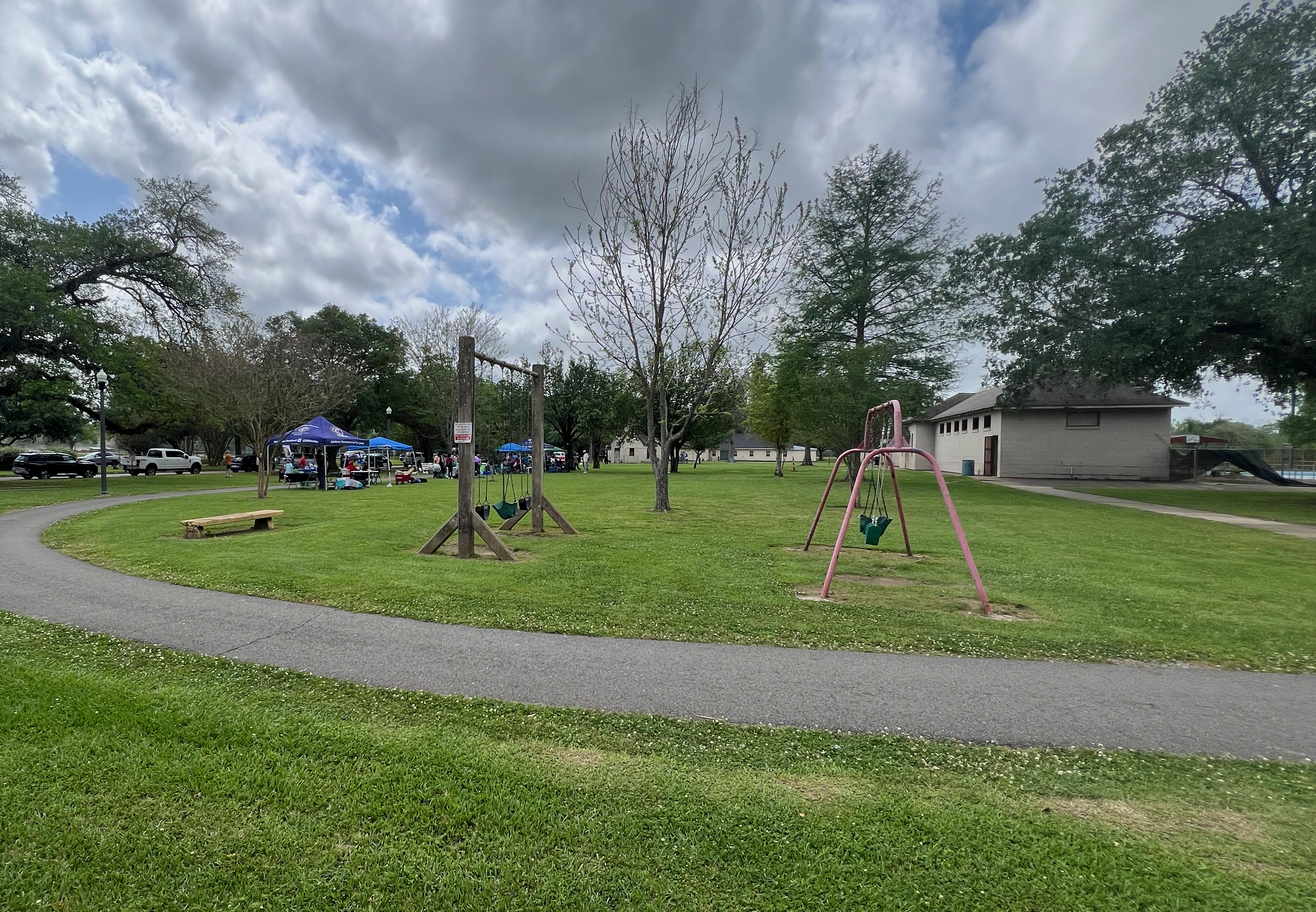
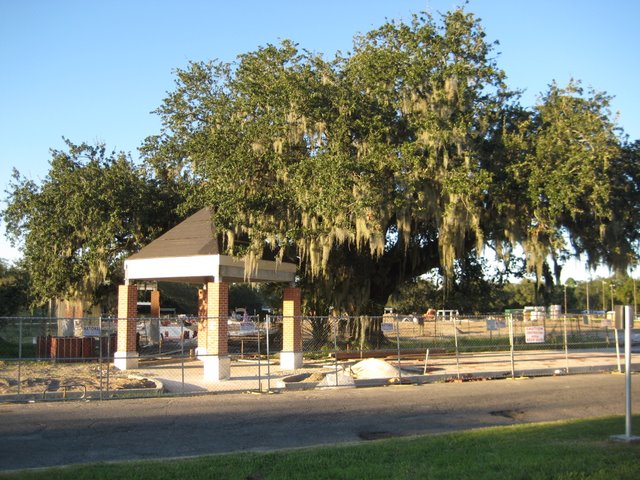
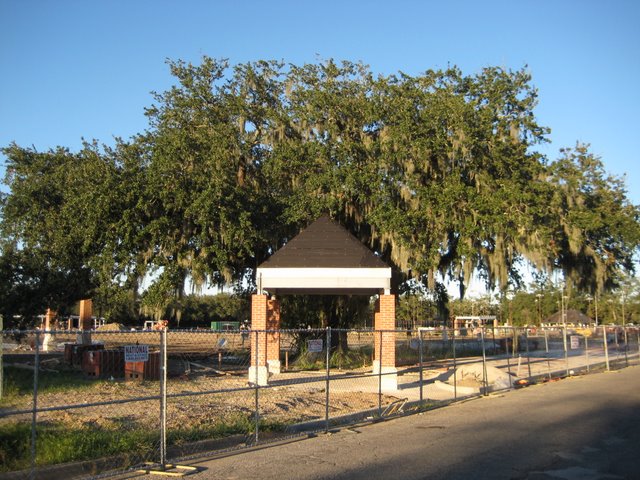
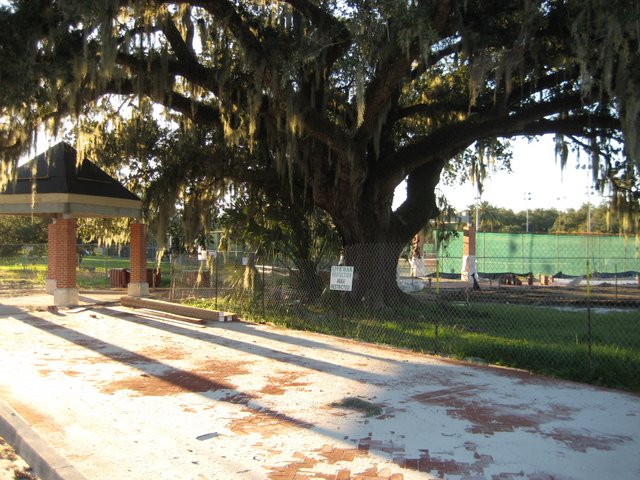
This part of the park is one of the most popular and well-utilized areas. These swingsets are for kids only, and the one on the left was built in 1939. Everything you see in this photo will be demolished.
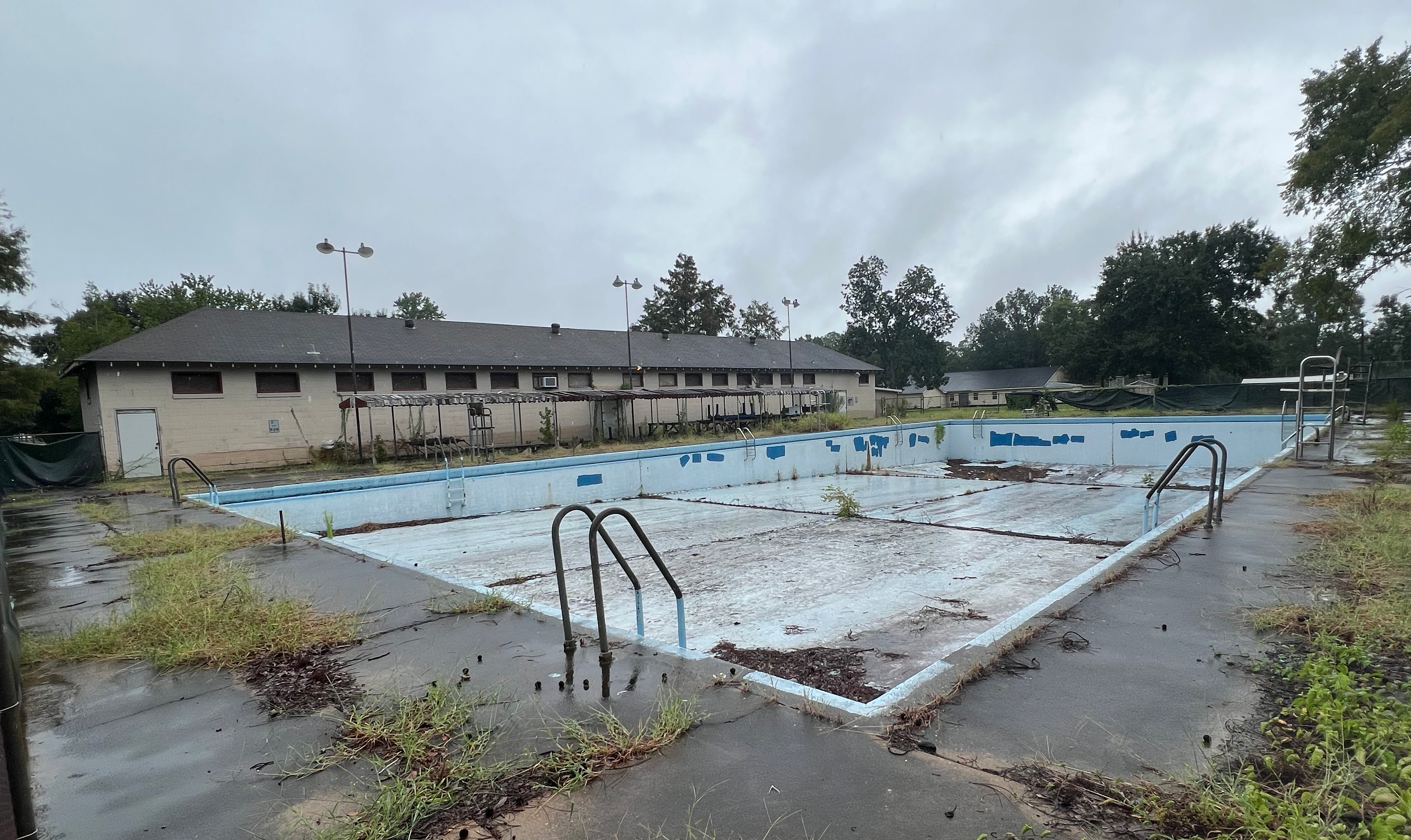
View of the current state of the pool. It’s in remarkably good shape, and there is no publicly available research indicating what it would cost to restore it. It is the largest pool in the city, and when it was constructed, it had its own well. The building is sturdy and in good condition. It was built with old-growth lumber and cinder blocks that are stronger than those available today. If demolished, it should be deconstructed and the materials salvaged.
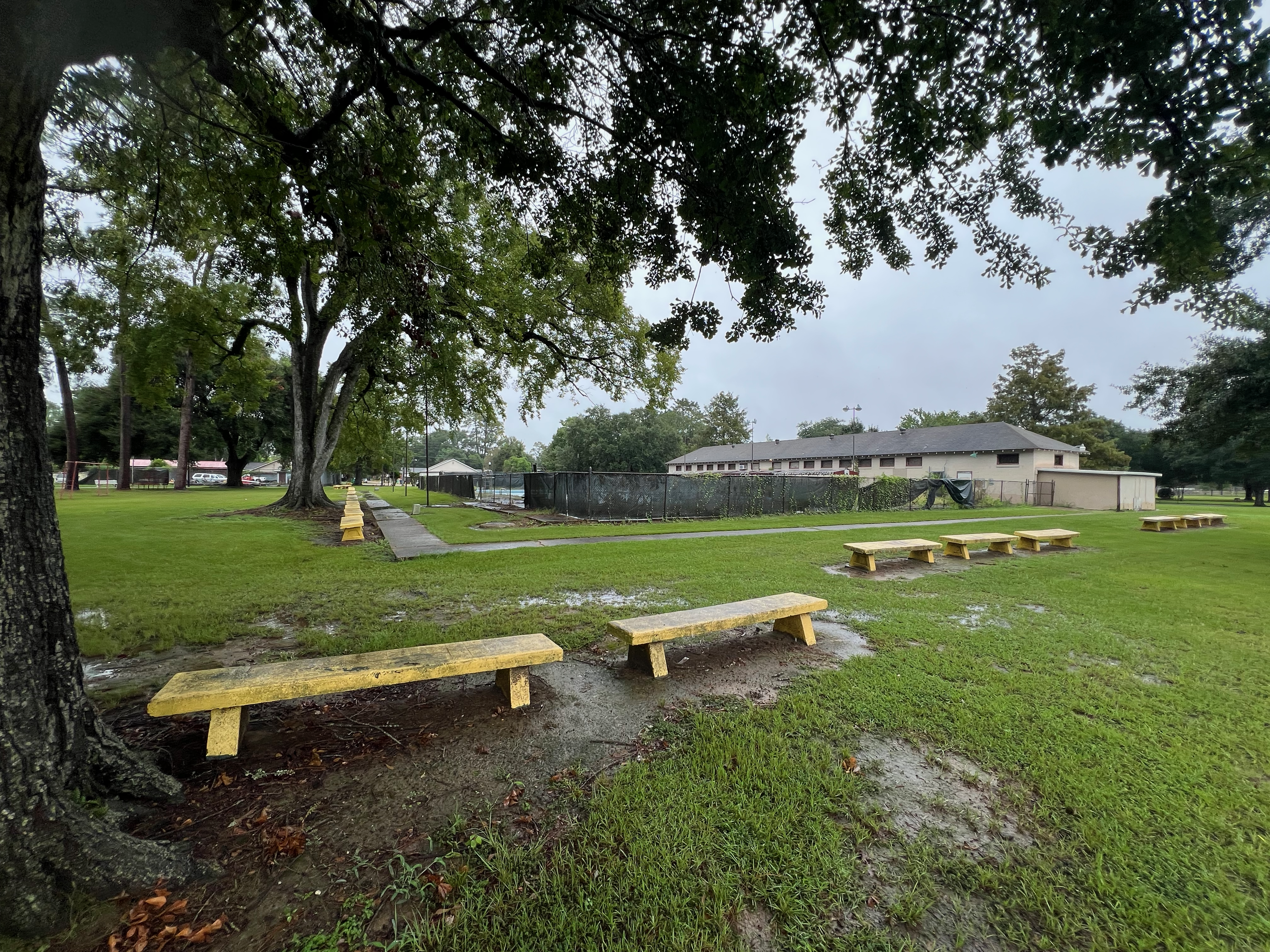
Rear view of the pool complex. Everything in this photo will be demolished.
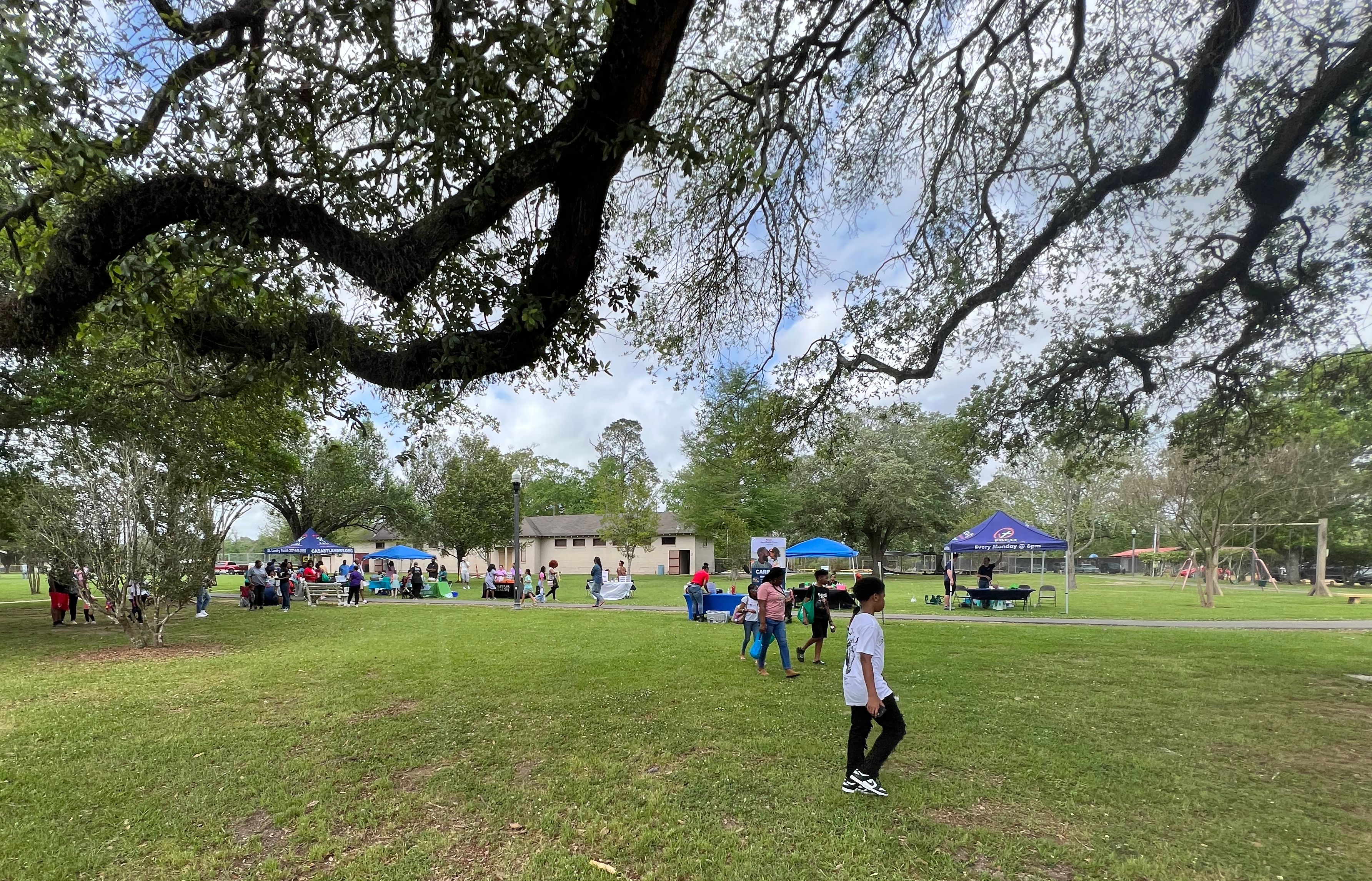
The site is popular for events and quiet contemplation. The walking path has become the most used feature in the park, attracting hundreds of walkers of all ages daily, many from nearby communities.

Lavish Dreams, Empty Coffers: A Reckoning in Opelousas

By Stephen C. Picou (May 1, 2025) For over a generation, Opelousas has relied on a one-cent sales tax to fund nearly a third of its annual operating budget. That tax expires on May 31, 2025, and reinstatement requires a yet-to-be-scheduled public vote. This week, the mayor called for a special meeting of the City Council to continue public notice in support of a ballot initiative to renew the tax. But it’s a classic scenario of too little, too late to stop the cut, because this situation should have been addressed years ago.

How did we end up in this position? It’s not complicated. All city leaders had to do was read the Legislative Auditor’s annual financial report, which plainly states that the tax will expire in 2025. However, those entrusted to plan responsibly repeatedly overlooked this fact.

Over the past fifteen years, under the heading of Sales and Use Tax, the audit shared the following: “Proceeds of the 1% sales and use tax was initially levied by authority of a special election held on April 5, 1975, and was extended through May 31, 2025.” This statement does not hide in footnotes or small print; it is part of the main body of the report. Yet, until March of this year, no one at City Hall flagged it as an urgent concern.

One glaring reason for this oversight is clear: for the past three years, city leaders have been consumed by an ambitious and costly plan to transform serene and bucolic South City Park into a busy, commercially supported, paved-over, high-end sports complex. Fueled by city funds and special sales tax revenue from the Opelousas Downtown Development District (ODDD), this project became their fixation, while more pressing fiscal responsibilities were neglected. 

Some of us expressed serious concerns early on, warning that the plan was overpriced, poorly justified, and pushed forward with little transparency or public input. Instead of addressing our concerns, officials dismissed them—and us.

In November, as it became clear that substantial cuts to federal funding for social safety nets were imminent and could devastate Opelousas, the mayor rejected calls to prepare the city by reducing costs on South Park initiatives. He insisted on “staying the course” with the extravagant park development plans, the most expensive non-infrastructure project in the 300-year history of Opelousas.

In the days leading up to Mardi Gras, someone—whose identity remains unknown—must have finally reviewed the annual Louisiana Legislative Auditor report on the city’s finances and discovered the impending May 31 fiscal cliff. It wasn’t until April that the council could initiate the required public notice period.

When the tax expires on May 31, potentially severe cuts will soon follow. Who and what might be on the chopping block are issues that have yet to be discussed publicly.

Though I, too, was unaware of the looming expiration, my advocacy for fiscal prudence during these trying times was timely but insufficient. My analysis, rooted in extensive experience in government, community planning and outreach, economic development, and support for public parks and the environment, was that the city could not afford the costly plans for South Park, and that expenses to improve Gardner Stadium could easily be reduced by more than half while still meeting the needs of the schools.

For more than a year, I politely and professionally presented my questions and observations to the ODDD month after month. Initially, I was ignored. However, in recent months, as I uncovered and revealed details they kept from the public, I have faced scorn and derision. Last month, during an outdoor public event, a board member yelled at me, calling me negative, a liar, and an asshole, in front of city managers who chuckled like schoolyard bullies. I found the incident disheartening and unacceptable. That board member should resign or be removed.

Louisiana has the second-worst poverty rate in the continental US, exceeding eighteen percent. Nearly a million residents live below the poverty line. In Opelousas, the poverty rate is thirty-four percent, and in one Census Tract, home to more than 4000 people, the rate surpasses fifty percent. South Park is not in that tract; the much-neglected North Park is.

Due to special taxing districts like the ODDD, Opelousas has one of the highest sales tax rates in the country. The ODDD is mismanaging this revenue along with its responsibilities. They meet far from downtown at a location outside their district and operate with insufficient transparency and inadequate public input. Millions are being funneled into South Park without the legally mandated guidance of the still-unappointed Parks and Recreation Commission. What has transpired over the past few years, while they and the mayor were distracted by their envy and ambitions for a high-end sports complex like the one in much wealthier and fast-growing Youngsville, is nothing short of a travesty.

In his second term, the mayor is responsible for this situation and for failing to read the annual reports that clearly outline the pending sales tax expiration. Unfortunately, the phrase “the buck stops here” has taken on a new and painful meaning in his case. The bucks are stopping. What happens next is unclear, but we will all suffer due to the failure to prioritize investment in the basic functions of this needy, crumbling town. 

People in Opelousas are not clamoring for pickleball; they need food, affordable housing, clean water, good schools, healthcare, and job opportunities. Building state-of-the-art, limited-use sports facilities in a poor town with crumbling infrastructure, rather than investing in infrastructure and business development, is like putting a fur coat on a starving person dying of heat stroke.

Opelousas is a unique and special place. Our history, cultural mix, and location make it a desirable place to live. With the right infrastructure investment and leadership mix, this city can be a great place. However, this can only be achieved when the people elect city (and parish) leaders who strive for greater transparency, are guided by science and data, follow the law, read the audits, and incorporate the public’s voice. It’s up to all of us to do better! 

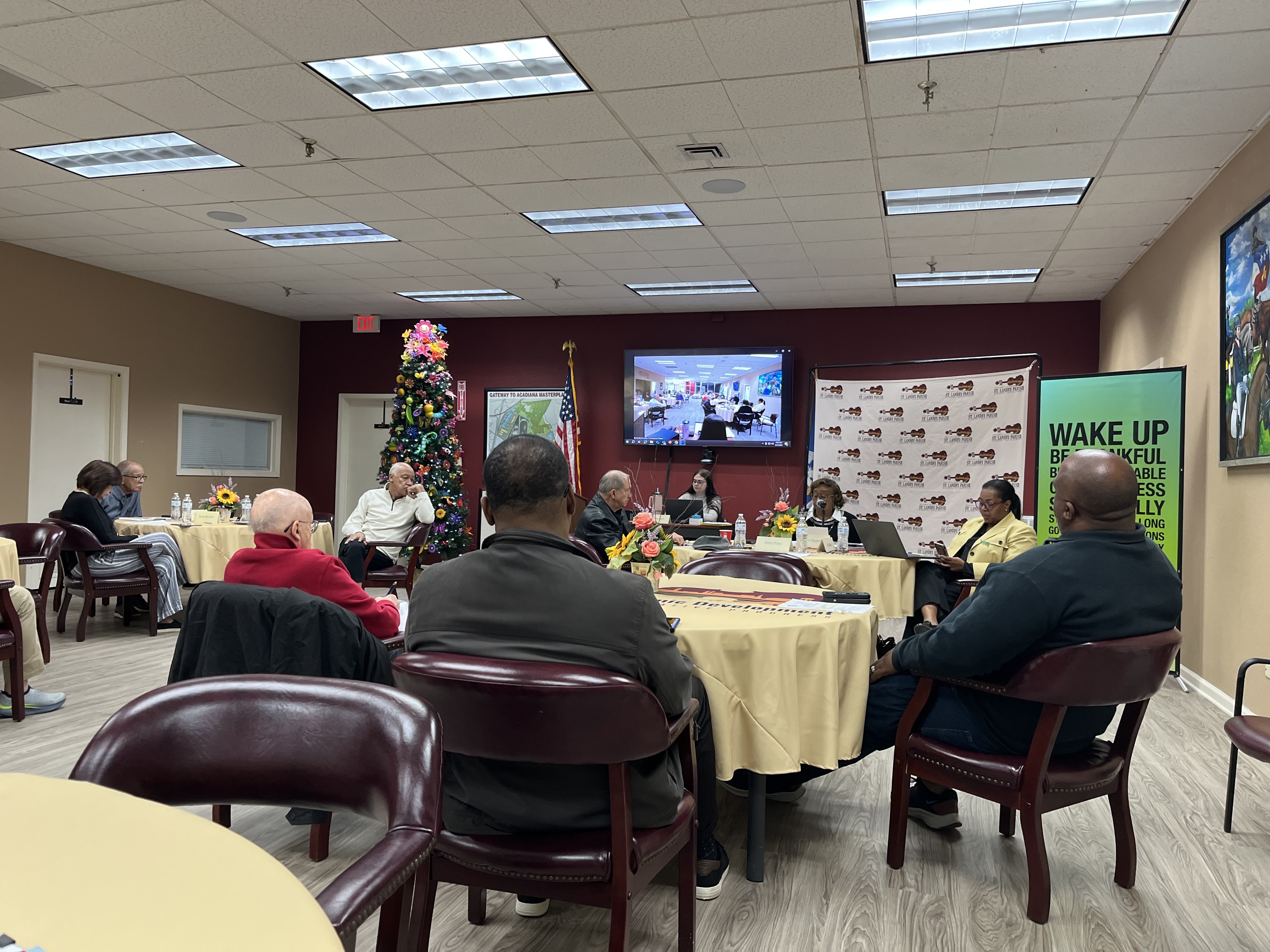
March 21, 2025, meeting of the Opelousas Downtown Development District. Held on the last Friday of the month at 9 am, outside the ODDD boundaries in the offices of the St. Landry Economic Development District (SLEDD), in the old Daily World building on the I-49 service road, nearly three miles by car from downtown.

Old Mandeville Oak Falls in the City and People Don’t Hear the Truth

A story in the Times-Picayune tells the sad tale of the death of yet another benevolent giant live oak in Louisiana. This time, it was a revered tree in Old Mandeville, killed by the usual suspect–humans. Yet the writer and the so-called expert got it all wrong. This tree did not die a natural death, it was a slow-motion murder by pavement and development. It didn’t have to happen, and it doesn’t have to continue to happen, but it will.

We lack the common sense to be responsible stewards of our landscape. To some, this isn’t a big deal. But the fact is, we will die if we continue to fail to address our ignorance. That tree is just one of thousands of ancient oaks lost to development. In too many cases, “tree coffins,” those concrete boxes in the sidewalk or parking lot in which we expect trees to “live” are ultimately the cause of their deaths.  You see it everywhere, from downtown streets to mall lots, older trees getting scraggly and dying in these small set-asides. It’s just plain stupid.

I’d love to do a documentary on this subject if anyone out there is interested in helping. It’s long overdue.

Here’s the article: http://www.nola.com/politics/index.ssf/2014/08/300-year-old_madisonville_oak.html

And here are the comments I posted:

It is clear that development under the canopy is what killed that tree. To have a concrete curb within mere feet of the trunk means that the root system was damaged, ripped up and smothered by paving. The number one cause of the death of urban trees is soil compaction. Older trees, that grew without interference for decades, are particularly sensitive to disturbance of their root zones. Think of a tree as a closed system where the roots recycle the fallen leaves and act like both lungs and intestines, processing nutrients, water and air in a metabolic system. Then imagine machines, shovels, people, digging, covering, and sealing this system. It often takes decades for these trees to die. 

Look at the large trees in Old Metairie, surrounded by pavement. They are spindly, which means the tree is shutting down branch systems in its attempts to adjust. Trees are like submarines or ships with watertight doors that close to protect the rest of the vessel. When you see dead branches, those branches are shut down and will not become leafy again. 

That tree in Old Mandeville was murdered by progress. It died a slow and public death. It did not die of old age. It died of ignorance, neglect, and by the assault of human development. 

The good news is that we know better and can do better. But it is too late for many of these sentient giants in whose branches we can sense the touch of the divine. Older trees need and deserve protection and that means public policies that honor their roles in the health and wellbeing of the land that supports and nurtures us. We need to give older trees space. The top 18 inches of soil where most of the life-giving aspects of biology give rise to not only trees, but us. We need to understand that soil is alive and that trees–and humans–need healthy, loose, alive soil if we are to thrive. 

Guidry is wrong. It was somebody’s fault, a very long time ago, when they failed to care about the space that tree needed, and put concrete and pavement over its roots, and began a process of starvation and strangulation that weakened it and caused it to die sooner than it should have. We killed this tree, probably generations ago, when we built the roads and sidewalks over its most sensitive space, its root systems.

But it’s not just about protection, if we are to have good public infrastructure and healthy communities to serve future generations, we need to understand that we must put the right tree, in the right place, planted at the right time. And that means a broader variety of native species, not more crape myrtles, and not live oaks planted in small spaces between sidewalks and roads and under power lines. This, too, is foolhardy.

Until we become better educated about tree biology and implement policies that protect older trees and guide future plantings, many more will die. And we lose something of ourselves every time.

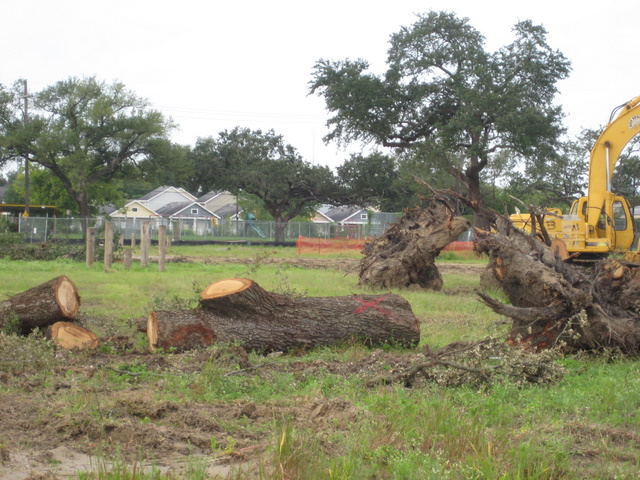
And here’s a picture of a tree killed by development after Katrina, since this article needs a dead tree and I’m not going to use the T-P’s pic.

One of the more than 30 mature oaks destroyed by the redevelopment of the Lafitte Projects on Orleans Ave.

Louisiana Music Commission to be Euthanized

Heartbeat of the LMC from 2005 to Present

After 4 years of lifeless existence under the direction of Chairwoman Maggie Warwick, the Louisiana Music Commission (LMC) is finally being put out of its misery. As reported in newspapers a few weeks ago, after July 1 the LMC will disappear. The articles quoted Ms. Warwick as saying she “supports eliminating it.” That’s like quoting Nero during the burning of Rome.

I would like to congratulate Ms. Warwick for her vision and talent in destroying the state’s (and nation’s) first agency dedicated exclusively to music. And thanks also to Lynn Ourso, the ostensible “director” of the LMC for directing it right into oblivion.

Though there were 15+ people appointed to serve on the LMC over the past 4 years, evidently none of them had the ability or power to grasp the controls and pull the LMC out of the dive it entered when it was eviscerated by (convicted and jailed former film office director) Mark Smith, then relocated and de-funded during the Blanco years (with the assistance of former Secretary of Louisiana Economic Development Mike Olivier). To those members who tried, really tried to represent the best interests of musicians, I say thank you. To those who colluded with and bought-in to the tired and ineffective leadership of Ms. Warwick and Mr. Ourso–and you know who you are–I say that the proof is in the pudding. And yours turned out to be a runny, smelly failure.

Since 2006, when they finally wrested control of the remnants of the LMC that had been systematically weakened by their team, observing the Warwick-Ourso tenure was like watching an elderly nursing home patient slowly, painfully gasp for breath–for month after month after month. It was a pathetic and absurd situation. And now it’s finally over.

The coroner has declared the patient dead but did not cite the cause. I say it was starvation, deprivation, and neglect compounded by malpractice and out-of-touch stewardship. And there will be no investigations, no funeral, no accurate recapitulation or memorial. This will likely be my last blog on that subject. And for that, I’m sure some will be grateful.

I’m proud of the work Ellis Marsalis, Bernie Cyrus and I did, but we were far from alone. From 1992 to 2006 literally hundreds of people helped us achieve unprecedented levels of support for Louisiana music. Because of our work, thousands of Louisiana musicians appeared on radio and television; tens of thousands of elementary school students statewide experienced living jazz history lessons; sites were saved (though many were lost); and attention to the health and welfare of working musicians was raised to new levels not surpassed until the tragedies of the failed levees of Katrina. You can read about what we did here: LMC Summary Report 1992-2003.

The LMC is dead. And though I spent 25+ years in music, it was always with a focus on environmental and social justice issues, on reducing our impact and helping the needy. Today, that’s what I do full time. I love music. I hope to play again some day. But I have a great job and a mission to bring positive change to the way we live. I am blessed to be where I am today.

Music is vital to our quality of life in Louisiana. Perhaps one day it will benefit from dedicated resources and support equal to what we give other industries such as agriculture, petrochemicals and film. One day. But not today.

Dear America,

20 million barrels of oil. 20 million. That’s what the USA uses every day. And nearly 50% of that oil is being burned each day as motor fuel. As of Monday, June 7, the BP Macondo well has spewed in the vicinity of 2,000,000 barrels with no end in sight. That’s the equivalent of 10% of one day’s oil use in the US.

“That’s what we need to get through the day!” exclaimed John Hofmeister (German for “yard master” to you etymological folks) the former head of Shell on a recent Larry King Show. In prior media appearances Hofmeister promoted his oil skimming ideas, his experiences in keeping a culture of safety at Shell, and his book. On King’s show he reverted to the Company Man and showed his Chamber of Commerce side, indulging in a couple too many Gripes on Behalf of the Oil Companies. He evaded James Carville’s challenge to explain and justify the cozy relationships Big Oil cultivated with government, including regulatory agencies and personnel, which will prove to be a major factor in the chain of events.

Then came T. Boone Pickens. He was visibly stressed. But he was clear as a bell. His overriding message, “It’s not time to panic.” He emphasized that we need to focus on stopping the well and dealing with the humanitarian and environmental response. When we get ahead of these demanding issues, then we can focus on inquiries and blame. But he knows it’s bad. “This event is like a 100 Year Storm.” He emphasized a military-like focus.

Which brings us to that ugly and horrible act of humanity: War.

For nearly 10 years we, our families, friends and neighbors have been paying the ultimate cost for our military actions around the world. The United States has been at war longer than World War ll, and as of June 7, longer than in Viet Nam, our longest war. We are paying the price in lives, money, energy and resources. Yet we blithely go about our days worrying more about phony celebrities, useless trends and pop culture than we do about being at war in foreign countries. We are sacrificing so much–lives, resources, energy, money, time–and we are so spoiled by all the power we wield with our smart phones, fast cars, fast cards and fast food–that we are oblivious, like slowly cooking frogs, to our impending doom.

Whether is it our diet and diabetes, or our vapid, mobile lifestyles and growing environmental crises, we are in a massive state of denial that only a large-scale psychological and spiritual transformation effort can least-painfully change. But it appears we’re incapable of changing without very painful and tragic impetus.

Hell, if even the increasingly unnecessary maiming and death of our best and brightest in military service isn’t compelling us to act, then perhaps Nature will. Or will it?

The root cause of this situation is our demand for oil and our addiction to dirty fossil fuels. Though we built our consumer society on what appears to be “cheap” fossil fuels, the true cost has never been fully factored or equitably distributed.

For 150 years, modern civilization has depended upon exploitation, extraction, manufacturing and distribution of natural resources, usually directed from the less powerful to the more powerful.

And now this. The BP oil disaster is well on its way to being the worst singular petroleum catastrophe in world history, impacting far more than just Louisiana and the Gulf of Mexico.

The site of the BP Deepwater Horizon and areas impacted by the catastrophe are the uterus and placenta of the Gulf Stream. And a breathtaking array of biology upon which humans on multiple continents depend is threatened. We cannot determine how long it will take to recover, even after the well is stopped. Years? Decades? In whose lifetime will these land and water ecosystems return to the diversity and volume of April 2010?

Some 30% of the USA’s seafood comes from these estuaries.  But, that’s only measuring it in the USA. Many of the species most seriously affected by this spill migrate between continents. There could be shortages of fish products around the world.

But let us not lose sight of the biggest tragedy–us. This is a growing humanitarian crisis.

In Louisiana, Mississippi, Alabama, Florida and Texas, hundreds of thousands of jobs are threatened and tens of thousands of jobs are at a standstill or waiting to be told to stop. This means that thousands of families and households are not receiving income.

Second Harvest has been overwhelmed trying to bring food to families in Louisiana. With the assistance of Catholic Charities, the New Orleans Food & Farm Network and others, a growing number of volunteers are participating in distributing food to the hardworking, diverse patchwork of celebrated cultures of people who define the character of Louisiana to the world but who are not emotionally prepared to be dependent upon charities.

As efforts mount, words get stronger. Beth Galante calls us to action in the May 2010 Global Green newsletter, “The humanitarian crisis is the first priority – every single coastal resident has had their job destroyed or damaged for the foreseeable future, from the fishermen to the local restaurant staff to the hotel maids, and it is imperative that aggressive action ensures that they can keep food on their families’ tables, make mortgage and credit card payments, and get rapid access to comprehensive mental health care services.”

Why are these things happening? Why is this how we are going to spend the 5th Anniversary of the tragedy of the failed levees after Katrina? Fundamentally because a perfect storm of stupidity has swept this country for the past few decades. We’ve had all the information, all the warnings we needed to make changes. We are lost in consumerism. We are not saving energy. We are not taking the steps needed to reduce our impact. We are indeed living in The Age of Stupid. We are at war on two fronts, sacrificing our friends, families and economy to the mighty Oil God. And we won’t change our ways. We are ultimately at war with ourselves.

Will this event change us? There is no doubt that Louisiana is now forever changed, perhaps for generations. But will the USA change its ways and reduce our dependence upon dirty fossil fuels? 11 dead in the Gulf and 15 dead in the mines in 2010 don’t seem to matter much. More than 5000 of our finest sacrificed in Iraq and Afghanistan seems to make no difference. We blithely drive, shop and waste and waste and waste. We gossip about pop “stars” ruining their lives while our own are ruined by ignorance,  inactivity, bad food and the resulting obesity, diabetes, heart disease and cancer. The fact that the current generation is the first in modern times to be expected to live shorter lives than their parents doesn’t even seem to be changing people’s attitudes much. We are speeding pedal to the metal into a dead end.

So I have a request to the USA: pray. No, I’m not a religious person. But I am desperate. And in desperation, most folks suddenly find God. Besides, other than cutting your driving by at least 20% and pledging to do better, there’s not much you can do.

So, Dear America, pray. And pray hard and for a long, long time. It might not slow the oil. But at least it will slow you down.

Climatology vs. Meteorology: Why Do So Many Weather Personalities Deny Climate Change?

OK, time to address a seriously Big Issue: Climate Change. I’ll try to keep this one simple.

For some reason, meteorologists have quite a few prominent deniers in their ranks. They purport to be experts because they are involved in reporting on weather. But, weather is not climate. And for TV weather “forecasters” to make claims that humans cannot and do not impact climate is a logical fallacy; because, they are not climate scientists. Meteorologists typically have a bachelors degree. Scientists, well, they not only are bound by rigid, peer-review methodologies; but, they have years of education above and beyond that of a typical TV weather personality. And research trumps opinion.

So here’s my take: Climate is to weather what the digestive system is to feces and urine. Climatologists are like medical doctors analyzing a system. Meteorologists are like commentators observing the process and predicting the arrival and general composition of an end product.

To put it crudely, when it comes to climate science, TV weather personalities barely know shit. And if it wasn’t for government investment in weather and climate resources—socialized science!—TV weather personalities wouldn’t be able to smile at us daily and make their predictions.

We live in a tiny bubble of life for which we can find no comparison in the known Universe. And on the scale of the Universe, our blue sphere is but an atom.

The biosphere is a relatively small part of Earth. The zone of life-giving atmosphere and land for humans is only a couple of miles thick. We undeniably have–and continue to–profoundly affect systems in the biosphere that normally span tens of thousands, even millions, of years. Whether it be the coastline of Louisiana; the expanding mats of plastic and petrochemical waste in the oceans; the prevalence of 20th century man-made chemical compounds in the tissues of humans, mammals and other species; or the ongoing and massive extinction of species at a rate 1000 times what should be normal–we ARE affecting Life on Earth.

Our short time in this realm of the living can be many things. The impact of one human’s brief life and work can linger for thousands of years. We see that in the wisdom and examples of religious figures, philosophers, scientists and inventors, and those who sacrificed themselves on the altar of basic human rights. If we can have such a positive impact, it is only logical to assume that we can have a long term negative impact.

We are messy and selfish creatures; but, we have the intelligence and imagination to reach the stars, and to live compassionate and productive lives. We know that many of the things we do are harmful to our future both individually and collectively. Climate scientists have clearly shown us that we must take bold steps now to reduce the chances of catastrophic harm to ourselves. This is not about saving the planet. This is about saving us.

The next time you see or hear a media weather personality dismissing the human realities of climate change, contact that media company and express your frustration. Tell them you’re tuning them out for another channel. Media companies understand that language. Vote with your voice and with the remote control.

We live in the most compassionate time in the history of the human race. We instantly communicate tragedies and elicit immediate response from an increasingly aware and generous international population. This is potentially the most transformative era in human history. But naysayers and deniers, many of whom are profiting handsomely from their contrariness, are undermining our response to this global emergency. And transformation can go either way, good or bad. We have no time to waste.

It’s the ultimate “lead, follow or get out of the way” moment. What are you going to do?

NOTE: The Age of Stupid is currently airing on Planet Green. Even if you don’t have cable, you can watch this powerful and compelling movie online. Do it today. If we don’t take immediate action to reduce our impact both individually and collectively, the next generations face catastrophic change.

Thoughts on the LSU hospital plans

Now that the issue (fill in the blank based on your views/knowledge: is, appears to be, might be, might never be) settled, it’s time to discuss what will happen next. We need to focus on better building techniques, sustainability and resource management. The demolition of buildings needs to be well managed. We must recycle as much of the irreplaceable old-growth lumber and components as possible. There should be a consortium of all the city’s materials recycling entities to handle this. NOLARecycles and the Green Collaborative represent collective efforts and can be tapped for expertise.

There will be lead paint issues, asbestos issues. But we have an enormous opportunity to set new examples of Best Practices in recycling and re-use, and that means economic development. Now is the time for leaders of the Biosciences District to seek assistance from area green organizations and leadership. I can see several sites processing these materials and the possibility of reinvigorating our rebuilding resource organizations with this effort.

A huge concern of this project is water management. Stormwater runoff from this site will be copious. There are many in this area who are well-versed in sustainable development techniques. We must make this site a shining example that exceeds anything ever built in New Orleans when it comes to water systems and ecological footprint. The development team needs to delve deeply into Low Impact Development principles, Regenerative Design techniques and Biomimicry concepts. These should be Living Buildings where healing takes place with the assistance of Nature. And they need to be leading examples of resilience and mitigation. We can make the hospitals state of the art in more than just medicine, but also in how to build in our hot, humid, windy environment and for our soil types.

There’s no doubt this project can be measured in both dollars and lives. There’s no doubt Charity Hospital was prevented from opening in the months after the flood by those seeking to build the new hospital. We can (and probably will) debate this issue for decades; because, for too many, the cost was measured in the loss of loved ones like Cayne Miceli. And there is no doubt that far too many of those lives were lost due to a plethora of failures that reach their nadir in the mismanagement and brutality of the operations of Orleans Parish Prison. Unfortunately for us, today’s funding decision changes nothing about life in New Orleans in that regard until both the hospital and new jail are completed, years from now.

So I say it’s time for us to come together and make these entities the best they can be. There will be opportunities for involvement, for cooperation and compromise in the coming days. I intend to do my part, and hope that everyone who worked so hard on both sides will do theirs, to ensure that these projects make New Orleans stronger and become the kind of assets that will improve our lives and economy.

Let’s not settle for the same kind of management, design and construction practices of the past. As yesterday’s Green Collaborative Platform for Candidates proposes, we know how to grow the economy of New Orleans. These hospitals need to be catalysts for green/sustainable development. It’s time to step up, demand the best and build our future.

City Park: Green Fills the Holes in The Great Concrete and Roosevelt Mall Smells Like Money

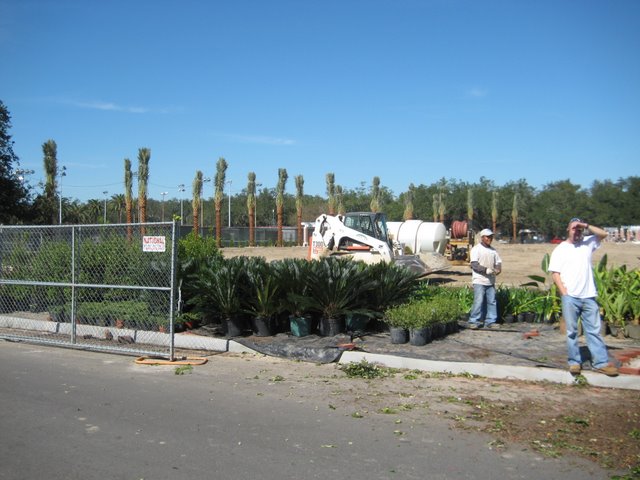
Non-native plants ready to plugged into the waiting holes of the hand laid brick and concrete holes in the nearly finished Great Lawn.
Non-native plants ready to be plugged into the hand-laid brick and concrete holes in the nearly finished Great Lawn.

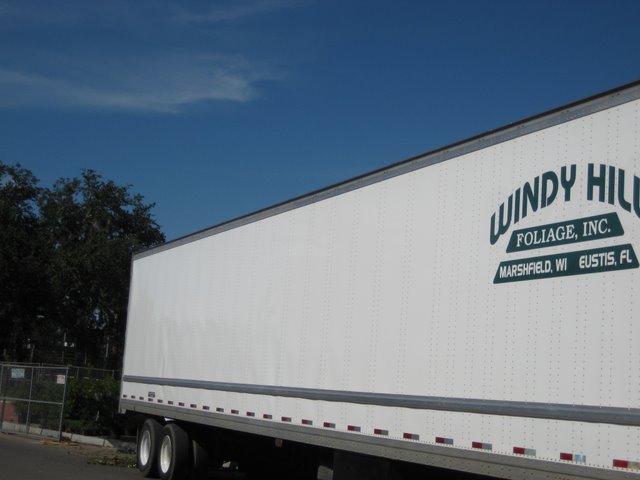
This week an 18 wheeler delivered a truckload of plants for the final stages of The Great Concrete Lawn in City Park. This multi-million dollar project sure provided a lot of money and work. That’s economic development. And that truckload of plants sure helped keep people employed—in Florida!

As the photo shows, a truckload of non-native species plants was delivered from a company with locations in Wisconsin and Florida. Cashio Cochran LLC, whose designs have disguised, smothered and killed the native landscape of City Park for the past couple of decades, ensured their role in history as perhaps the most un-enlightened park designers of the past half century with this last implantation of imported plant life.

Economic development in City Park for an out of state plant provider.
Economic development in City Park...for an out of state plant provider.

But all is not lost…..yet. After this past week’s debacle of destruction, the Voodoo Music Experience (VME), tore up the soil under some of the most beautiful and fragile oaks in the park, we at least can look forward to when these non-native palms, ginger and other decorative plants blossom and bloom and hide those ugly old oaks that obviously were in the way of Cashio Cochran’s Eisenhower Era vision of tidy design.

IMG_1284
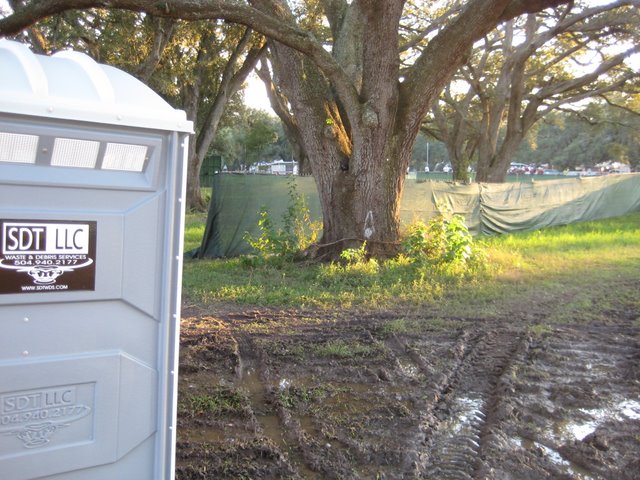
City Park brings friends together for the production of the Voodoo Music Experience. Rehage and Torres treat the park like, well, like what goes in that portabe potty.

What a year it’s been in City Park! Though I’ve only been blogging about it since March, we’ve seen bad decisions multiply like invasive species. The ironies pile up, too. The post-VME smell on Roosevelt Mall, despite the preponderance of familiar bull horns on the portable toilets, isn’t the aroma of the past couple of years in the French Quarter, but that of Bourbon Street of years gone by–a sour, sickly smell that this week’s blooming Sweet Olives can’t disguise. The damage, the smell, the bad design, the out of state plants, the heavy equipment crushing soil and roots, I guess it all smells like money to somebody. Or else we’d be hearing more than just me moaning and griping.

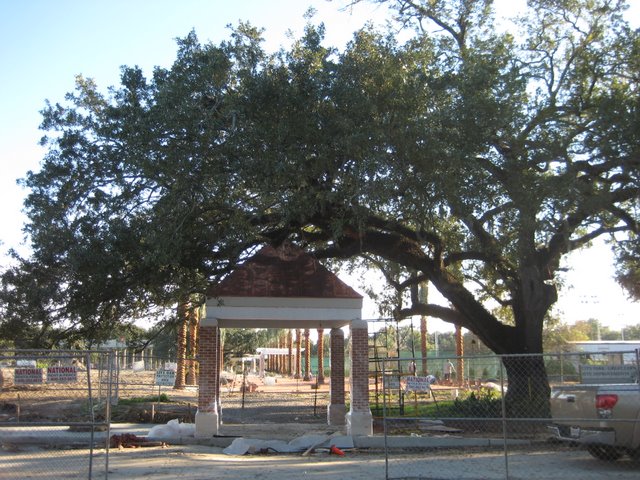
That copper roof will turn a nice shade of green. You  think the designers planned for that to match the tree?
That copper roof will turn a nice shade of green. You think the designers planned for that to match the tree?

But, I guess I’m lucky. Unlike the those ever-more scraggly old oaks, I get to go home and put those smells and sights out of my mind whenever I want. And I have to assume that the folks who work there find all this quite normal since it keeps happening again and again and again and again and again…………..

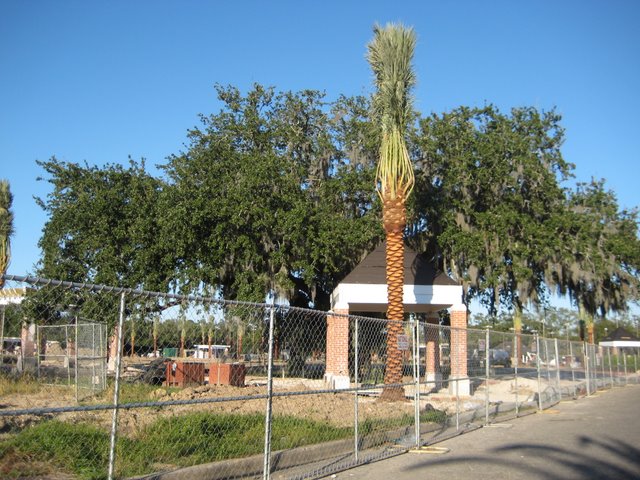
Cashio Cochran's big flourish--a palm in front of a pyramid hat building in front of an ancient live oak. Bam!
Cashio Cochran's big flourish--a palm in front of a pyramid hat building in front of an ancient live oak. BAM!

City Park Soil Remediation Project: One Step Forward

IMG_1110
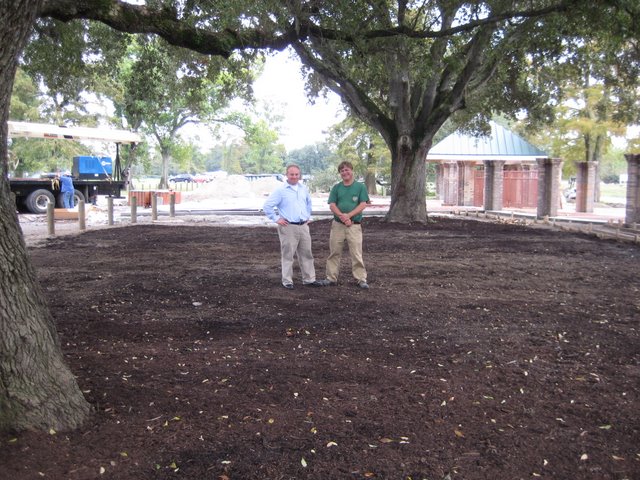
Newly hired LSU AgCenter horticultural agent Russell Harris (L) stands with La. Dept. of Agriculture & Forestry arborist Tom Campbell (R) under two live oaks where soil was aerated, remediated and improved at the new City Park Dog Park.

City Park’s consulting arborist, Tom Campbell, working with contract arborist Tom Benton, has taken the first step in best practices for live oaks with a soil remediation project for two trees at the site of the new dog park. This location, where cars parked for decades and compressed the soil, was a great candidate for the effort.

Working with what arborists call an “air knife” that injects compressed air into the soil, loosening it and allowing air, water and nutrients to flow, the soil was also amended with organic matter and now looks rich and life-giving.

The site will now  serve as a test for future efforts. The next likely candidate area is the playground near the Peristyle, where years of human activity have compressed the soil and badly damaged many mature trees.

Kudos to Tom Campbell and City Park for taking the initiative to begin this much-needed process of restoration and best practices!

Cashio Cochran Takes “Risks” in City Park

Just what every ancient live oak needs: a man-made building.

Thanks to Lolis Elie and the Times-Picayune for telling the story of how I’ve been trying to promote best practices for tree care in our area.

This is just a brief post for new visitors. I’ll be updating in greater detail later. But, I have to address a statement made by landscape architect Carlos Cashio in today’s article. He says that “sometimes you take risks to accomplish certain design elements.” My response is NO, YOU DO NOT TAKE RISKS WITH MATURE LIVE OAKS IN CITY PARK. Ever.

I post these pictures to let you decide for yourself. What is more beautiful: Carlos Cashio’s concrete and brick pyramid-hat building or God’s ancient live oak?

Architectural symmetry is more important to Cashio Cochran than the beauty of an older live oak.

It’s past time to let some of the true stewards and visionaries in the field of landscape architecture shape the future of this precious place. We already know what Cashio Cochran can do, and it does not meet my standards of the concept of legacy.

After I challenged this construction, sand was used under the brick rather than concrete. However, sand has little pore space to allow air, water and nutrients to reach the tree roots, so the tree will suffer so we can walk on bricks. Harming the oaks steals from the future and violates the standards of stewardship needed for the park.
After I challenged this construction, sand was used under the brick rather than concrete. However, sand has little pore space to allow air, water and nutrients to reach the tree roots, so the tree will suffer so we can walk on bricks. Harming the oaks steals from the future and violates our history.