
How Opelousas leaders are ignoring federal rules, silencing public input, and risking long-term damage to the city’s future.
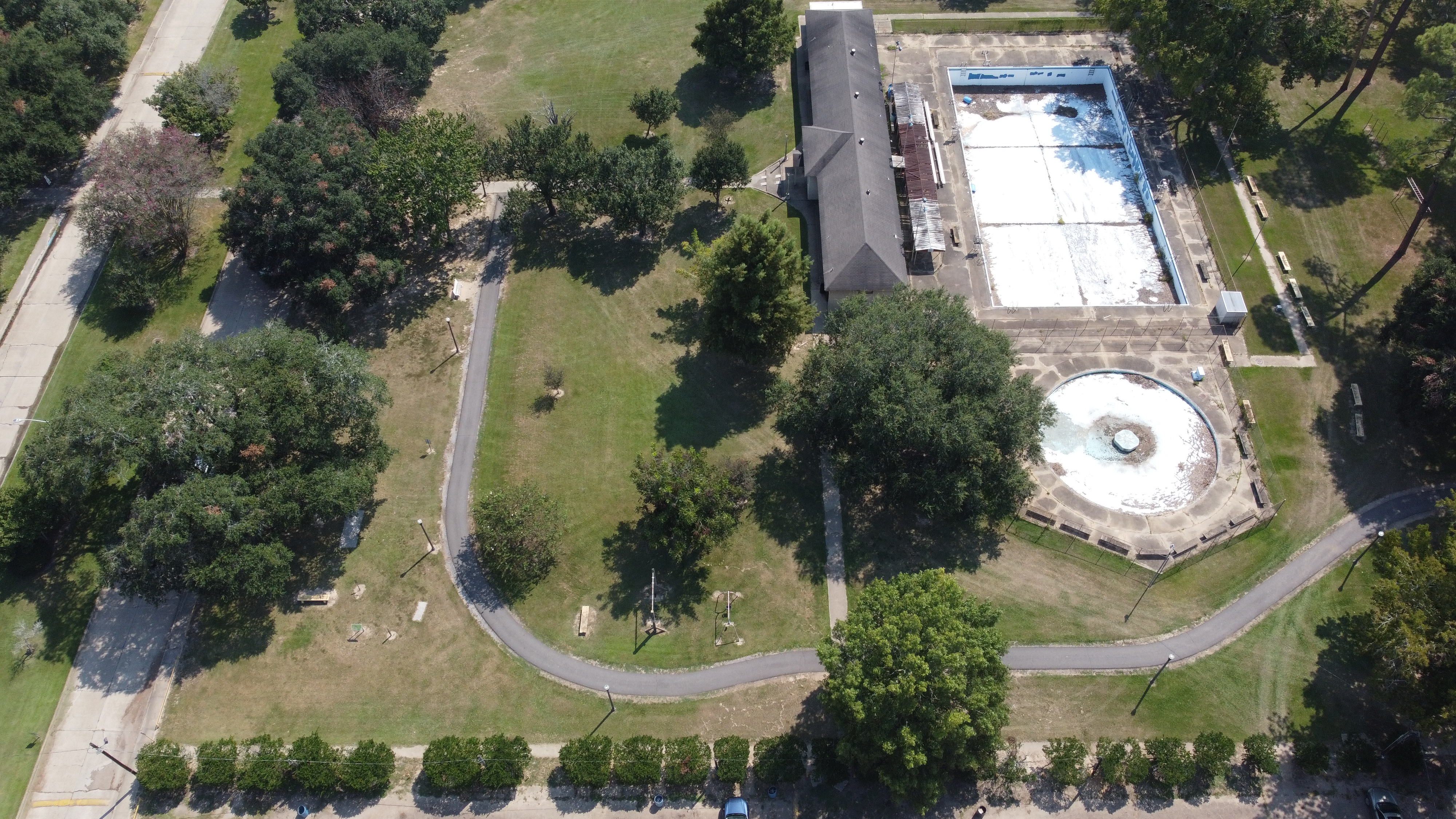
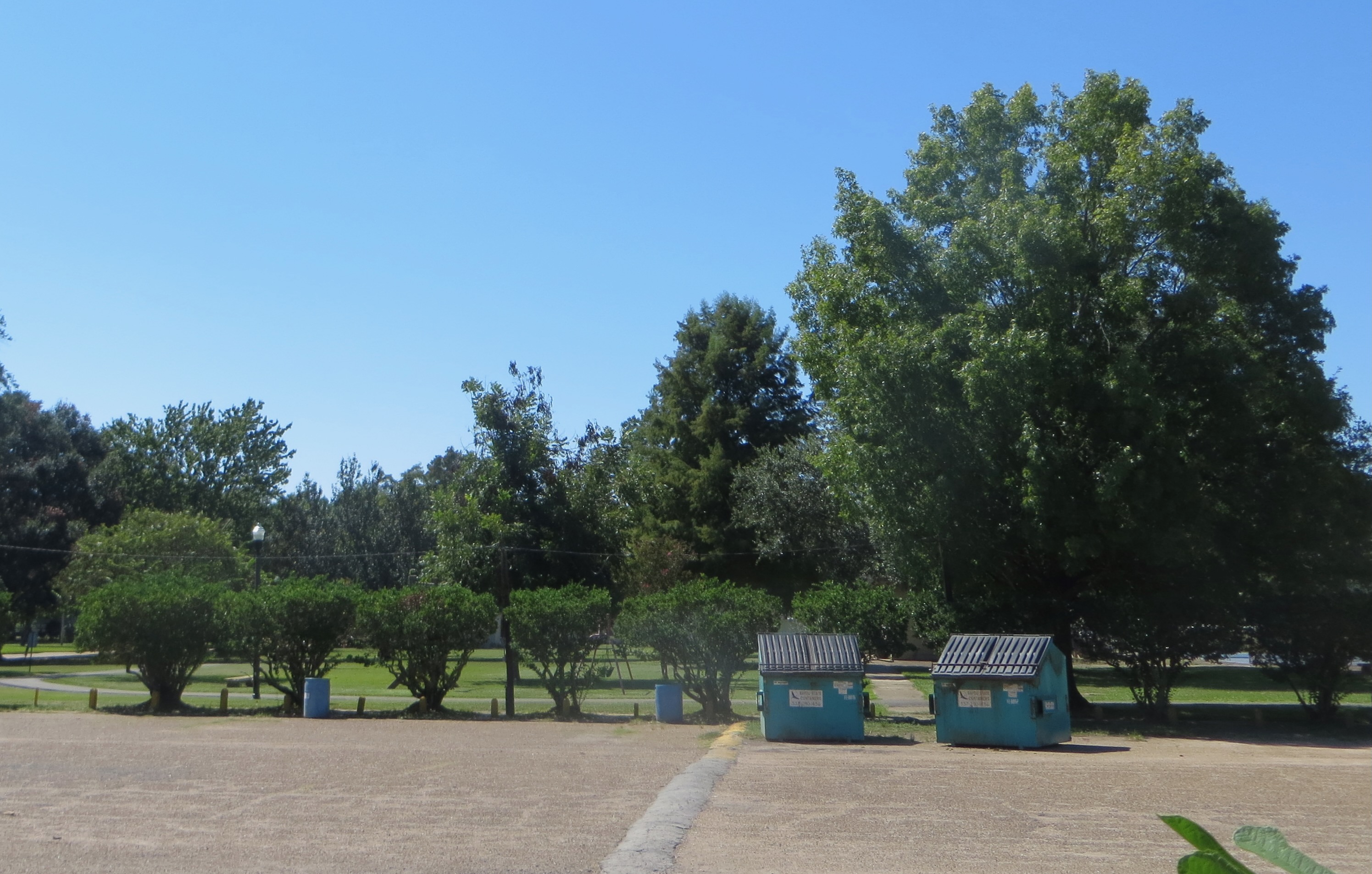
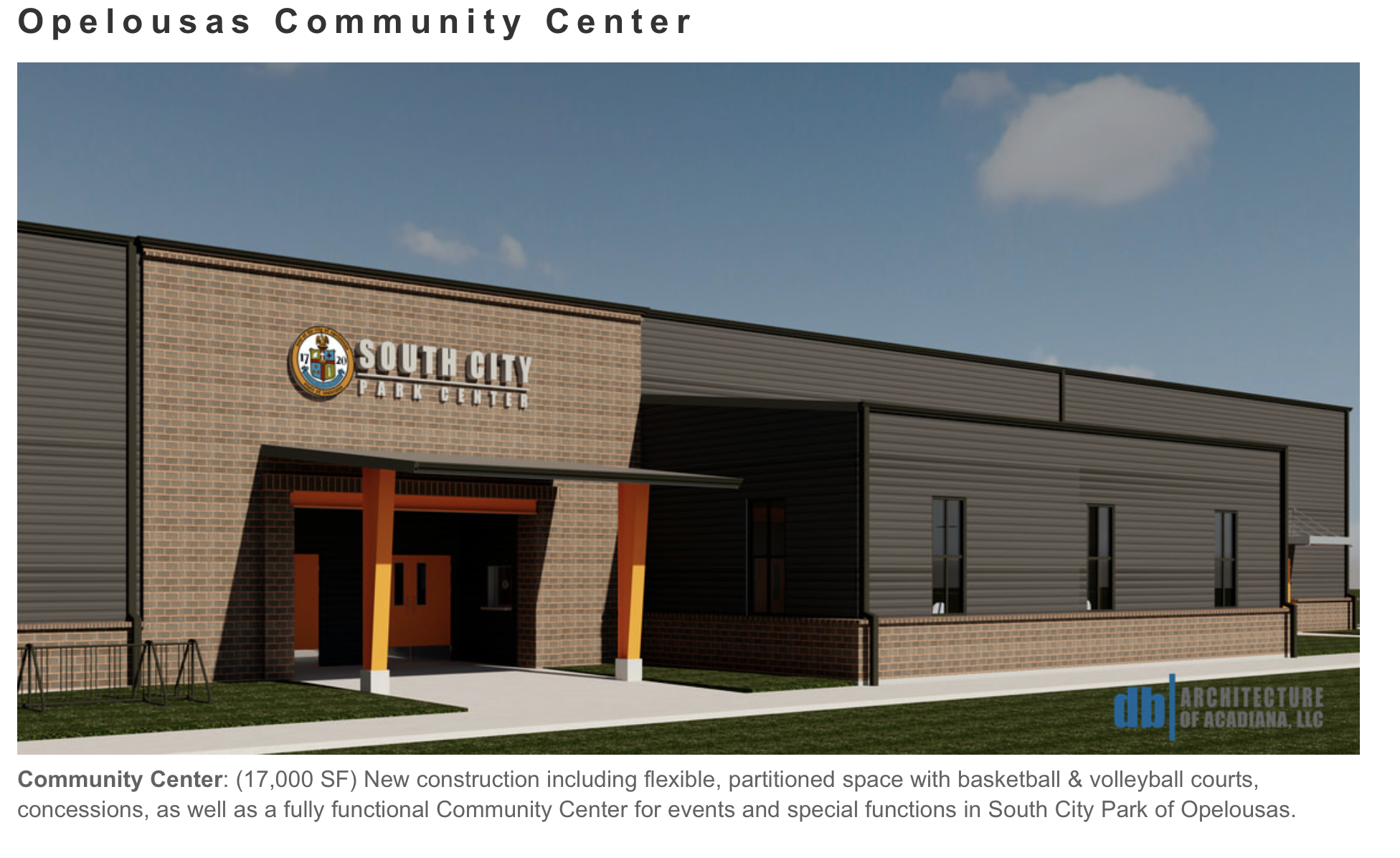
(September 12, 2025)This week, city officials—including the mayor, the CAO, the parks director, ODDD leaders and SLED staff, State Representative Dustin Miller, and the project architect—hosted ConnectLA representatives at South City Park to showcase the proposed site of a new multipurpose center. What they toured, however, is a public green space the city now plans to clear-cut, and a historic public pool and bathhouse the administration aims to demolish. Any day now, the city is expected to release the RFP for demolition and construction. Yet the public has still not been shown the final plans, nor been allowed to weigh in.
This entire process is unfolding in violation of both the spirit and likely the letter of federal grant guidelines. Funding for the proposed facility is to come from ConnectLA’s Gumbo grant program, with dollars from the federal Broadband Equity Access and Deployment Program, which is intended to support community connectivity and broadband access. These funds are governed by strict federal standards 1 under 2 CFR Part 200 2, the National Historic Preservation Act (NHPA) 3, and the National Environmental Policy Act (NEPA) 4.
Federal rules require that costs be reasonable, necessary, and well-documented. Publicly owned properties must be planned and procured through a transparent, equitable process. Decisions to demolish existing infrastructure and natural amenities—like the mature trees and historic pool in South Park—require environmental and historic preservation review. Yet no such analysis has been conducted and shared publicly, and the city has selected a more expensive, destructive, and less inclusive path without justification. This puts the project at serious risk of violating federal cost principles, procurement standards, and preservation rules.
At the September council meeting, Councilman John Guilbeau asked why the legally required Parks & Recreation Commission still does not exist. The city attorney, whose primary office is in Lafayette, shrugged off the question, calling it merely an “advisory body.” That is an incomplete answer. According to the city code, the Parks & Recreation Commission is the public’s policymaking voice on all park matters. Without it, there is no lawful framework for planning, budgeting, or evaluating this facility.
This lack of legal structure coincides with a dangerously irresponsible economic context. The Opelousas economy is facing massive pressure from federal SNAP cuts, rising health insurance costs, inflation, and looming reductions in Medicaid and Medicare reimbursements. Local health care systems are already seeing cuts. Additionally, the city budget lost nearly $1 million in sales tax revenue over the summer due to the mayor’s and council’s failure to thoroughly read the annual city audit. Overall, as these effects increase over the coming months and years, our small economy could lose up to $3 million each month in purchasing power due to federal cuts, rising health insurance costs, inflation, and shifts in spending.
Meanwhile, newly released census data shows the national median household income is $83,730. In Opelousas, it’s less than $26,000. This gap is staggering. And it comes at a time when birth rates are declining and the city is not growing. Fewer children, fewer working-age adults, decreasing enrollment, and greater poverty mean we must spend public dollars with discipline and wisdom.
Instead, the mayor’s team has chosen a path of secrecy and spectacle. They plan to destroy a beloved, shaded section of South Park to build a sports-centered facility that may ultimately serve tournaments more than residents. They awarded several major city projects to a single Lafayette-based architect without transparency. They are adding debt and obligations without publishing operations budgets or maintenance costs. And they have never held a single citywide meeting to ask what residents want. (Here’s how a similar situation played out for New Orleans City Park.)
This is not how a poor city builds trust. It is not how public money should be spent. And it is not compliant with federal law.
Before any demolition occurs, the City of Opelousas must:
- Reinstate and activate the Parks & Recreation Commission.
- Halt all demolition and site clearing activities until a full environmental and legal review is completed.
- Release the full project designs, budgets, and justification documents.
- Explain the selection process and total payments to the project architect.
- Conduct public meetings in every district to gather input and assess alternatives.
South Park is not a blank canvas for out-of-town architects and a small group of politicians and ODDD board members. It is one of the few remaining green spaces in the heart of the city—a space that serves people of all ages and abilities, families, seniors, walkers, artists, and outdoor gatherings of all kinds.
Opelousas doesn’t need another sports monument. It needs housing, jobs, clean water, safe streets, and a responsive government.
Let’s stop this demolition before it starts. And let’s rebuild the public process before we build anything else.
Without your voice, they are empowered to change the park permanently, and we’ll never get back that beautiful space. Tell your neighbors. Tell the mayor and council members. Tell your legislators. Tell ConnectLA. This is our park. This is our city. You are the key to Opelousas being the best it can be!
Here are their email addresses:
Mayor Julius Alsandor: mayoralsandor@cityofopelousas.com
John Guilbeaux: jguilbeaux@cityofopelousas.com
Delita Rubin-Broussard: drubinbroussard@cityofopelousas.com
Charles Cummings: ccummings@cityofopelousas.com
Sherrel Roberts: sroberts@cityofopelousas.com
Chasity Davis: cdavis@cityofopelousas.com
Marvin Richard: mrichard@cityofopelousas.com
City Attorney Travis Broussard: tbroussard@cityofopelousas.com
City Chief Administrative Officer Anthony Daniel: ADANIEL@cityofopelousas.com
ODDD Chair Lena Charles: lenafcharles@bellsouth.net
Rep. Dustin Miller: millerd@legis.la.gov
ConnectLA: connect@la.gov
The most common way people give up their power is by thinking they don’t have any. Alice Walker
Footnotes:
- Publicly Owned Property and Procurement Standards
Since all properties in South Park are publicly owned, the decision-making process is subject to federal procurement rules emphasizing efficiency and economy. Without a strong, documented justification for demolishing historic assets and green space—rather than developing nearby vacant land—such actions may be challenged for violating these standards.
↩︎ - Federal Cost Principles (2 CFR Part 200)
Federal awards require that all costs be “reasonable and necessary.” Choosing a significantly more expensive or environmentally damaging development site—when a viable, cheaper alternative exists—must be justified with evidence. Non-federal entities must maintain clear documentation explaining key decisions, including site selection.
↩︎ - Historic Preservation Requirements (NHPA Section 106)
Federal agencies must consider the impact of funded projects on historic properties. Demolition of a historic building (including those eligible for—but not listed on—the National Register) requires a Section 106 review and may trigger mitigation requirements. “Anticipatory demolition” to avoid review can render the project ineligible for federal support.
↩︎ - Environmental and Green Space Considerations
Federal grants often require environmental review under NEPA and EPA guidelines. These prioritize minimizing ecological damage and encourage the use of vacant or underutilized properties. Destroying public green space and mature trees—without clear benefit—may violate the intent and spirit of these regulations. ↩︎
 NOLAmotion Blog
You must be logged in to post a comment.