Artificial Turf Sports Fields are Unhealthy for Children and Other Living Things

A thinly researched, more than eight-million-dollar plan to significantly modify Gardner Stadium in Opelousas, Louisiana, calls for artificial turf, a product developed for indoor fields that, when installed outdoors, creates a potentially deadly mix of heat, impact injuries, and toxic chemical exposures that threaten the health of players, coaches, fans, and the environment. 

Construction bids exceeded eight million dollars, so the Mayor’s office is working to lower costs. Natural turf is a good place to start since it is more affordable and, in the long run, produces a healthier facility that is less likely to cause injury, heat stroke, and future legal liability for the city, the Opelousas Downtown Development District (ODDD), and the school district.

An artificial turf field is basically an asphalt parking lot overlaid with thin layers of plastic carpet. Initially developed for the world’s first large indoor stadium, the Astrodome, “astroturf” was created out of convenience, not scientifically designed to improve the game but to make sports possible on an indoor, paved surface. It was not crafted (and has not successfully been improved) to reduce injuries or enhance performance; it was designed to endure. 

A natural turf field is a living surface of soil and plants that cushions athletes and exposes children to a healthy mix of microbes, moisture, and oxygen. The grass and soil of a natural field absorb and filter rainfall; when it lands on paved, plastic grass landscapes, it becomes a poisonous soup that contaminates streams and groundwater.

Artificial turf exposes players to impact injuries, extreme heat, and toxic chemicals that outgas into the air and are directly absorbed by their bodies via inhalation and scrapes and scratches known as “turf burn.” This abrasiveness is why many professional football players wear fabric tape over their elbows.

Globally, the deadliest weather phenomenon is heat, which kills more people annually than storms, floods, or cold. In a rapidly warming world, artificial turf fields put children, coaches, and fans at greater risk for heat stroke that can permanently damage brains and other vital organs. These fields can easily reach deadly temperatures of 130 to 150 degrees or higher on a ninety-degree day, creating a potentially fatal scenario. Last August, there were thirty-five emergency calls for heat stroke at a single UL-Lafayette football game. 

It should come as no surprise that heat-related deaths of high school football players are happening, with five fatalities in just three southern states since July 2024. Those teenage boys died simply because they wanted to play football; they were failed by adults who had the responsibility to protect them.

Adding to heat risk is the fact that because the plastic turf is underlaid by asphalt, injuries like concussions, blown knees, and shattered ankles occur at a much higher rate than on natural grass. This rate of injuries is the primary reason why ninety-two percent of the members of the NFL Players Association voted last year to demand that all thirty NFL stadiums install real grass. Professional soccer players agree, and the World Cup is played on natural turf.

The health threats of synthetic turf fields are myriad. Plastic grass is flammable and impregnated with fire retardant, often a “forever chemical” proven to cause cancer. Shredded tires are spread over the turf to keep the “blades” up and add additional cushion. This infill also contributes to airborne microplastic pollution and yet more potential for cancer, lung and liver damage, and other developmental problems.

Because these harms are now more commonly known, the city could face future lawsuits by parents whose children become permanently impaired because artificial turf was chosen as a convenience even though professional footballers reject it as dangerous. 

The decision by the mayor and the ODDD to stick with the current plans is guaranteed to end the careers of high school athletes randomly for decades and add the potential for cancer and other diseases later in life. In the years to come, those teenagers who suffer concussions, blown knees, shattered ankles, and failing health will find that their suffering might have been prevented if the city and ODDD had done their research and listened to the science and the professionals.

Sports like football, baseball, and soccer were invented outdoors, where weather and field conditions add their wildcard impacts to the game. Children need contact with grass and soil to build their immune systems, and they deserve to play in as much safety as science, budgets, and our loving care allow. Keeping the grass in Gardner Stadium is a simple way to save money and protect future generations, and that’s what we should all expect from our public leaders. 
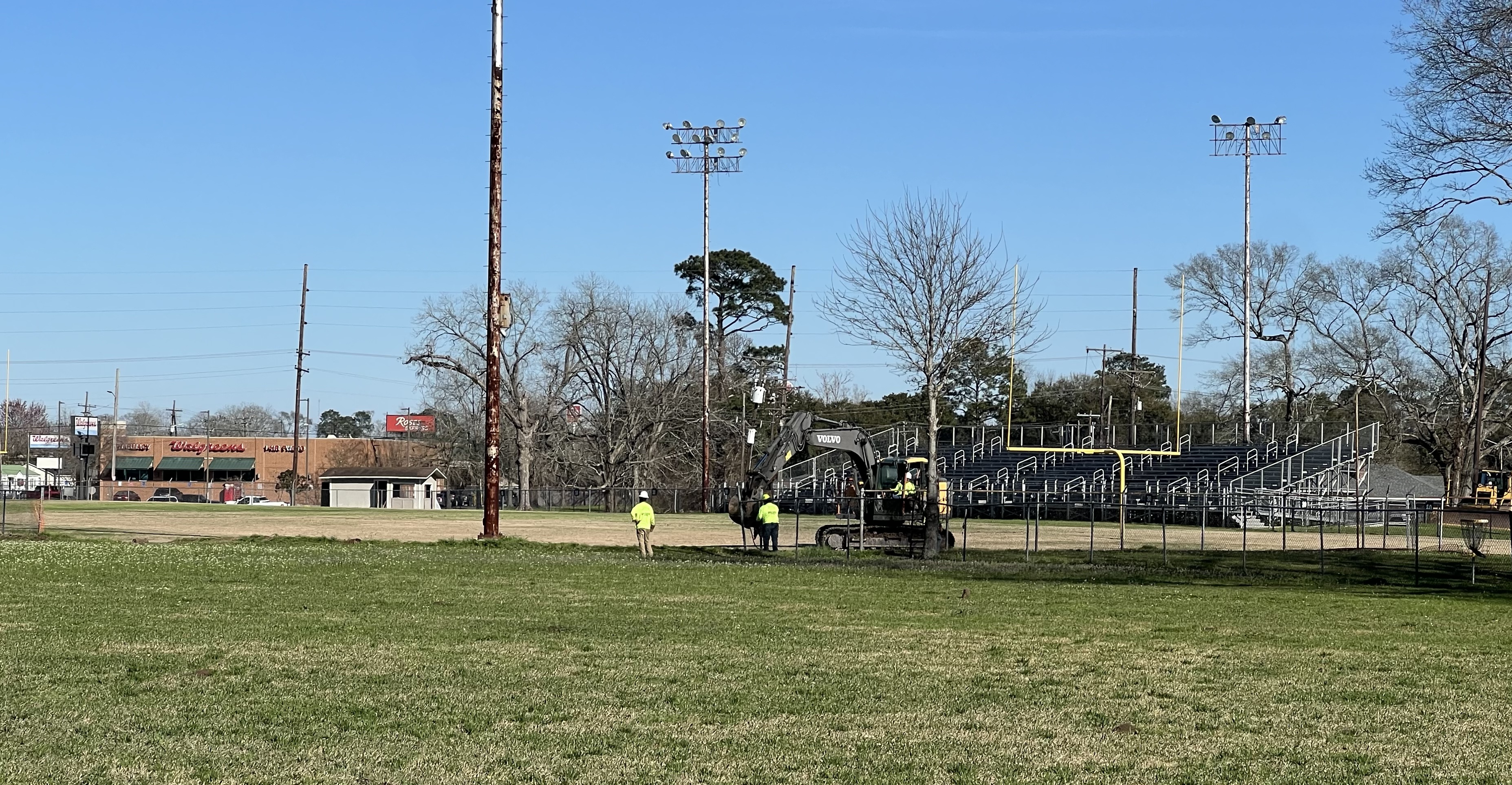
Workers removing fencing as construction begins on Gardner Stadium in Opelousas, LA, Feb. 17, 2025.

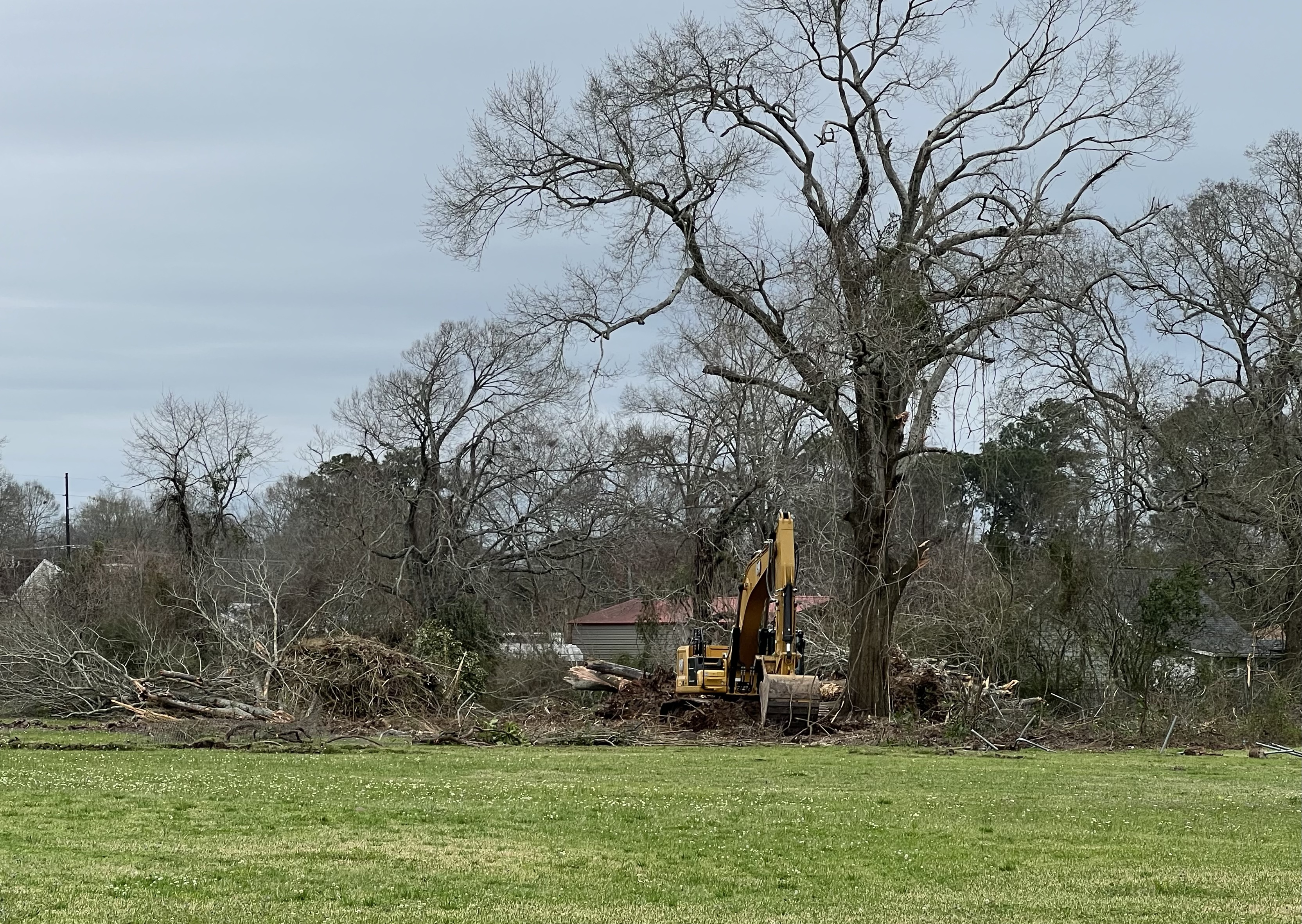
The first step always means loss of greenery. A stand of mature trees being destroyed by the construction at Gardner Stadium on Feb. 18, 2025.

2023 Update #1: A climate migration in the works

Managing multiple websites is challenging. Between this one, my work, my music, and the plethora of (increasingly fetid) social media, it can be overwhelming. I’ve stopped posting on FB, though I spend too much time perusing it for the rare gem of information from people I care about. And the mixed bag cesspool that Twitter has become? Well, I’m not alone in lamenting its state. So this long overdue update is the first step in reorganizing my online presence and the availability of things I’ve written and plan to write. And do I ever have a lot to say!

Between the hate-fueled headwinds of the latest rise of fascism and white supremacy to the rapid decline of the biosphere, these are tough times and only getting tougher. When viewed through the eyes of my aging body, today’s trends are quite depressing. However, I haven’t lost my desire to be force for good, and this post is a reiteration of why this website exists.

So much has happened to all of us since the start of the pandemic, and so much is happening to our planet this year that I almost don’t know where to start. So I will keep this post focused on personal news, though I have a music update as well.

First, I want to let y’all in on our plans. In December 2022, we sold our beloved home of 17 years because I have no confidence that my basic income can handle rising insurance rates or the risk of losing everything to another storm or flood. We’ve been renting a much smaller house in the same block while looking for a place to buy on higher ground in Acadiana, specifically in Opelousas, the state’s 3rd oldest city. We consider ourselves to be climate migrants, albeit with the wherewithal to do it voluntarily.

It’s painful to move from a city I love like no other. As of July 4 I’ve lived in New Orleans for 32 years (and with Grasshopper for 20), and nowhere else have I felt so connected to a place or so much a part of a living landscape and community. I’m awed to say that over the years I’ve added a few fibers and threads to the rich quilt of New Orleans/Bulbancha history, and I’m grateful beyond words for the people, experiences, and quality of life I’ve been blessed to have in this unique city.

We grieve as we plan this departure, but we must leave our emotional comfort zone and push ourselves to continue to make a difference where we believe we can, something we’re all having a hard time with as the climate bounces into unknown territory.

It’s not just the climate risks that triggered this decision; it’s also that our work here has grown up. For more than a decade, Grasshopper and I did our best to catalyze the movement to embrace integrated water management, green infrastructure, and the water economy. Myriad organizations, state and regional government, and people have now coalesced around the power of water, and the momentum is growing. Over the years that we were public figures, what Tim Williamson once called “the Johnny Appleseeds of the water movement,” we had inconsistent and inadequate financial support. And in 2017, after we released “The Louisiana Water Economy: Our Shared Destiny,” we pivoted to focus on building our company, Adaptation Strategies.

I don’t want to sound maudlin because I know I’m privileged and fortunate to be in the position I’m in, but I am sad and anxious, feelings that haunt us all as we age and as the world burns. But I have a lot more to say and do. So I plan to use this site to encompass a broader perspective of my writing, past and future, and this post is a first step. And Grasshopper’s idea for re-branding this blog works: NOLAmotion now stands for New Orleans-Opelousas Louisiana (I know, that’s NOOLA but that doesn’t sit right with me).

Grasshopper and I remain committed to Louisiana, and this move will allow us to work on other issues that we’ve long wanted to address regarding health, aging, the environment, and the well-being of smaller towns. Plus I’ll be closer to Dockside Studio, where Bas Clas continues to make music. In fact we recently released a live recording from 1988 and have more to come. If all goes as planned, we’ll be building relationships between New Orleans and Opelousas, so you’ll have friends only two hours away. For now, thank you for reading this, and stay tuned!

Climatology vs. Meteorology: Why Do So Many Weather Personalities Deny Climate Change?

OK, time to address a seriously Big Issue: Climate Change. I’ll try to keep this one simple.

For some reason, meteorologists have quite a few prominent deniers in their ranks. They purport to be experts because they are involved in reporting on weather. But, weather is not climate. And for TV weather “forecasters” to make claims that humans cannot and do not impact climate is a logical fallacy; because, they are not climate scientists. Meteorologists typically have a bachelors degree. Scientists, well, they not only are bound by rigid, peer-review methodologies; but, they have years of education above and beyond that of a typical TV weather personality. And research trumps opinion.

So here’s my take: Climate is to weather what the digestive system is to feces and urine. Climatologists are like medical doctors analyzing a system. Meteorologists are like commentators observing the process and predicting the arrival and general composition of an end product.

To put it crudely, when it comes to climate science, TV weather personalities barely know shit. And if it wasn’t for government investment in weather and climate resources—socialized science!—TV weather personalities wouldn’t be able to smile at us daily and make their predictions.

We live in a tiny bubble of life for which we can find no comparison in the known Universe. And on the scale of the Universe, our blue sphere is but an atom.

The biosphere is a relatively small part of Earth. The zone of life-giving atmosphere and land for humans is only a couple of miles thick. We undeniably have–and continue to–profoundly affect systems in the biosphere that normally span tens of thousands, even millions, of years. Whether it be the coastline of Louisiana; the expanding mats of plastic and petrochemical waste in the oceans; the prevalence of 20th century man-made chemical compounds in the tissues of humans, mammals and other species; or the ongoing and massive extinction of species at a rate 1000 times what should be normal–we ARE affecting Life on Earth.

Our short time in this realm of the living can be many things. The impact of one human’s brief life and work can linger for thousands of years. We see that in the wisdom and examples of religious figures, philosophers, scientists and inventors, and those who sacrificed themselves on the altar of basic human rights. If we can have such a positive impact, it is only logical to assume that we can have a long term negative impact.

We are messy and selfish creatures; but, we have the intelligence and imagination to reach the stars, and to live compassionate and productive lives. We know that many of the things we do are harmful to our future both individually and collectively. Climate scientists have clearly shown us that we must take bold steps now to reduce the chances of catastrophic harm to ourselves. This is not about saving the planet. This is about saving us.

The next time you see or hear a media weather personality dismissing the human realities of climate change, contact that media company and express your frustration. Tell them you’re tuning them out for another channel. Media companies understand that language. Vote with your voice and with the remote control.

We live in the most compassionate time in the history of the human race. We instantly communicate tragedies and elicit immediate response from an increasingly aware and generous international population. This is potentially the most transformative era in human history. But naysayers and deniers, many of whom are profiting handsomely from their contrariness, are undermining our response to this global emergency. And transformation can go either way, good or bad. We have no time to waste.

It’s the ultimate “lead, follow or get out of the way” moment. What are you going to do?

NOTE: The Age of Stupid is currently airing on Planet Green. Even if you don’t have cable, you can watch this powerful and compelling movie online. Do it today. If we don’t take immediate action to reduce our impact both individually and collectively, the next generations face catastrophic change.