Bypassing the People, Bulldozing the Park

How Opelousas leaders are ignoring federal rules, silencing public input, and risking long-term damage to the city’s future.

(September 12, 2025)This week, city officials—including the mayor, the CAO, the parks director, ODDD leaders and SLED staff, State Representative Dustin Miller, and the project architect—hosted ConnectLA representatives at South City Park to showcase the proposed site of a new multipurpose center. What they toured, however, is a public green space the city now plans to clear-cut, and a historic public pool and bathhouse the administration aims to demolish. Any day now, the city is expected to release the RFP for demolition and construction. Yet the public has still not been shown the final plans, nor been allowed to weigh in.

This entire process is unfolding in violation of both the spirit and likely the letter of federal grant guidelines. Funding for the proposed facility is to come from ConnectLA’s Gumbo grant program, with dollars from the federal Broadband Equity Access and Deployment Program, which is intended to support community connectivity and broadband access. These funds are governed by strict federal standards 1 under 2 CFR Part 200 2, the National Historic Preservation Act (NHPA) 3, and the National Environmental Policy Act (NEPA) 4.

Federal rules require that costs be reasonable, necessary, and well-documented. Publicly owned properties must be planned and procured through a transparent, equitable process. Decisions to demolish existing infrastructure and natural amenities—like the mature trees and historic pool in South Park—require environmental and historic preservation review. Yet no such analysis has been conducted and shared publicly, and the city has selected a more expensive, destructive, and less inclusive path without justification. This puts the project at serious risk of violating federal cost principles, procurement standards, and preservation rules.

At the September council meeting, Councilman John Guilbeau asked why the legally required Parks & Recreation Commission still does not exist. The city attorney, whose primary office is in Lafayette, shrugged off the question, calling it merely an “advisory body.” That is an incomplete answer. According to the city code, the Parks & Recreation Commission is the public’s policymaking voice on all park matters. Without it, there is no lawful framework for planning, budgeting, or evaluating this facility.

This lack of legal structure coincides with a dangerously irresponsible economic context. The Opelousas economy is facing massive pressure from federal SNAP cuts, rising health insurance costs, inflation, and looming reductions in Medicaid and Medicare reimbursements. Local health care systems are already seeing cuts. Additionally, the city budget lost nearly $1 million in sales tax revenue over the summer due to the mayor’s and council’s failure to thoroughly read the annual city audit. Overall, as these effects increase over the coming months and years, our small economy could lose up to $3 million each month in purchasing power due to federal cuts, rising health insurance costs, inflation, and shifts in spending.

Meanwhile, newly released census data shows the national median household income is $83,730. In Opelousas, it’s less than $26,000. This gap is staggering. And it comes at a time when birth rates are declining and the city is not growing. Fewer children, fewer working-age adults, decreasing enrollment, and greater poverty mean we must spend public dollars with discipline and wisdom.

Instead, the mayor’s team has chosen a path of secrecy and spectacle. They plan to destroy a beloved, shaded section of South Park to build a sports-centered facility that may ultimately serve tournaments more than residents. They awarded several major city projects to a single Lafayette-based architect without transparency. They are adding debt and obligations without publishing operations budgets or maintenance costs. And they have never held a single citywide meeting to ask what residents want. (Here’s how a similar situation played out for New Orleans City Park.)

This is not how a poor city builds trust. It is not how public money should be spent. And it is not compliant with federal law.

Before any demolition occurs, the City of Opelousas must:

  • Reinstate and activate the Parks & Recreation Commission.
  • Halt all demolition and site clearing activities until a full environmental and legal review is completed.
  • Release the full project designs, budgets, and justification documents.
  • Explain the selection process and total payments to the project architect.
  • Conduct public meetings in every district to gather input and assess alternatives.

South Park is not a blank canvas for out-of-town architects and a small group of politicians and ODDD board members. It is one of the few remaining green spaces in the heart of the city—a space that serves people of all ages and abilities, families, seniors, walkers, artists, and outdoor gatherings of all kinds.

Opelousas doesn’t need another sports monument. It needs housing, jobs, clean water, safe streets, and a responsive government.

Let’s stop this demolition before it starts. And let’s rebuild the public process before we build anything else. 

Without your voice, they are empowered to change the park permanently, and we’ll never get back that beautiful space. Tell your neighbors. Tell the mayor and council members. Tell your legislators. Tell ConnectLA. This is our park. This is our city. You are the key to Opelousas being the best it can be!

Here are their email addresses:

Mayor Julius Alsandor: mayoralsandor@cityofopelousas.com
John Guilbeaux: jguilbeaux@cityofopelousas.com 
Delita Rubin-Broussard: drubinbroussard@cityofopelousas.com
Charles Cummings: ccummings@cityofopelousas.com 
Sherrel Roberts: sroberts@cityofopelousas.com
Chasity Davis: cdavis@cityofopelousas.com 
Marvin Richard: mrichard@cityofopelousas.com
City Attorney Travis Broussard: tbroussard@cityofopelousas.com
City Chief Administrative Officer Anthony Daniel: ADANIEL@cityofopelousas.com
ODDD Chair Lena Charles: lenafcharles@bellsouth.net
Rep. Dustin Miller: millerd@legis.la.gov
ConnectLA: connect@la.gov 

The most common way people give up their power is by thinking they don’t have any. Alice Walker
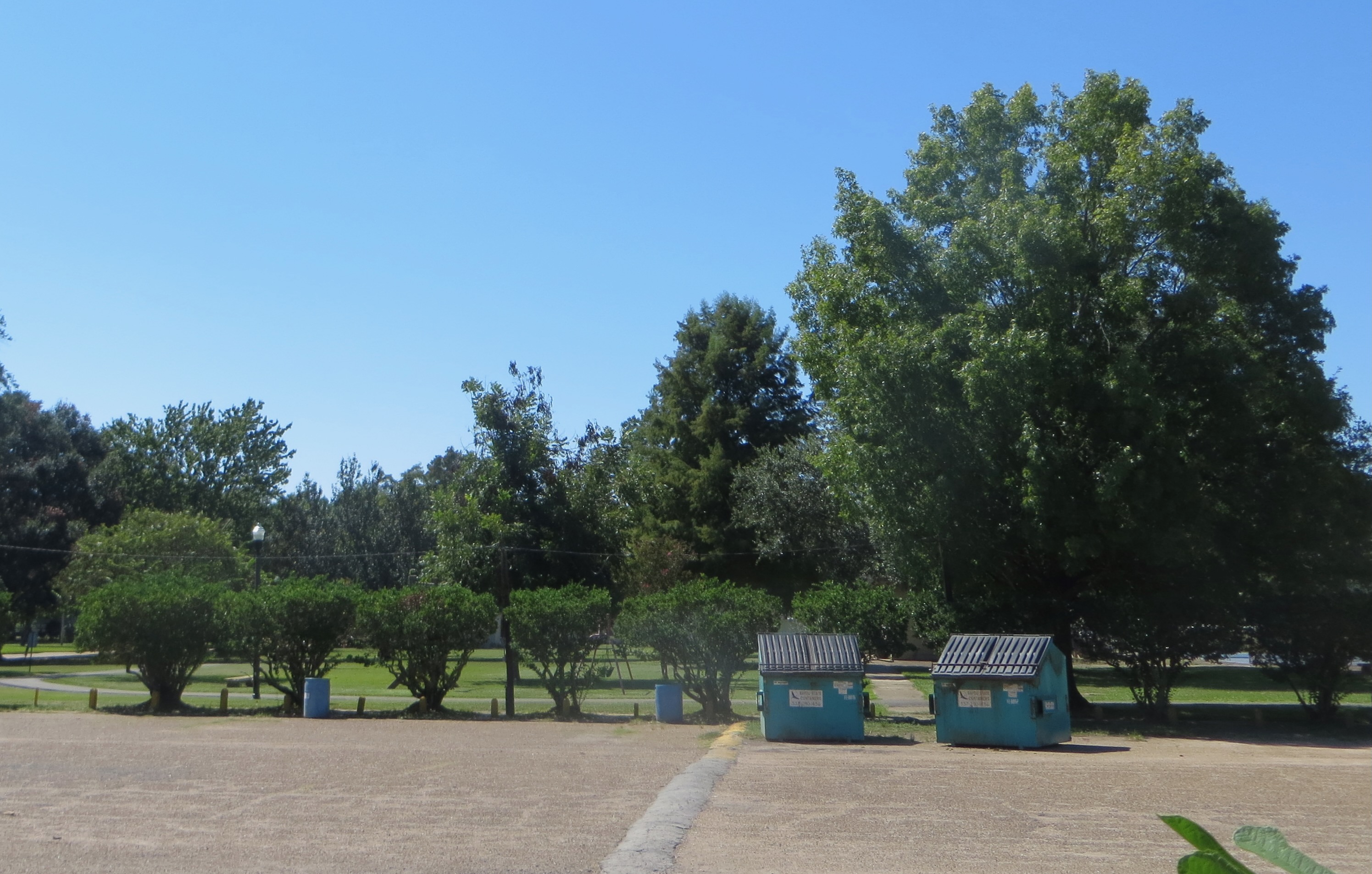
The vast majority of the trees and all of the shrubs lining the parking lot border, including two mature oaks, will need to be removed for the multipurpose center. The large live oak on the border of Market (left side of the photo), as well as one of the oldest oaks in the park behind the kiddie pool (actually another historic feature, a fountain that once stood downtown), will be negatively impacted by construction. The entire pool complex is planned to be demolished and filled, adding hundreds of thousands of dollars to the cost of the project, a potential violation of federal grant guidelines when less expensive sites are available. (Photo by author.)
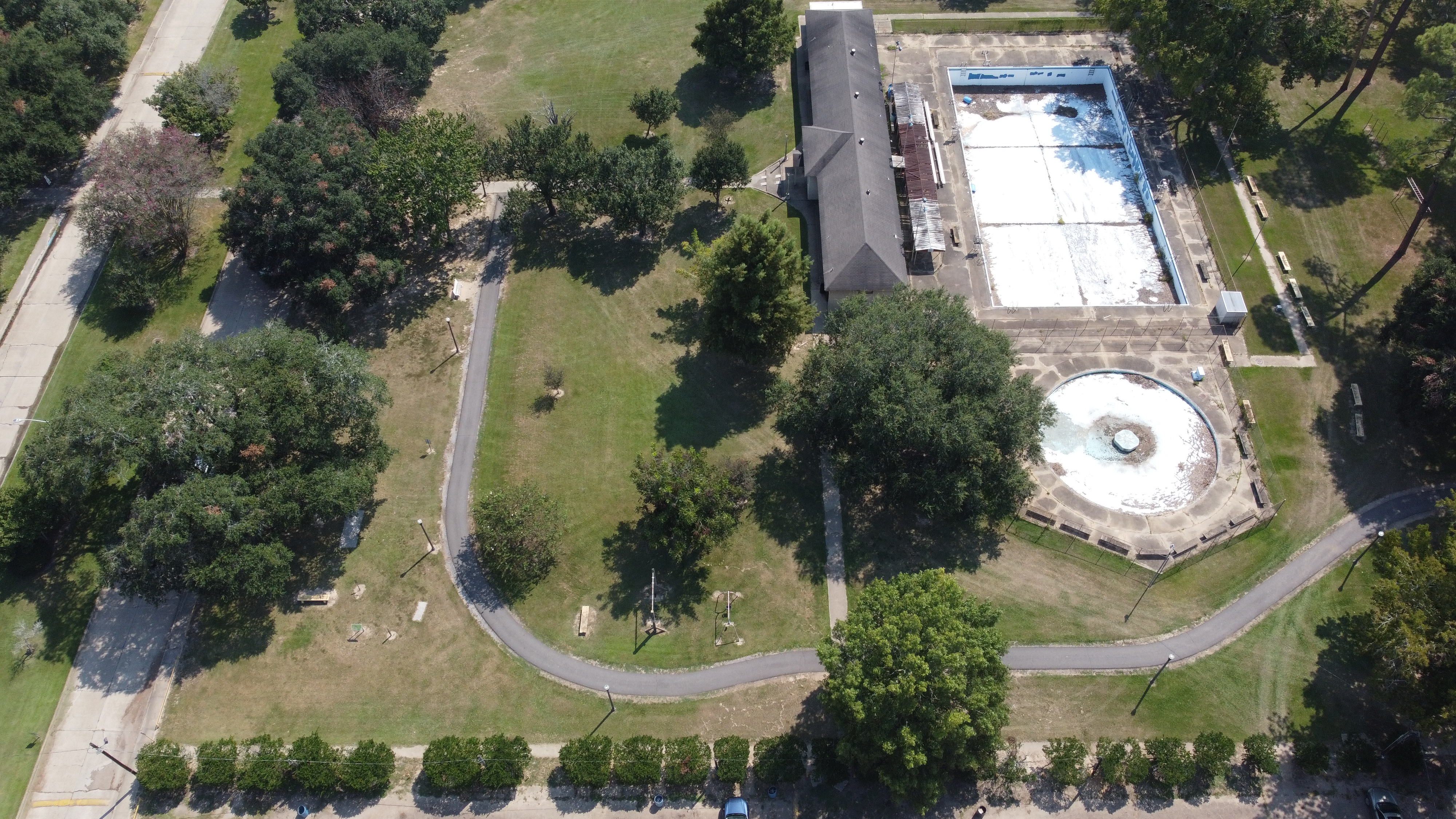
All of the trees and greenery here would be removed, including a mature, 50+ year old white oak, a similar age live oak and other healthy shade trees. This area is the most popular location in the park for annual community events, fairs, cookoffs, family reunions, and cultural traditions. The popular swing set for small children is also located in this area. (Photo by author.)
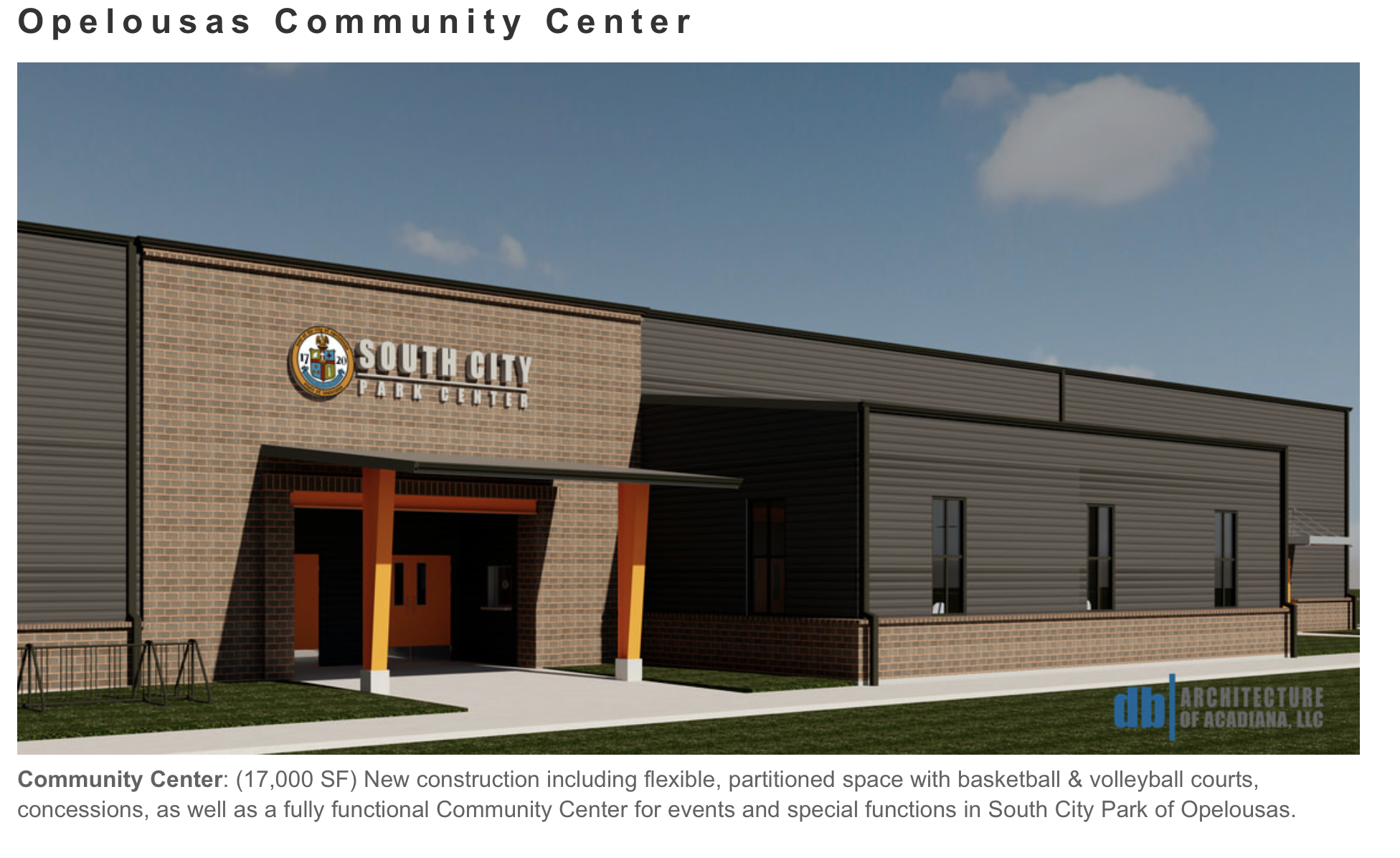
This is what would face the parking lot and loom over nearby homes. The dark colors will add energy costs due to heat gain and the industrial building design is out of character with the existing park flora and infrastructure. The architecture firm touts no sustainability, energy efficiency, or water management credentials, such as USGBC LEED (Leadership in Energy and Environmental Design), which indicate expertise in sustainability and thoughtful management of building impacts on sites, energy use, resource management, and nearby neighborhoods. Use of this site will radically impact the popular walking trail. Would you rather walk behind this building, or among shade trees, grass, and nearly century-old, sturdy historic buildings? (Screenshot from Lafayette-based DB Architecture’s webpage. This image is yet to appear on any city or ODDD website.)

Footnotes:

  1. Publicly Owned Property and Procurement Standards
    Since all properties in South Park are publicly owned, the decision-making process is subject to federal procurement rules emphasizing efficiency and economy. Without a strong, documented justification for demolishing historic assets and green space—rather than developing nearby vacant land—such actions may be challenged for violating these standards.
    ↩︎
  2. Federal Cost Principles (2 CFR Part 200)
    Federal awards require that all costs be “reasonable and necessary.” Choosing a significantly more expensive or environmentally damaging development site—when a viable, cheaper alternative exists—must be justified with evidence. Non-federal entities must maintain clear documentation explaining key decisions, including site selection.
    ↩︎
  3. Historic Preservation Requirements (NHPA Section 106)
    Federal agencies must consider the impact of funded projects on historic properties. Demolition of a historic building (including those eligible for—but not listed on—the National Register) requires a Section 106 review and may trigger mitigation requirements. “Anticipatory demolition” to avoid review can render the project ineligible for federal support.
    ↩︎
  4. Environmental and Green Space Considerations
    Federal grants often require environmental review under NEPA and EPA guidelines. These prioritize minimizing ecological damage and encourage the use of vacant or underutilized properties. Destroying public green space and mature trees—without clear benefit—may violate the intent and spirit of these regulations. ↩︎
Artificial Turf Sports Fields are Unhealthy for Children and Other Living Things

A thinly researched, more than eight-million-dollar plan to significantly modify Gardner Stadium in Opelousas, Louisiana, calls for artificial turf, a product developed for indoor fields that, when installed outdoors, creates a potentially deadly mix of heat, impact injuries, and toxic chemical exposures that threaten the health of players, coaches, fans, and the environment. 

Construction bids exceeded eight million dollars, so the Mayor’s office is working to lower costs. Natural turf is a good place to start since it is more affordable and, in the long run, produces a healthier facility that is less likely to cause injury, heat stroke, and future legal liability for the city, the Opelousas Downtown Development District (ODDD), and the school district.

An artificial turf field is basically an asphalt parking lot overlaid with thin layers of plastic carpet. Initially developed for the world’s first large indoor stadium, the Astrodome, “astroturf” was created out of convenience, not scientifically designed to improve the game but to make sports possible on an indoor, paved surface. It was not crafted (and has not successfully been improved) to reduce injuries or enhance performance; it was designed to endure. 

A natural turf field is a living surface of soil and plants that cushions athletes and exposes children to a healthy mix of microbes, moisture, and oxygen. The grass and soil of a natural field absorb and filter rainfall; when it lands on paved, plastic grass landscapes, it becomes a poisonous soup that contaminates streams and groundwater.

Artificial turf exposes players to impact injuries, extreme heat, and toxic chemicals that outgas into the air and are directly absorbed by their bodies via inhalation and scrapes and scratches known as “turf burn.” This abrasiveness is why many professional football players wear fabric tape over their elbows.

Globally, the deadliest weather phenomenon is heat, which kills more people annually than storms, floods, or cold. In a rapidly warming world, artificial turf fields put children, coaches, and fans at greater risk for heat stroke that can permanently damage brains and other vital organs. These fields can easily reach deadly temperatures of 130 to 150 degrees or higher on a ninety-degree day, creating a potentially fatal scenario. Last August, there were thirty-five emergency calls for heat stroke at a single UL-Lafayette football game. 

It should come as no surprise that heat-related deaths of high school football players are happening, with five fatalities in just three southern states since July 2024. Those teenage boys died simply because they wanted to play football; they were failed by adults who had the responsibility to protect them.

Adding to heat risk is the fact that because the plastic turf is underlaid by asphalt, injuries like concussions, blown knees, and shattered ankles occur at a much higher rate than on natural grass. This rate of injuries is the primary reason why ninety-two percent of the members of the NFL Players Association voted last year to demand that all thirty NFL stadiums install real grass. Professional soccer players agree, and the World Cup is played on natural turf.

The health threats of synthetic turf fields are myriad. Plastic grass is flammable and impregnated with fire retardant, often a “forever chemical” proven to cause cancer. Shredded tires are spread over the turf to keep the “blades” up and add additional cushion. This infill also contributes to airborne microplastic pollution and yet more potential for cancer, lung and liver damage, and other developmental problems.

Because these harms are now more commonly known, the city could face future lawsuits by parents whose children become permanently impaired because artificial turf was chosen as a convenience even though professional footballers reject it as dangerous. 

The decision by the mayor and the ODDD to stick with the current plans is guaranteed to end the careers of high school athletes randomly for decades and add the potential for cancer and other diseases later in life. In the years to come, those teenagers who suffer concussions, blown knees, shattered ankles, and failing health will find that their suffering might have been prevented if the city and ODDD had done their research and listened to the science and the professionals.

Sports like football, baseball, and soccer were invented outdoors, where weather and field conditions add their wildcard impacts to the game. Children need contact with grass and soil to build their immune systems, and they deserve to play in as much safety as science, budgets, and our loving care allow. Keeping the grass in Gardner Stadium is a simple way to save money and protect future generations, and that’s what we should all expect from our public leaders. 

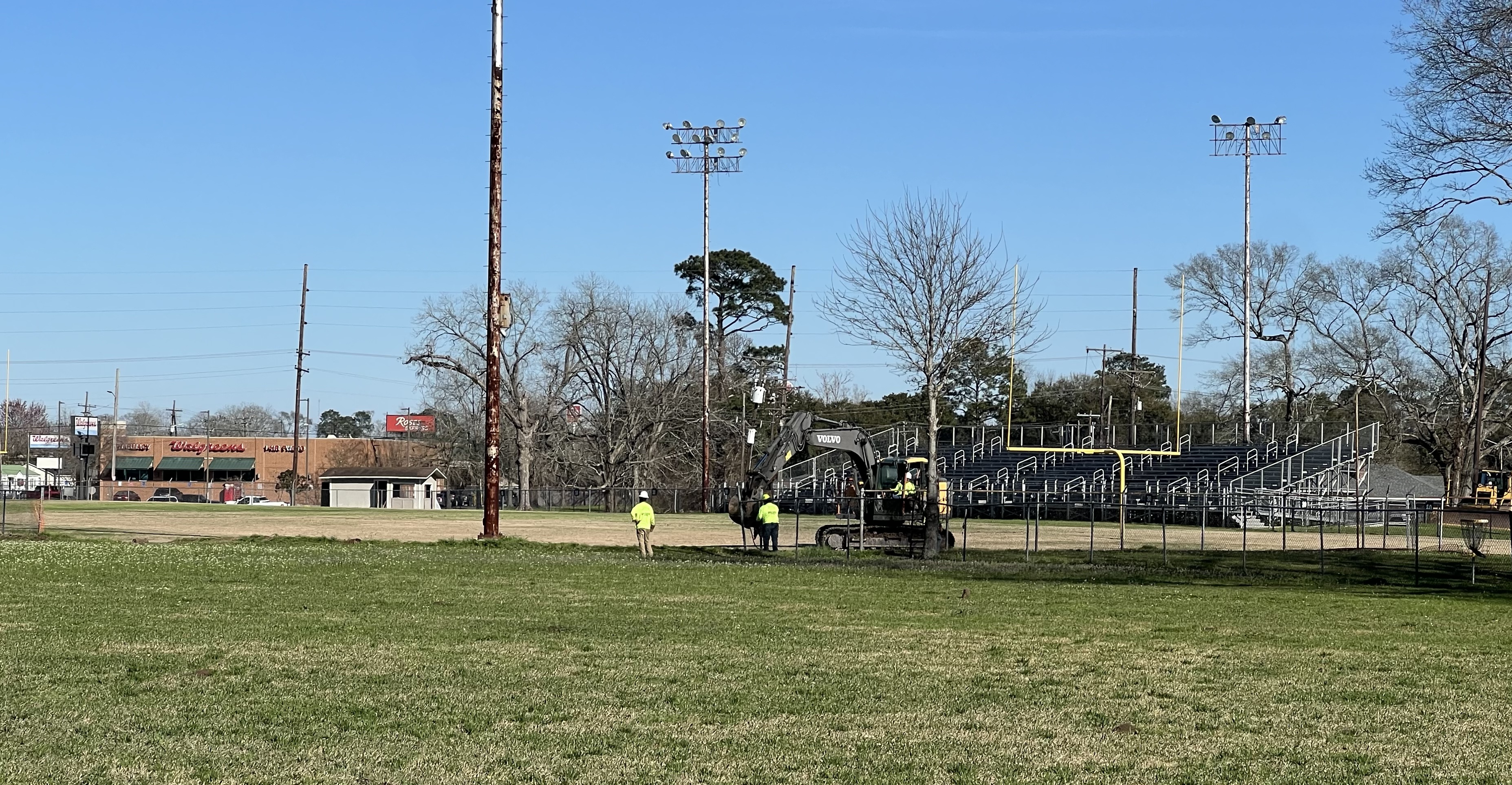
Workers removing fencing as construction begins on Gardner Stadium in Opelousas, LA, Feb. 17, 2025.

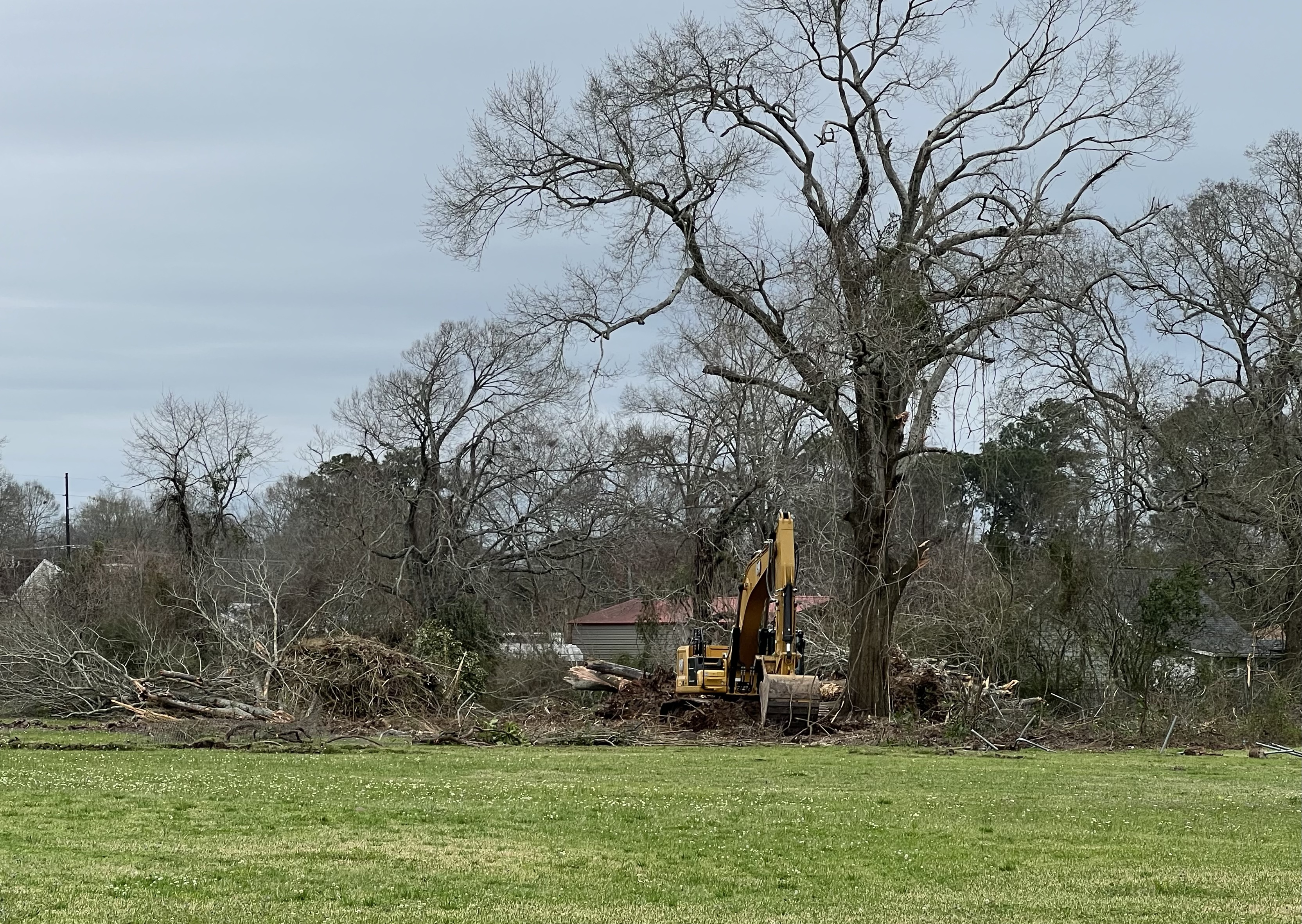
The first step always means loss of greenery. A stand of mature trees being destroyed by the construction at Gardner Stadium on Feb. 18, 2025.

Old Mandeville Oak Falls in the City and People Don’t Hear the Truth

A story in the Times-Picayune tells the sad tale of the death of yet another benevolent giant live oak in Louisiana. This time, it was a revered tree in Old Mandeville, killed by the usual suspect–humans. Yet the writer and the so-called expert got it all wrong. This tree did not die a natural death, it was a slow-motion murder by pavement and development. It didn’t have to happen, and it doesn’t have to continue to happen, but it will.

We lack the common sense to be responsible stewards of our landscape. To some, this isn’t a big deal. But the fact is, we will die if we continue to fail to address our ignorance. That tree is just one of thousands of ancient oaks lost to development. In too many cases, “tree coffins,” those concrete boxes in the sidewalk or parking lot in which we expect trees to “live” are ultimately the cause of their deaths.  You see it everywhere, from downtown streets to mall lots, older trees getting scraggly and dying in these small set-asides. It’s just plain stupid.

I’d love to do a documentary on this subject if anyone out there is interested in helping. It’s long overdue.

Here’s the article: http://www.nola.com/politics/index.ssf/2014/08/300-year-old_madisonville_oak.html

And here are the comments I posted:

It is clear that development under the canopy is what killed that tree. To have a concrete curb within mere feet of the trunk means that the root system was damaged, ripped up and smothered by paving. The number one cause of the death of urban trees is soil compaction. Older trees, that grew without interference for decades, are particularly sensitive to disturbance of their root zones. Think of a tree as a closed system where the roots recycle the fallen leaves and act like both lungs and intestines, processing nutrients, water and air in a metabolic system. Then imagine machines, shovels, people, digging, covering, and sealing this system. It often takes decades for these trees to die. 

Look at the large trees in Old Metairie, surrounded by pavement. They are spindly, which means the tree is shutting down branch systems in its attempts to adjust. Trees are like submarines or ships with watertight doors that close to protect the rest of the vessel. When you see dead branches, those branches are shut down and will not become leafy again. 

That tree in Old Mandeville was murdered by progress. It died a slow and public death. It did not die of old age. It died of ignorance, neglect, and by the assault of human development. 

The good news is that we know better and can do better. But it is too late for many of these sentient giants in whose branches we can sense the touch of the divine. Older trees need and deserve protection and that means public policies that honor their roles in the health and wellbeing of the land that supports and nurtures us. We need to give older trees space. The top 18 inches of soil where most of the life-giving aspects of biology give rise to not only trees, but us. We need to understand that soil is alive and that trees–and humans–need healthy, loose, alive soil if we are to thrive. 

Guidry is wrong. It was somebody’s fault, a very long time ago, when they failed to care about the space that tree needed, and put concrete and pavement over its roots, and began a process of starvation and strangulation that weakened it and caused it to die sooner than it should have. We killed this tree, probably generations ago, when we built the roads and sidewalks over its most sensitive space, its root systems.

But it’s not just about protection, if we are to have good public infrastructure and healthy communities to serve future generations, we need to understand that we must put the right tree, in the right place, planted at the right time. And that means a broader variety of native species, not more crape myrtles, and not live oaks planted in small spaces between sidewalks and roads and under power lines. This, too, is foolhardy.

Until we become better educated about tree biology and implement policies that protect older trees and guide future plantings, many more will die. And we lose something of ourselves every time.

And here’s a picture of a tree killed by development after Katrina, since this article needs a dead tree and I’m not going to use the T-P’s pic.

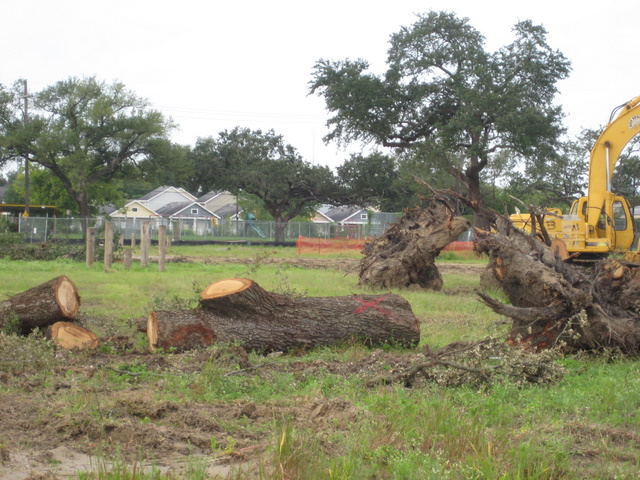
One of the more than 30 mature oaks destroyed by the redevelopment of the Lafitte Projects on Orleans Ave.

Dear America,

20 million barrels of oil. 20 million. That’s what the USA uses every day. And nearly 50% of that oil is being burned each day as motor fuel. As of Monday, June 7, the BP Macondo well has spewed in the vicinity of 2,000,000 barrels with no end in sight. That’s the equivalent of 10% of one day’s oil use in the US.

“That’s what we need to get through the day!” exclaimed John Hofmeister (German for “yard master” to you etymological folks) the former head of Shell on a recent Larry King Show. In prior media appearances Hofmeister promoted his oil skimming ideas, his experiences in keeping a culture of safety at Shell, and his book. On King’s show he reverted to the Company Man and showed his Chamber of Commerce side, indulging in a couple too many Gripes on Behalf of the Oil Companies. He evaded James Carville’s challenge to explain and justify the cozy relationships Big Oil cultivated with government, including regulatory agencies and personnel, which will prove to be a major factor in the chain of events.

Then came T. Boone Pickens. He was visibly stressed. But he was clear as a bell. His overriding message, “It’s not time to panic.” He emphasized that we need to focus on stopping the well and dealing with the humanitarian and environmental response. When we get ahead of these demanding issues, then we can focus on inquiries and blame. But he knows it’s bad. “This event is like a 100 Year Storm.” He emphasized a military-like focus.

Which brings us to that ugly and horrible act of humanity: War.

For nearly 10 years we, our families, friends and neighbors have been paying the ultimate cost for our military actions around the world. The United States has been at war longer than World War ll, and as of June 7, longer than in Viet Nam, our longest war. We are paying the price in lives, money, energy and resources. Yet we blithely go about our days worrying more about phony celebrities, useless trends and pop culture than we do about being at war in foreign countries. We are sacrificing so much–lives, resources, energy, money, time–and we are so spoiled by all the power we wield with our smart phones, fast cars, fast cards and fast food–that we are oblivious, like slowly cooking frogs, to our impending doom.

Whether is it our diet and diabetes, or our vapid, mobile lifestyles and growing environmental crises, we are in a massive state of denial that only a large-scale psychological and spiritual transformation effort can least-painfully change. But it appears we’re incapable of changing without very painful and tragic impetus.

Hell, if even the increasingly unnecessary maiming and death of our best and brightest in military service isn’t compelling us to act, then perhaps Nature will. Or will it?

The root cause of this situation is our demand for oil and our addiction to dirty fossil fuels. Though we built our consumer society on what appears to be “cheap” fossil fuels, the true cost has never been fully factored or equitably distributed.

For 150 years, modern civilization has depended upon exploitation, extraction, manufacturing and distribution of natural resources, usually directed from the less powerful to the more powerful.

And now this. The BP oil disaster is well on its way to being the worst singular petroleum catastrophe in world history, impacting far more than just Louisiana and the Gulf of Mexico.

The site of the BP Deepwater Horizon and areas impacted by the catastrophe are the uterus and placenta of the Gulf Stream. And a breathtaking array of biology upon which humans on multiple continents depend is threatened. We cannot determine how long it will take to recover, even after the well is stopped. Years? Decades? In whose lifetime will these land and water ecosystems return to the diversity and volume of April 2010?

Some 30% of the USA’s seafood comes from these estuaries.  But, that’s only measuring it in the USA. Many of the species most seriously affected by this spill migrate between continents. There could be shortages of fish products around the world.

But let us not lose sight of the biggest tragedy–us. This is a growing humanitarian crisis.

In Louisiana, Mississippi, Alabama, Florida and Texas, hundreds of thousands of jobs are threatened and tens of thousands of jobs are at a standstill or waiting to be told to stop. This means that thousands of families and households are not receiving income.

Second Harvest has been overwhelmed trying to bring food to families in Louisiana. With the assistance of Catholic Charities, the New Orleans Food & Farm Network and others, a growing number of volunteers are participating in distributing food to the hardworking, diverse patchwork of celebrated cultures of people who define the character of Louisiana to the world but who are not emotionally prepared to be dependent upon charities.

As efforts mount, words get stronger. Beth Galante calls us to action in the May 2010 Global Green newsletter, “The humanitarian crisis is the first priority – every single coastal resident has had their job destroyed or damaged for the foreseeable future, from the fishermen to the local restaurant staff to the hotel maids, and it is imperative that aggressive action ensures that they can keep food on their families’ tables, make mortgage and credit card payments, and get rapid access to comprehensive mental health care services.”

Why are these things happening? Why is this how we are going to spend the 5th Anniversary of the tragedy of the failed levees after Katrina? Fundamentally because a perfect storm of stupidity has swept this country for the past few decades. We’ve had all the information, all the warnings we needed to make changes. We are lost in consumerism. We are not saving energy. We are not taking the steps needed to reduce our impact. We are indeed living in The Age of Stupid. We are at war on two fronts, sacrificing our friends, families and economy to the mighty Oil God. And we won’t change our ways. We are ultimately at war with ourselves.

Will this event change us? There is no doubt that Louisiana is now forever changed, perhaps for generations. But will the USA change its ways and reduce our dependence upon dirty fossil fuels? 11 dead in the Gulf and 15 dead in the mines in 2010 don’t seem to matter much. More than 5000 of our finest sacrificed in Iraq and Afghanistan seems to make no difference. We blithely drive, shop and waste and waste and waste. We gossip about pop “stars” ruining their lives while our own are ruined by ignorance,  inactivity, bad food and the resulting obesity, diabetes, heart disease and cancer. The fact that the current generation is the first in modern times to be expected to live shorter lives than their parents doesn’t even seem to be changing people’s attitudes much. We are speeding pedal to the metal into a dead end.

So I have a request to the USA: pray. No, I’m not a religious person. But I am desperate. And in desperation, most folks suddenly find God. Besides, other than cutting your driving by at least 20% and pledging to do better, there’s not much you can do.

So, Dear America, pray. And pray hard and for a long, long time. It might not slow the oil. But at least it will slow you down.