DON’T PAVE OUR PARK!

Opelousas Deserves a Voice Before the Bulldozers Roll Again

UPDATE December 1: The groundbreaking is yet to be scheduled.

Any day now, the City of Opelousas is planning to hold a ceremonial groundbreaking for the proposed “multipurpose community center” in South City Park. I plan to be there, but city leaders already know where I stand.

What matters now is whether you will be there, and what message they see when they look out at the crowd.

Because unless we speak up, Opelousas is on the verge of making an irreversible mistake: demolishing a historic WPA-era pool complex and paving over green space without public input, without transparency, and without meeting federal requirements that are supposed to protect communities from exactly this kind of reckless decision.

1. DEMOLITION WITHOUT REQUIRED FEDERAL REVIEW IS NOT LEGAL

The bathhouse and pool were built in 1939 by the Works Progress Administration—a historic public asset over 80 years old.

Any federally funded project that affects a historic structure must go through:

  • Section 106 review1 under the National Historic Preservation Act
  • Public notice and public comment
  • Consultation with the Louisiana State Historic Preservation Office2
  • Evaluation of alternatives (including sites that don’t require demolition)

None of this was done.

No public notice.

No hearings.

No historic review.

No alternatives analysis.

That is not just bad practice—it violates federal law attached to the funds they are using.

2. THE CITY CHOSE THE MOST EXPENSIVE AND RISKY SITE

If the goal is to build a gym or community center, there are multiple city-owned parcels that could host it with:

  • no demolition costs
  • no hazardous materials
  • no historic review
  • no environmental review
  • better drainage
  • lower site-preparation costs

Instead, the City chose:

  • a site requiring demolition of a sturdy WPA building
  • the removal of healthy, mature trees
  • potential drainage issues for surrounding areas and Bayou Tesson
  • more expensive foundations and earthwork
  • legal risk under federal environmental laws that could cause clawback of funding
  • a more costly construction path

Under federal law 2 CFR 200.404, all federally funded projects must demonstrate “reasonable costs.”3 Since this project is monitored monthly with payments disbursed via invoices rather than upfront, an audit six months from now could identify issues and halt funds, potentially requiring the return of spent funds.

As of today, the city has received no money from the state. The process for payments to the contractor will hinge on the city’s acceptance of invoices for work done, followed by the state agency’s approval and verification of work. With this system, checks to the contractor are issued by the city after the state disburses funds. It’s often a slow and complicated process with many approval and verification speed bumps. I have post-Katrina experience as a contractor on federally funded programs administered by the state to municipalities, and this multi-step process can lead to slow payments. I hope the Lafayette-based contractor realizes this.

3. THEY NEVER ASKED THE PUBLIC WHY WE USE SOUTH PARK, WHAT WE WANT OR NEED

There has been:

  • No park user survey
  • No citywide needs assessment
  • No analysis of youth sports demand
  • No demographic or enrollment trend data
  • No public workshops or listening sessions

Opelousas is making multi-million-dollar decisions without one shred of unbiased research. I’d refer you to the construction manual and bid documents that describe the project in detail, but the city never posted the request for proposals on their Advertisement for Bids page.

A project built on assumptions, whim, and envy for what wealthier communities have rather than evidence is destined to fail—and to cost taxpayers even more in the long run.

4. THE PARKS & RECREATION COMMISSION—REQUIRED BY LAW—HAS NOT MET FOR FIVE YEARS

The city charter requires an independent Parks & Recreation Commission to guide decisions on:

  • park investments
  • all planning and new facilities
  • public processes and input
  • setting annual budgets, programming and policies
  • maintenance and upkeep

This body has been dormant since 2019.

Instead, decisions impacting the future of our parks—and millions of dollars—are made by a small, insular group of people, with no citizen oversight, no transparency, and no accountability.

5. ALL OF THIS IS HAPPENING WHILE THE CITY FACES A $1.85 MILLION HOLE IN ITS BUDGET

The city lost $1.85 million in revenue due to a four-month lapse in sales tax collection—an internal control failure because no one on the city’s payroll read the Legislative Auditor’s report for 15 years.

Instead of correcting course, tightening spending, or creating a public plan to stabilize finances, city leaders are:

  • taking on new long-term operational costs
  • committing to expensive facilities
  • draining half of ODDD’s sales tax revenue for 10 years
  • ignoring the budget crisis

This is not resilience.

It is not planning.

It is financial mismanagement at the moment we can least afford it.

WHAT YOU CAN DO: SHOW UP!

At this month’s ODDD meeting, a ceremonial groundbreaking “hopefully on December 2 at 10am” was discussed, but I’ve seen no announcements, and it’s not happening on that day. Ideally, they’ll post the plan. Then again, I suspect they only want to alert the news media and the small group of city and regional leaders who want to pave South Park into a plastic grass sports complex like Youngsville’s. Watch Historic Opelousas and Opelousas Downtown Development District Facebook pages for an announcement, and if I learn more, I’ll update this post.

In the meantime, city leaders need to see that this community values:

  • parks
  • green space
  • historic places
  • fiscal responsibility
  • the input and voice of the public

This is not about politics.

This is about our home—our most beautiful and inviting neighborhood park—our future.

Post comments on social media. Talk to your friends and neighbors. Show up. Bring a sign. Bring friends. Bring your voice.

Here are some simple sign ideas:

“DON’T PAVE OUR PARK”

“SAVE SOUTH CITY PARK”

“NO DEMOLITION WITHOUT PUBLIC INPUT”

“WHERE IS THE PARKS & REC COMMISSION?”

“LISTEN TO THE COMMUNITY”

“HISTORY MATTERS”

“THIS IS NOT COST-EFFECTIVE”

Stand quietly, but talk to the people there. Stand respectfully. Stand firmly.

Let them see that Opelousas is about all the people, not just a select few. That parks are for people of all ages and abilities. Natural spaces and learning about nature and gardening are the prerequisites for children’s health and well-being, and are more critical to developing life skills than indoor competitive sports.

Let them see that decisions made about our parks must include the people who actually use them!

If we don’t show up, they will say no one cared.

But we do care.

And this is the moment to prove it!

  1. https://www.achp.gov/protecting-historic-properties/section-106-process/introduction-section-106 ↩︎
  2. https://crt.state.la.us/cultural-development/historic-preservation/section-106-review/index ↩︎
  3. https://www.ecfr.gov/current/title-2/subtitle-A/chapter-II/part-200/subpart-E/subject-group-ECFRea20080eff2ea53/section-200.404 ↩︎
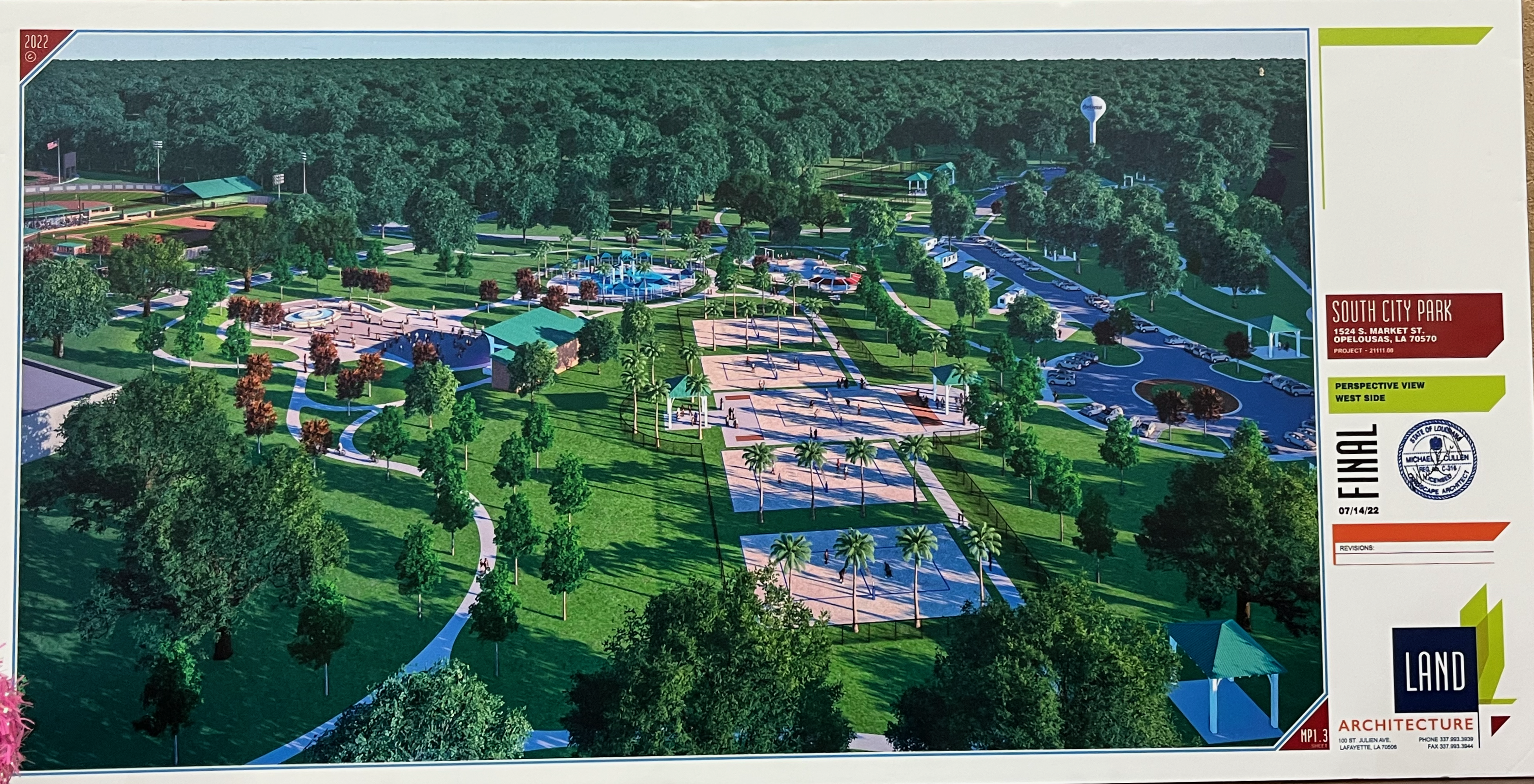
A photo by the author shows a south-facing rendering of the Conceptual Master Plan, created in 2022, which the city and ODDD continue to use while spending more money than ever in Opelousas’s 300-year history on non-infrastructure projects. This plan has never been published on the city’s or ODDD’s websites. To see it, you must visit the offices of St. Landry Economic Development on the I-49 Service Road, three miles from downtown. The plan proposes paving a large portion of the park’s natural green spaces for poorly researched sports facilities. Since no unbiased studies have been conducted, all decisions are based on whim and opinion rather than facts, surveys, or guidance from the legally mandated but unappointed Parks & Recreation Commission, the citizen-led “board of directors” for all public parks. This excessive spending and exclusionary planning reflect a severe neglect of duty by the city and ODDD.

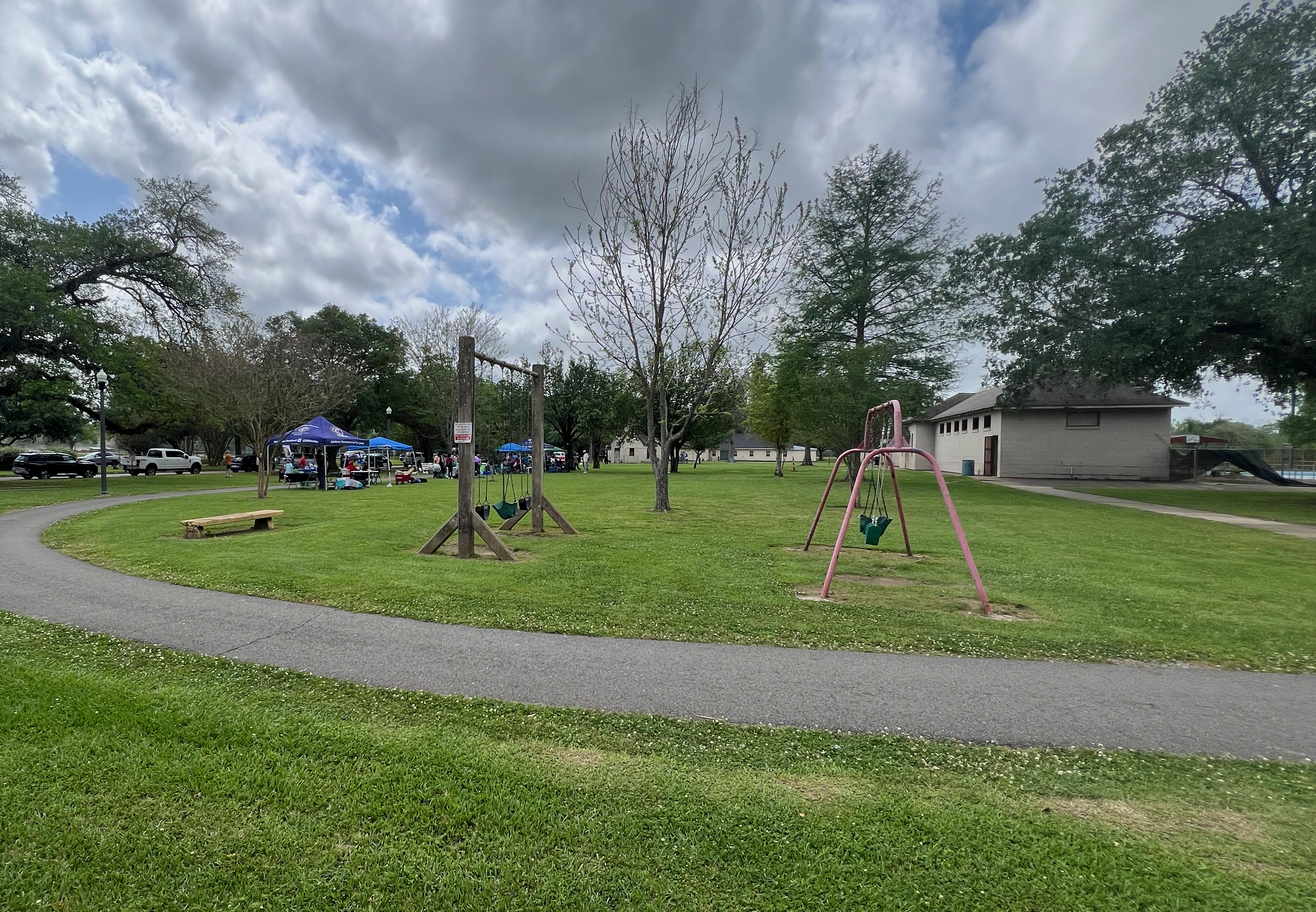
This part of the park is one of the most popular and well-utilized areas. These swingsets are for kids only, and the one on the left was built in 1939. Everything you see in this photo will be demolished.
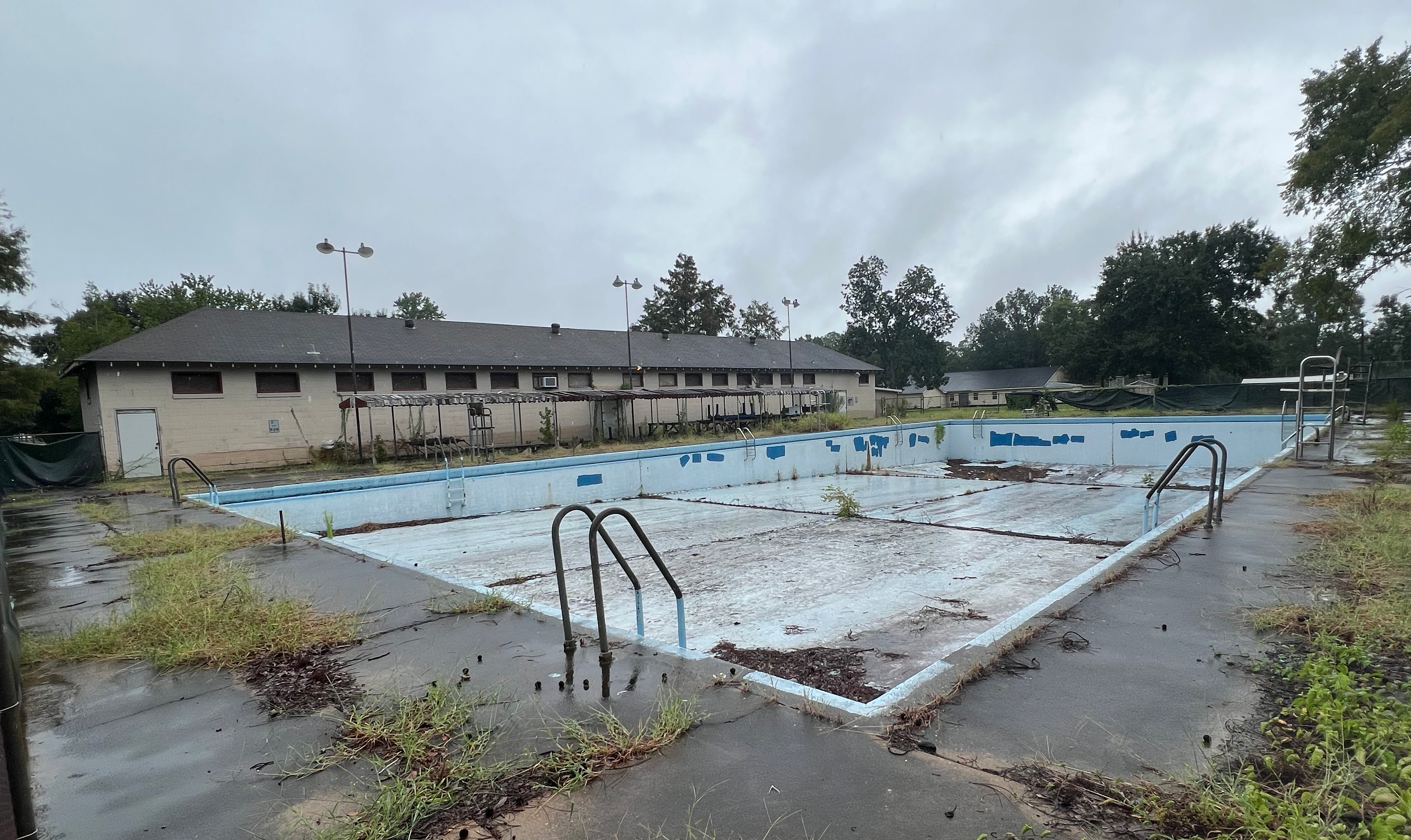
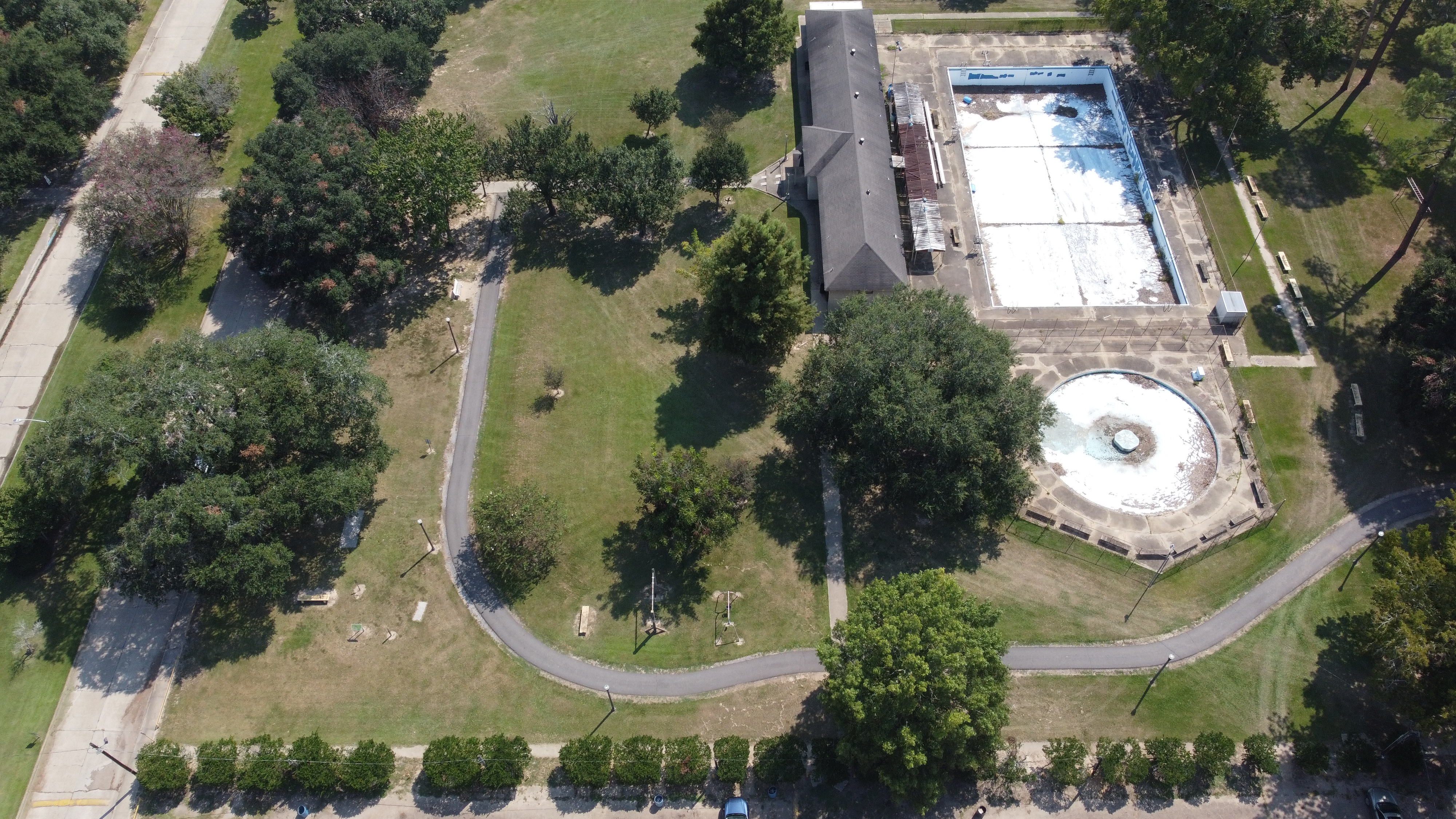
View of the current state of the pool. It’s in remarkably good shape, and there is no publicly available research indicating what it would cost to restore it. It is the largest pool in the city, and when it was constructed, it had its own well. The building is sturdy and in good condition. It was built with old-growth lumber and cinder blocks that are stronger than those available today. If demolished, it should be deconstructed and the materials salvaged.
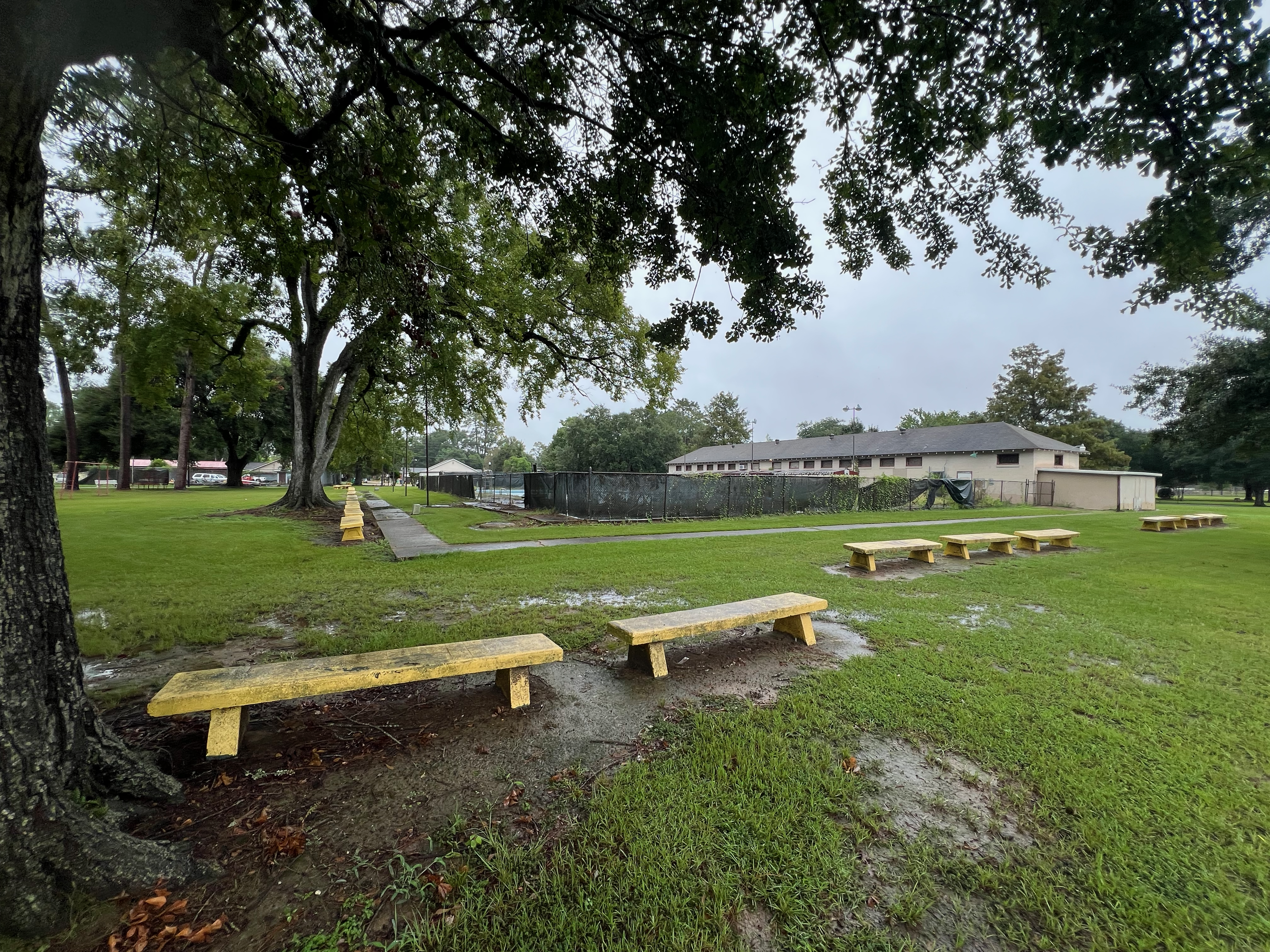
Rear view of the pool complex. Everything in this photo will be demolished.
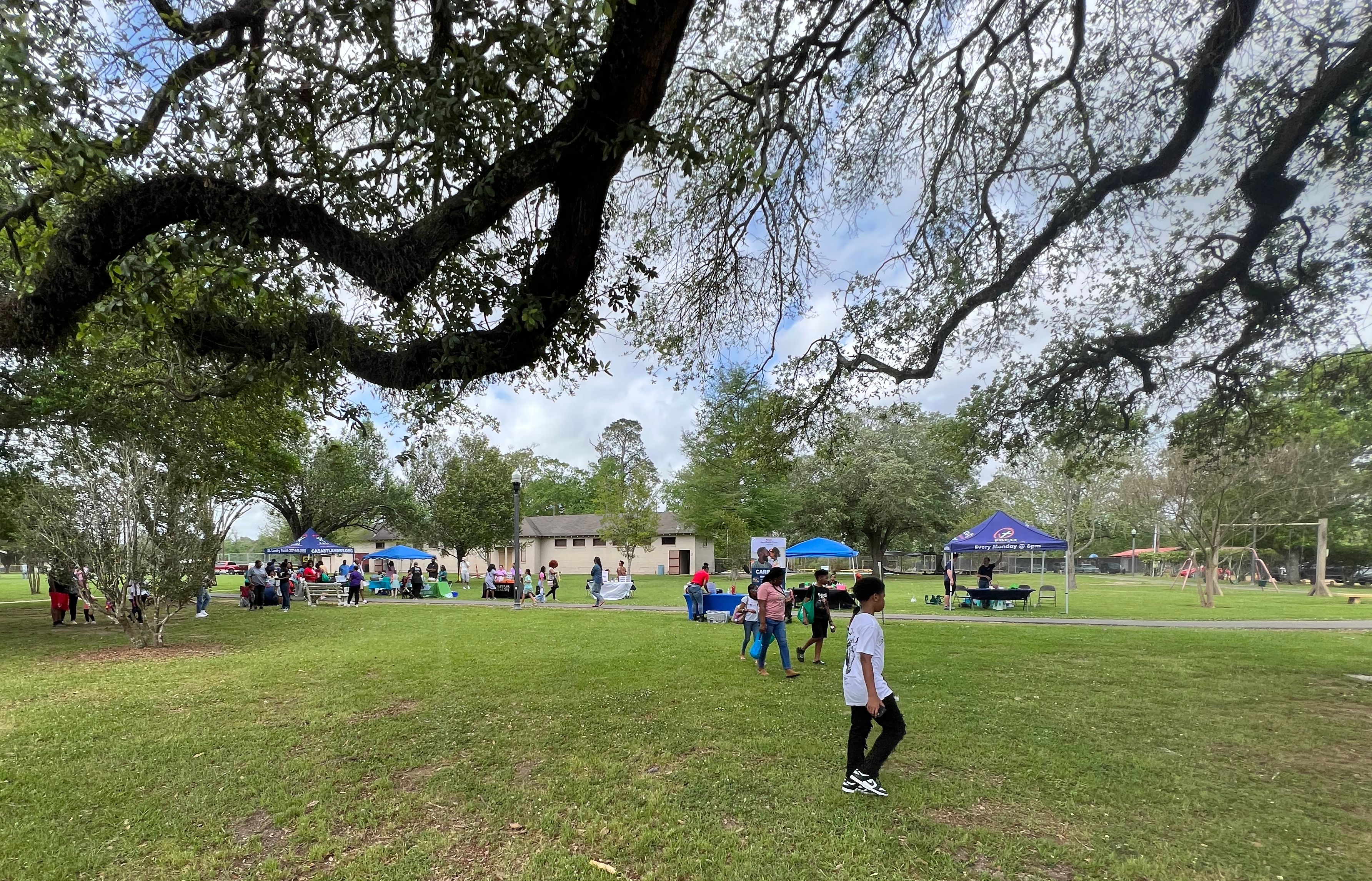
The site is popular for events and quiet contemplation. The walking path has become the most used feature in the park, attracting hundreds of walkers of all ages daily, many from nearby communities.

Bypassing the People, Bulldozing the Park

How Opelousas leaders are ignoring federal rules, silencing public input, and risking long-term damage to the city’s future.

(September 12, 2025)This week, city officials—including the mayor, the CAO, the parks director, ODDD leaders and SLED staff, State Representative Dustin Miller, and the project architect—hosted ConnectLA representatives at South City Park to showcase the proposed site of a new multipurpose center. What they toured, however, is a public green space the city now plans to clear-cut, and a historic public pool and bathhouse the administration aims to demolish. Any day now, the city is expected to release the RFP for demolition and construction. Yet the public has still not been shown the final plans, nor been allowed to weigh in.

This entire process is unfolding in violation of both the spirit and likely the letter of federal grant guidelines. Funding for the proposed facility is to come from ConnectLA’s Gumbo grant program, with dollars from the federal Broadband Equity Access and Deployment Program, which is intended to support community connectivity and broadband access. These funds are governed by strict federal standards 1 under 2 CFR Part 200 2, the National Historic Preservation Act (NHPA) 3, and the National Environmental Policy Act (NEPA) 4.

Federal rules require that costs be reasonable, necessary, and well-documented. Publicly owned properties must be planned and procured through a transparent, equitable process. Decisions to demolish existing infrastructure and natural amenities—like the mature trees and historic pool in South Park—require environmental and historic preservation review. Yet no such analysis has been conducted and shared publicly, and the city has selected a more expensive, destructive, and less inclusive path without justification. This puts the project at serious risk of violating federal cost principles, procurement standards, and preservation rules.

At the September council meeting, Councilman John Guilbeau asked why the legally required Parks & Recreation Commission still does not exist. The city attorney, whose primary office is in Lafayette, shrugged off the question, calling it merely an “advisory body.” That is an incomplete answer. According to the city code, the Parks & Recreation Commission is the public’s policymaking voice on all park matters. Without it, there is no lawful framework for planning, budgeting, or evaluating this facility.

This lack of legal structure coincides with a dangerously irresponsible economic context. The Opelousas economy is facing massive pressure from federal SNAP cuts, rising health insurance costs, inflation, and looming reductions in Medicaid and Medicare reimbursements. Local health care systems are already seeing cuts. Additionally, the city budget lost nearly $1 million in sales tax revenue over the summer due to the mayor’s and council’s failure to thoroughly read the annual city audit. Overall, as these effects increase over the coming months and years, our small economy could lose up to $3 million each month in purchasing power due to federal cuts, rising health insurance costs, inflation, and shifts in spending.

Meanwhile, newly released census data shows the national median household income is $83,730. In Opelousas, it’s less than $26,000. This gap is staggering. And it comes at a time when birth rates are declining and the city is not growing. Fewer children, fewer working-age adults, decreasing enrollment, and greater poverty mean we must spend public dollars with discipline and wisdom.

Instead, the mayor’s team has chosen a path of secrecy and spectacle. They plan to destroy a beloved, shaded section of South Park to build a sports-centered facility that may ultimately serve tournaments more than residents. They awarded several major city projects to a single Lafayette-based architect without transparency. They are adding debt and obligations without publishing operations budgets or maintenance costs. And they have never held a single citywide meeting to ask what residents want. (Here’s how a similar situation played out for New Orleans City Park.)

This is not how a poor city builds trust. It is not how public money should be spent. And it is not compliant with federal law.

Before any demolition occurs, the City of Opelousas must:

  • Reinstate and activate the Parks & Recreation Commission.
  • Halt all demolition and site clearing activities until a full environmental and legal review is completed.
  • Release the full project designs, budgets, and justification documents.
  • Explain the selection process and total payments to the project architect.
  • Conduct public meetings in every district to gather input and assess alternatives.

South Park is not a blank canvas for out-of-town architects and a small group of politicians and ODDD board members. It is one of the few remaining green spaces in the heart of the city—a space that serves people of all ages and abilities, families, seniors, walkers, artists, and outdoor gatherings of all kinds.

Opelousas doesn’t need another sports monument. It needs housing, jobs, clean water, safe streets, and a responsive government.

Let’s stop this demolition before it starts. And let’s rebuild the public process before we build anything else. 

Without your voice, they are empowered to change the park permanently, and we’ll never get back that beautiful space. Tell your neighbors. Tell the mayor and council members. Tell your legislators. Tell ConnectLA. This is our park. This is our city. You are the key to Opelousas being the best it can be!

Here are their email addresses:

Mayor Julius Alsandor: mayoralsandor@cityofopelousas.com
John Guilbeaux: jguilbeaux@cityofopelousas.com 
Delita Rubin-Broussard: drubinbroussard@cityofopelousas.com
Charles Cummings: ccummings@cityofopelousas.com 
Sherrel Roberts: sroberts@cityofopelousas.com
Chasity Davis: cdavis@cityofopelousas.com 
Marvin Richard: mrichard@cityofopelousas.com
City Attorney Travis Broussard: tbroussard@cityofopelousas.com
City Chief Administrative Officer Anthony Daniel: ADANIEL@cityofopelousas.com
ODDD Chair Lena Charles: lenafcharles@bellsouth.net
Rep. Dustin Miller: millerd@legis.la.gov
ConnectLA: connect@la.gov 

The most common way people give up their power is by thinking they don’t have any. Alice Walker

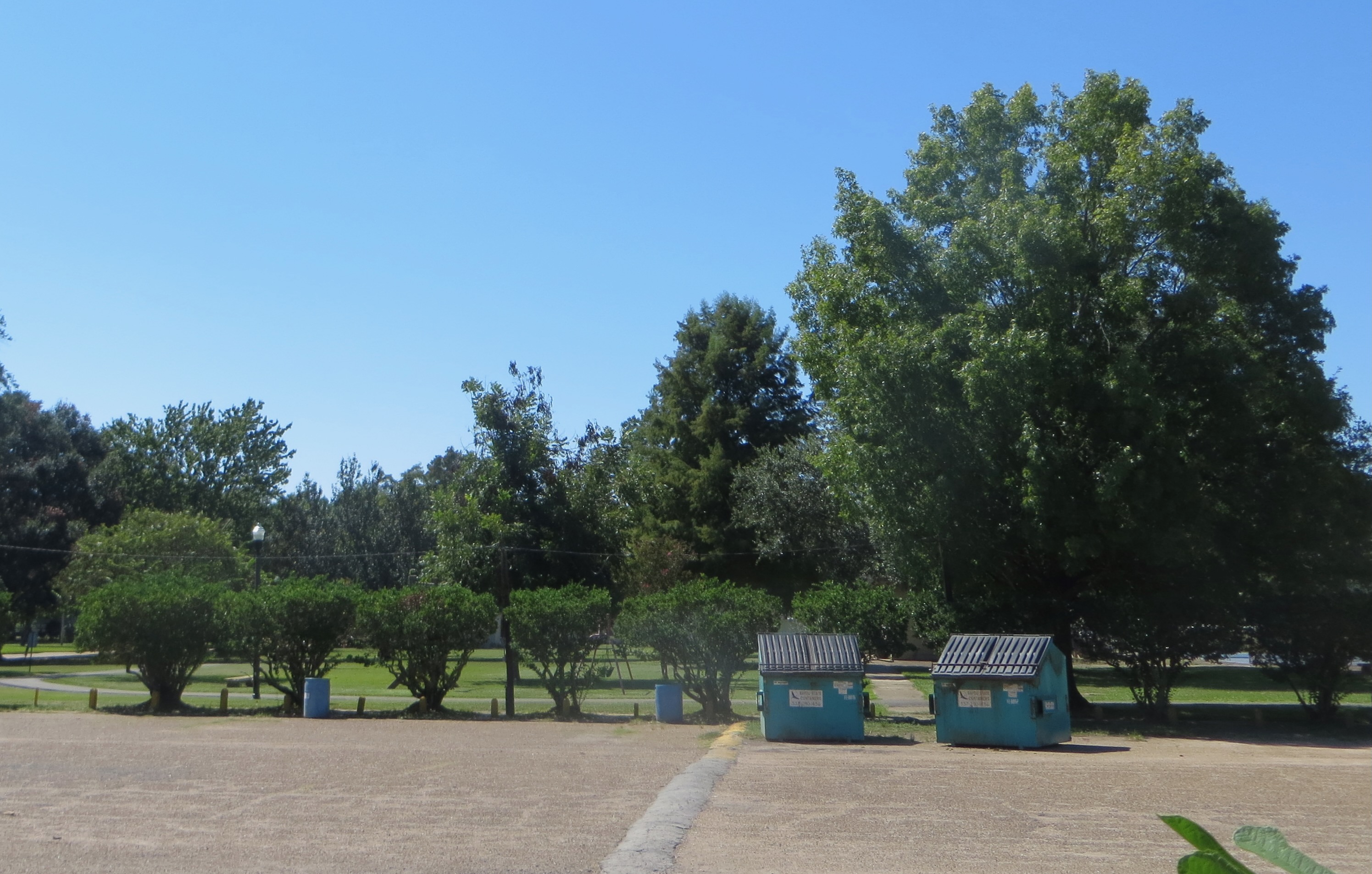
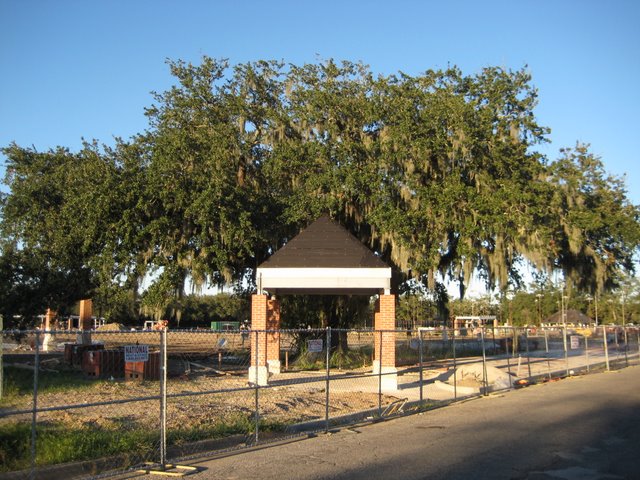
The vast majority of the trees and all of the shrubs lining the parking lot border, including two mature oaks, will need to be removed for the multipurpose center. The large live oak on the border of Market (left side of the photo), as well as one of the oldest oaks in the park behind the kiddie pool (actually another historic feature, a fountain that once stood downtown), will be negatively impacted by construction. The entire pool complex is planned to be demolished and filled, adding hundreds of thousands of dollars to the cost of the project, a potential violation of federal grant guidelines when less expensive sites are available. (Photo by author.)
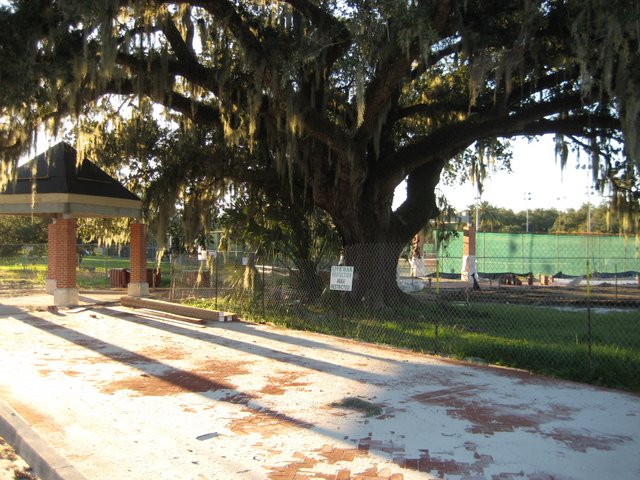
All of the trees and greenery here would be removed, including a mature, 50+ year old white oak, a similar age live oak and other healthy shade trees. This area is the most popular location in the park for annual community events, fairs, cookoffs, family reunions, and cultural traditions. The popular swing set for small children is also located in this area. (Photo by author.)
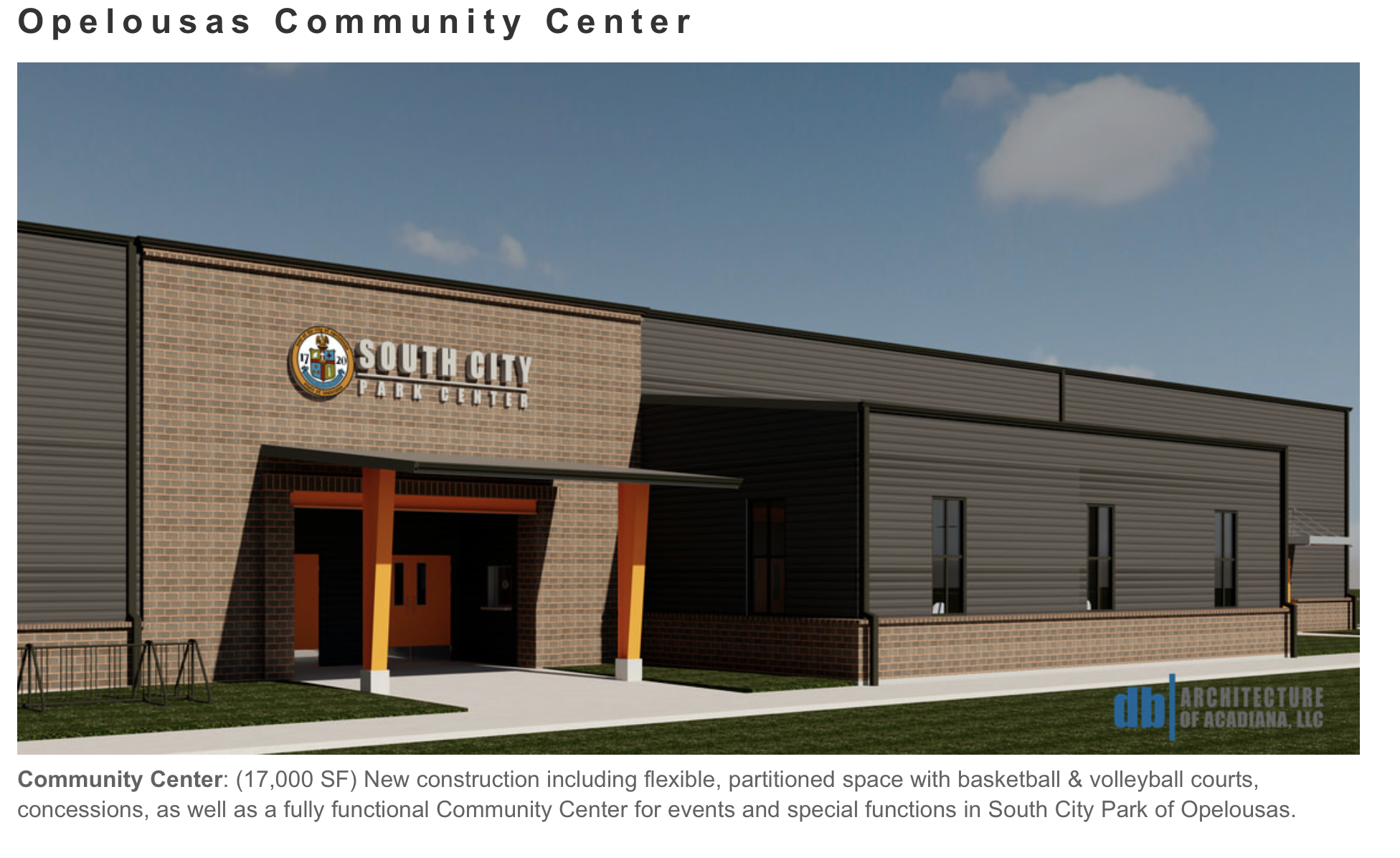
This is what would face the parking lot and loom over nearby homes. The dark colors will add energy costs due to heat gain and the industrial building design is out of character with the existing park flora and infrastructure. The architecture firm touts no sustainability, energy efficiency, or water management credentials, such as USGBC LEED (Leadership in Energy and Environmental Design), which indicate expertise in sustainability and thoughtful management of building impacts on sites, energy use, resource management, and nearby neighborhoods. Use of this site will radically impact the popular walking trail. Would you rather walk behind this building, or among shade trees, grass, and nearly century-old, sturdy historic buildings? (Screenshot from Lafayette-based DB Architecture’s webpage. This image is yet to appear on any city or ODDD website.)

Footnotes:

  1. Publicly Owned Property and Procurement Standards
    Since all properties in South Park are publicly owned, the decision-making process is subject to federal procurement rules emphasizing efficiency and economy. Without a strong, documented justification for demolishing historic assets and green space—rather than developing nearby vacant land—such actions may be challenged for violating these standards.
    ↩︎
  2. Federal Cost Principles (2 CFR Part 200)
    Federal awards require that all costs be “reasonable and necessary.” Choosing a significantly more expensive or environmentally damaging development site—when a viable, cheaper alternative exists—must be justified with evidence. Non-federal entities must maintain clear documentation explaining key decisions, including site selection.
    ↩︎
  3. Historic Preservation Requirements (NHPA Section 106)
    Federal agencies must consider the impact of funded projects on historic properties. Demolition of a historic building (including those eligible for—but not listed on—the National Register) requires a Section 106 review and may trigger mitigation requirements. “Anticipatory demolition” to avoid review can render the project ineligible for federal support.
    ↩︎
  4. Environmental and Green Space Considerations
    Federal grants often require environmental review under NEPA and EPA guidelines. These prioritize minimizing ecological damage and encourage the use of vacant or underutilized properties. Destroying public green space and mature trees—without clear benefit—may violate the intent and spirit of these regulations. ↩︎

Old Mandeville Oak Falls in the City and People Don’t Hear the Truth

A story in the Times-Picayune tells the sad tale of the death of yet another benevolent giant live oak in Louisiana. This time, it was a revered tree in Old Mandeville, killed by the usual suspect–humans. Yet the writer and the so-called expert got it all wrong. This tree did not die a natural death, it was a slow-motion murder by pavement and development. It didn’t have to happen, and it doesn’t have to continue to happen, but it will.

We lack the common sense to be responsible stewards of our landscape. To some, this isn’t a big deal. But the fact is, we will die if we continue to fail to address our ignorance. That tree is just one of thousands of ancient oaks lost to development. In too many cases, “tree coffins,” those concrete boxes in the sidewalk or parking lot in which we expect trees to “live” are ultimately the cause of their deaths.  You see it everywhere, from downtown streets to mall lots, older trees getting scraggly and dying in these small set-asides. It’s just plain stupid.

I’d love to do a documentary on this subject if anyone out there is interested in helping. It’s long overdue.

Here’s the article: http://www.nola.com/politics/index.ssf/2014/08/300-year-old_madisonville_oak.html

And here are the comments I posted:

It is clear that development under the canopy is what killed that tree. To have a concrete curb within mere feet of the trunk means that the root system was damaged, ripped up and smothered by paving. The number one cause of the death of urban trees is soil compaction. Older trees, that grew without interference for decades, are particularly sensitive to disturbance of their root zones. Think of a tree as a closed system where the roots recycle the fallen leaves and act like both lungs and intestines, processing nutrients, water and air in a metabolic system. Then imagine machines, shovels, people, digging, covering, and sealing this system. It often takes decades for these trees to die. 

Look at the large trees in Old Metairie, surrounded by pavement. They are spindly, which means the tree is shutting down branch systems in its attempts to adjust. Trees are like submarines or ships with watertight doors that close to protect the rest of the vessel. When you see dead branches, those branches are shut down and will not become leafy again. 

That tree in Old Mandeville was murdered by progress. It died a slow and public death. It did not die of old age. It died of ignorance, neglect, and by the assault of human development. 

The good news is that we know better and can do better. But it is too late for many of these sentient giants in whose branches we can sense the touch of the divine. Older trees need and deserve protection and that means public policies that honor their roles in the health and wellbeing of the land that supports and nurtures us. We need to give older trees space. The top 18 inches of soil where most of the life-giving aspects of biology give rise to not only trees, but us. We need to understand that soil is alive and that trees–and humans–need healthy, loose, alive soil if we are to thrive. 

Guidry is wrong. It was somebody’s fault, a very long time ago, when they failed to care about the space that tree needed, and put concrete and pavement over its roots, and began a process of starvation and strangulation that weakened it and caused it to die sooner than it should have. We killed this tree, probably generations ago, when we built the roads and sidewalks over its most sensitive space, its root systems.

But it’s not just about protection, if we are to have good public infrastructure and healthy communities to serve future generations, we need to understand that we must put the right tree, in the right place, planted at the right time. And that means a broader variety of native species, not more crape myrtles, and not live oaks planted in small spaces between sidewalks and roads and under power lines. This, too, is foolhardy.

Until we become better educated about tree biology and implement policies that protect older trees and guide future plantings, many more will die. And we lose something of ourselves every time.

And here’s a picture of a tree killed by development after Katrina, since this article needs a dead tree and I’m not going to use the T-P’s pic.

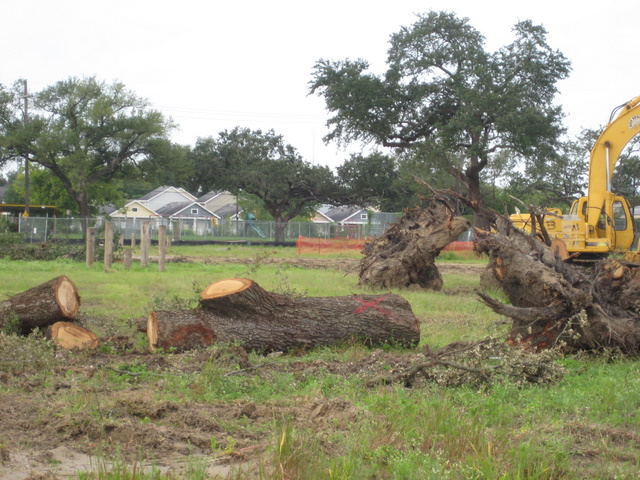
One of the more than 30 mature oaks destroyed by the redevelopment of the Lafitte Projects on Orleans Ave.

Bas Clas to Release 7 Song CD “Big Oak Tree” on Earth Day, April 22

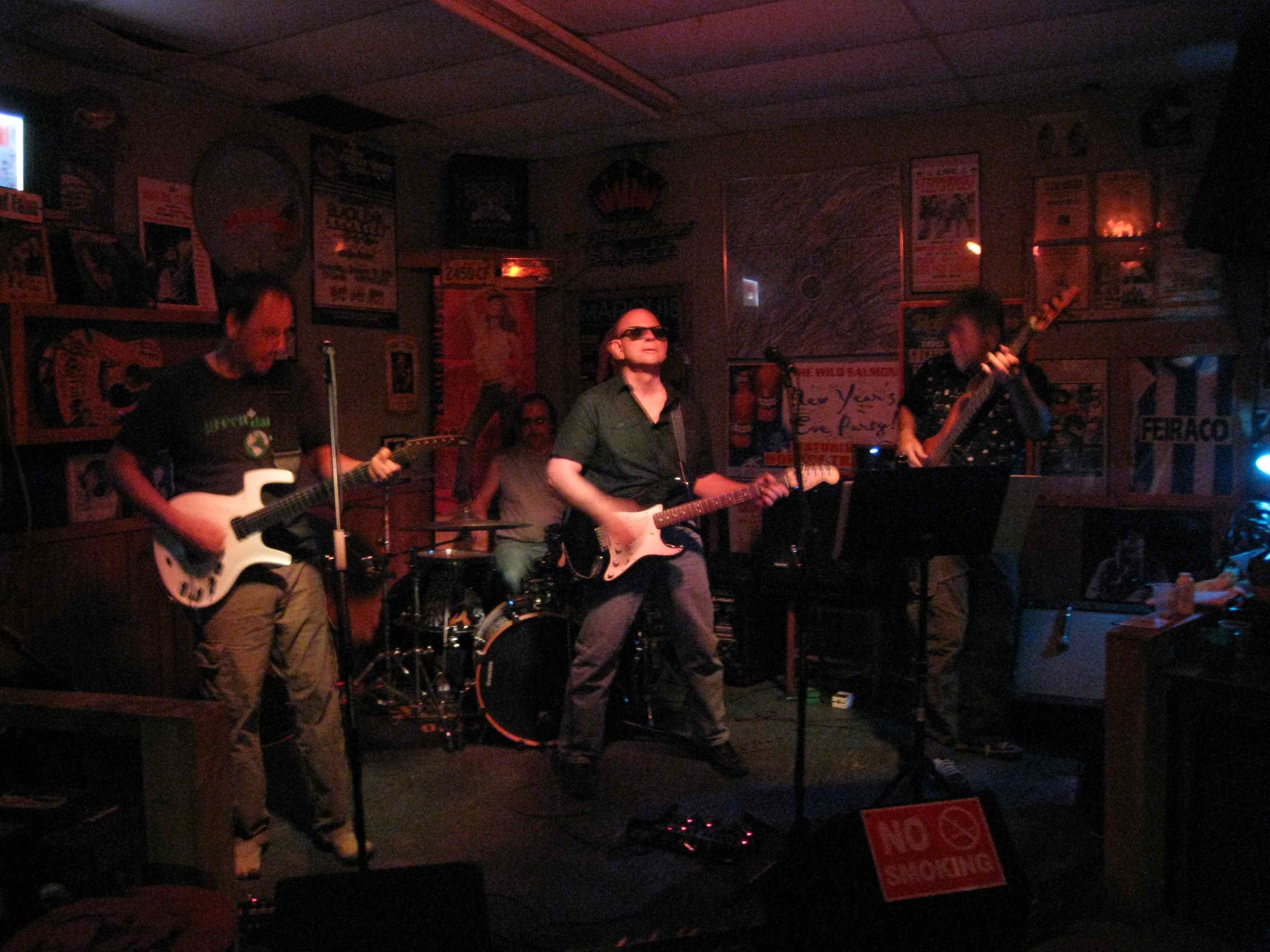
Bas Clas at The Wild Salmon, Aug 2011

It’s official. The first new recordings by Bas Clas  in more than 20 years will be released on Earth Day, Sunday April 22. The 7 song CD is titled “Big Oak Tree” and features a mix of old and new songs all recorded at Dockside Studio in August 2011 with engineer David Farrell. Featuring an expanded lineup that includes Eric Adcock on keyboards, Dickie Landry on sax, and backing vocals from Leslie Smith and Mike Picou, the tunes range from crunchy rockers to a Cajun-flavored tale of life and loss (from which the title was gleaned) that features Roddie Romero on accordion, David Greely and Mitch Reed on fiddles, and Christine Balfa on triangle. The band will be performing at Festival International du Louisiane in Lafayette on Thursday, April 26 at 6pm and the following night (Fri, Apr 27) at The Wild Salmon, also in Lafayette.

Climatology vs. Meteorology: Why Do So Many Weather Personalities Deny Climate Change?

OK, time to address a seriously Big Issue: Climate Change. I’ll try to keep this one simple.

For some reason, meteorologists have quite a few prominent deniers in their ranks. They purport to be experts because they are involved in reporting on weather. But, weather is not climate. And for TV weather “forecasters” to make claims that humans cannot and do not impact climate is a logical fallacy; because, they are not climate scientists. Meteorologists typically have a bachelors degree. Scientists, well, they not only are bound by rigid, peer-review methodologies; but, they have years of education above and beyond that of a typical TV weather personality. And research trumps opinion.

So here’s my take: Climate is to weather what the digestive system is to feces and urine. Climatologists are like medical doctors analyzing a system. Meteorologists are like commentators observing the process and predicting the arrival and general composition of an end product.

To put it crudely, when it comes to climate science, TV weather personalities barely know shit. And if it wasn’t for government investment in weather and climate resources—socialized science!—TV weather personalities wouldn’t be able to smile at us daily and make their predictions.

We live in a tiny bubble of life for which we can find no comparison in the known Universe. And on the scale of the Universe, our blue sphere is but an atom.

The biosphere is a relatively small part of Earth. The zone of life-giving atmosphere and land for humans is only a couple of miles thick. We undeniably have–and continue to–profoundly affect systems in the biosphere that normally span tens of thousands, even millions, of years. Whether it be the coastline of Louisiana; the expanding mats of plastic and petrochemical waste in the oceans; the prevalence of 20th century man-made chemical compounds in the tissues of humans, mammals and other species; or the ongoing and massive extinction of species at a rate 1000 times what should be normal–we ARE affecting Life on Earth.

Our short time in this realm of the living can be many things. The impact of one human’s brief life and work can linger for thousands of years. We see that in the wisdom and examples of religious figures, philosophers, scientists and inventors, and those who sacrificed themselves on the altar of basic human rights. If we can have such a positive impact, it is only logical to assume that we can have a long term negative impact.

We are messy and selfish creatures; but, we have the intelligence and imagination to reach the stars, and to live compassionate and productive lives. We know that many of the things we do are harmful to our future both individually and collectively. Climate scientists have clearly shown us that we must take bold steps now to reduce the chances of catastrophic harm to ourselves. This is not about saving the planet. This is about saving us.

The next time you see or hear a media weather personality dismissing the human realities of climate change, contact that media company and express your frustration. Tell them you’re tuning them out for another channel. Media companies understand that language. Vote with your voice and with the remote control.

We live in the most compassionate time in the history of the human race. We instantly communicate tragedies and elicit immediate response from an increasingly aware and generous international population. This is potentially the most transformative era in human history. But naysayers and deniers, many of whom are profiting handsomely from their contrariness, are undermining our response to this global emergency. And transformation can go either way, good or bad. We have no time to waste.

It’s the ultimate “lead, follow or get out of the way” moment. What are you going to do?

NOTE: The Age of Stupid is currently airing on Planet Green. Even if you don’t have cable, you can watch this powerful and compelling movie online. Do it today. If we don’t take immediate action to reduce our impact both individually and collectively, the next generations face catastrophic change.

City Park: Green Fills the Holes in The Great Concrete and Roosevelt Mall Smells Like Money

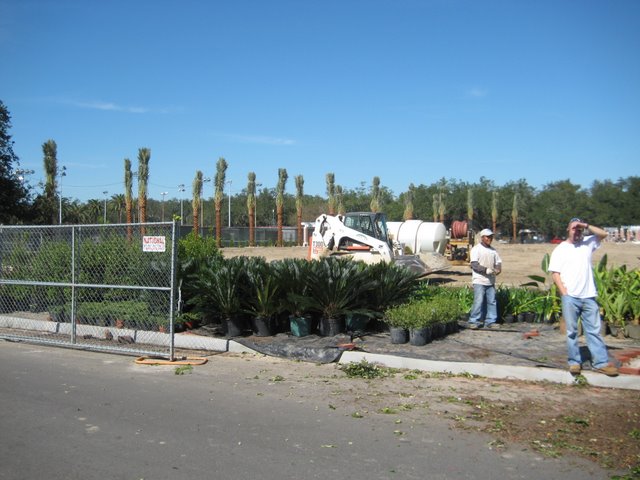
Non-native plants ready to plugged into the waiting holes of the hand laid brick and concrete holes in the nearly finished Great Lawn.
Non-native plants ready to be plugged into the hand-laid brick and concrete holes in the nearly finished Great Lawn.

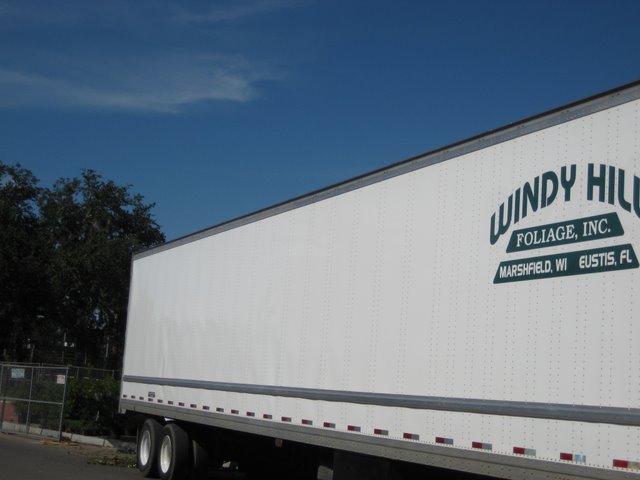
This week an 18 wheeler delivered a truckload of plants for the final stages of The Great Concrete Lawn in City Park. This multi-million dollar project sure provided a lot of money and work. That’s economic development. And that truckload of plants sure helped keep people employed—in Florida!

As the photo shows, a truckload of non-native species plants was delivered from a company with locations in Wisconsin and Florida. Cashio Cochran LLC, whose designs have disguised, smothered and killed the native landscape of City Park for the past couple of decades, ensured their role in history as perhaps the most un-enlightened park designers of the past half century with this last implantation of imported plant life.

Economic development in City Park for an out of state plant provider.
Economic development in City Park...for an out of state plant provider.

But all is not lost…..yet. After this past week’s debacle of destruction, the Voodoo Music Experience (VME), tore up the soil under some of the most beautiful and fragile oaks in the park, we at least can look forward to when these non-native palms, ginger and other decorative plants blossom and bloom and hide those ugly old oaks that obviously were in the way of Cashio Cochran’s Eisenhower Era vision of tidy design.

IMG_1284
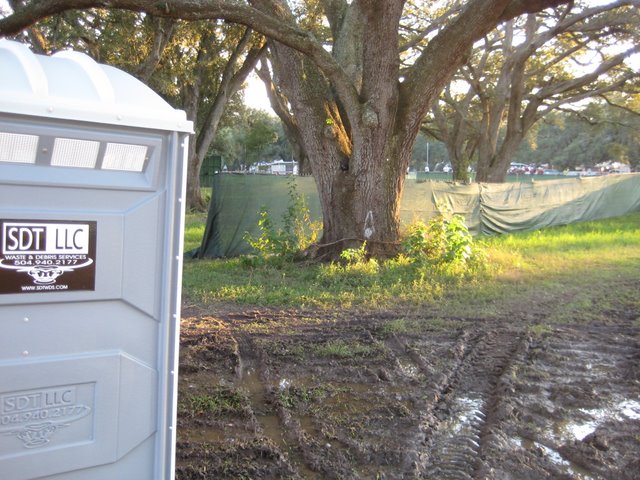
City Park brings friends together for the production of the Voodoo Music Experience. Rehage and Torres treat the park like, well, like what goes in that portabe potty.

What a year it’s been in City Park! Though I’ve only been blogging about it since March, we’ve seen bad decisions multiply like invasive species. The ironies pile up, too. The post-VME smell on Roosevelt Mall, despite the preponderance of familiar bull horns on the portable toilets, isn’t the aroma of the past couple of years in the French Quarter, but that of Bourbon Street of years gone by–a sour, sickly smell that this week’s blooming Sweet Olives can’t disguise. The damage, the smell, the bad design, the out of state plants, the heavy equipment crushing soil and roots, I guess it all smells like money to somebody. Or else we’d be hearing more than just me moaning and griping.

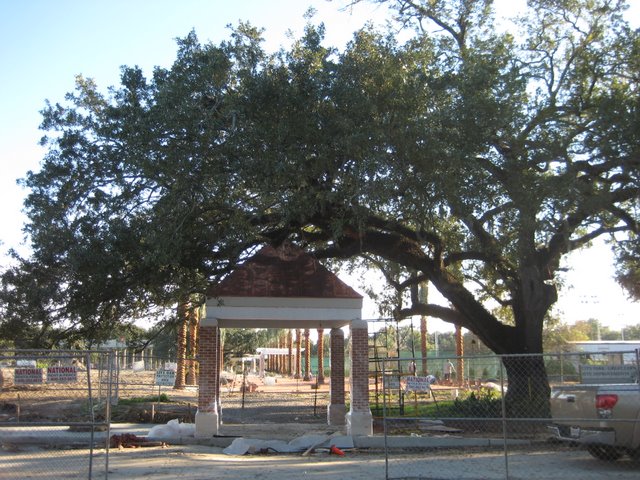
That copper roof will turn a nice shade of green. You  think the designers planned for that to match the tree?
That copper roof will turn a nice shade of green. You think the designers planned for that to match the tree?

But, I guess I’m lucky. Unlike the those ever-more scraggly old oaks, I get to go home and put those smells and sights out of my mind whenever I want. And I have to assume that the folks who work there find all this quite normal since it keeps happening again and again and again and again and again…………..

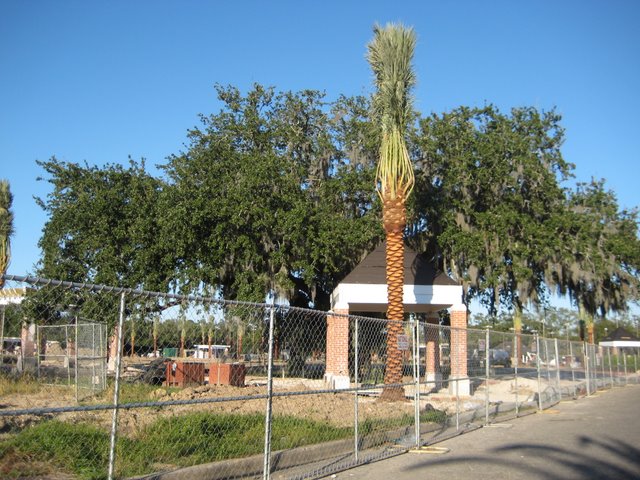
Cashio Cochran's big flourish--a palm in front of a pyramid hat building in front of an ancient live oak. Bam!
Cashio Cochran's big flourish--a palm in front of a pyramid hat building in front of an ancient live oak. BAM!

City Park Soil Remediation Project: One Step Forward

IMG_1110
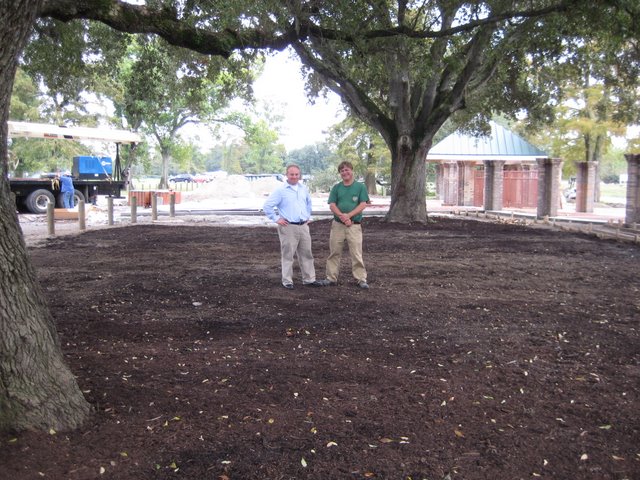
Newly hired LSU AgCenter horticultural agent Russell Harris (L) stands with La. Dept. of Agriculture & Forestry arborist Tom Campbell (R) under two live oaks where soil was aerated, remediated and improved at the new City Park Dog Park.

City Park’s consulting arborist, Tom Campbell, working with contract arborist Tom Benton, has taken the first step in best practices for live oaks with a soil remediation project for two trees at the site of the new dog park. This location, where cars parked for decades and compressed the soil, was a great candidate for the effort.

Working with what arborists call an “air knife” that injects compressed air into the soil, loosening it and allowing air, water and nutrients to flow, the soil was also amended with organic matter and now looks rich and life-giving.

The site will now  serve as a test for future efforts. The next likely candidate area is the playground near the Peristyle, where years of human activity have compressed the soil and badly damaged many mature trees.

Kudos to Tom Campbell and City Park for taking the initiative to begin this much-needed process of restoration and best practices!

Cashio Cochran Takes “Risks” in City Park

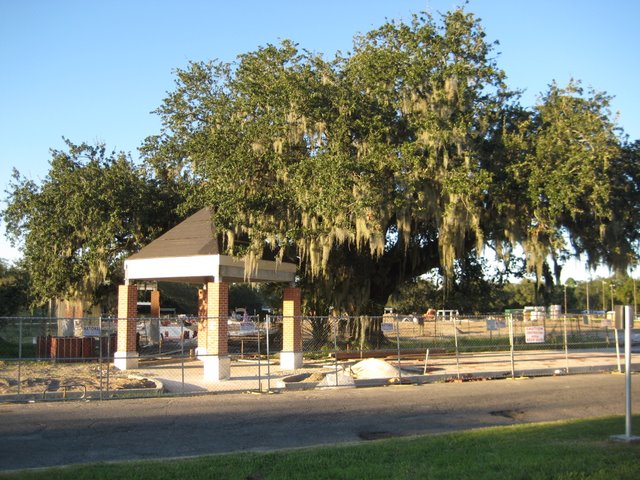
Just what every ancient live oak needs: a man-made building.

Thanks to Lolis Elie and the Times-Picayune for telling the story of how I’ve been trying to promote best practices for tree care in our area.

This is just a brief post for new visitors. I’ll be updating in greater detail later. But, I have to address a statement made by landscape architect Carlos Cashio in today’s article. He says that “sometimes you take risks to accomplish certain design elements.” My response is NO, YOU DO NOT TAKE RISKS WITH MATURE LIVE OAKS IN CITY PARK. Ever.

I post these pictures to let you decide for yourself. What is more beautiful: Carlos Cashio’s concrete and brick pyramid-hat building or God’s ancient live oak?

Architectural symmetry is more important to Cashio Cochran than the beauty of an older live oak.

It’s past time to let some of the true stewards and visionaries in the field of landscape architecture shape the future of this precious place. We already know what Cashio Cochran can do, and it does not meet my standards of the concept of legacy.

After I challenged this construction, sand was used under the brick rather than concrete. However, sand has little pore space to allow air, water and nutrients to reach the tree roots, so the tree will suffer so we can walk on bricks. Harming the oaks steals from the future and violates the standards of stewardship needed for the park.
After I challenged this construction, sand was used under the brick rather than concrete. However, sand has little pore space to allow air, water and nutrients to reach the tree roots, so the tree will suffer so we can walk on bricks. Harming the oaks steals from the future and violates our history.

Killing the Green with Green Building, Part 2: Lafitte Redevelopment

One of the more than 30 mature oaks destroyed by the redevelopment of the Lafitte Projects on Orleans Ave.

I really like the people behind the rebuilding of the Lafitte Projects. They’re nice. They said the new development will have many green and innovative features. But evidently everything must fit in nice square spaces and these trees are just not part of their vision for what the neighborhood should be.

30+ mature trees cut, 7 retained. And the beat goes on.

See all the pics and story here: http://dyingoaks.posterous.com

Dozens of Trees Damaged on Harrison Ave in City Park

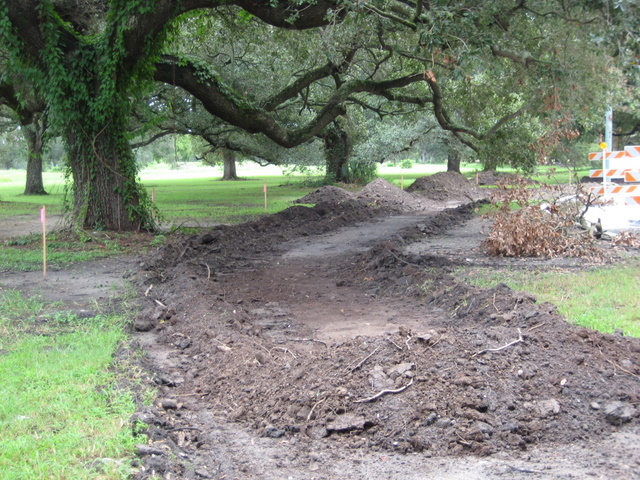
Bulldozed path under mature trees on Harrison Ave in City Park. Roots have been severed. These trees have been permanently damaged.

Good grief. I’m still trying to get to the bottom of this latest horrible development. Evidently the City of New Orleans bears some responsibility for restoring Harrison Ave through City Park. Not only are they widening the road–to the detriment of the oaks–but they’ve specified that a path be cut, evidently for sidewalks. Even the construction crew was surprised at the technical specifications which called for them to bulldoze the path. Now the trees have had their roots severed and are destined to be compacted and be abused by suffocating additions, likely concrete.

Why is it that as we rebuild we are killing so much of what matters in this town? What the floods didn’t take, stupidity is.

I couldn’t post all the pictures here so I built a Posterous page with 27 pictures. You can find it here at http://dyingoaks.posterous.com

Who is responsible for this latest crime against our quality of life?

IMG_0703
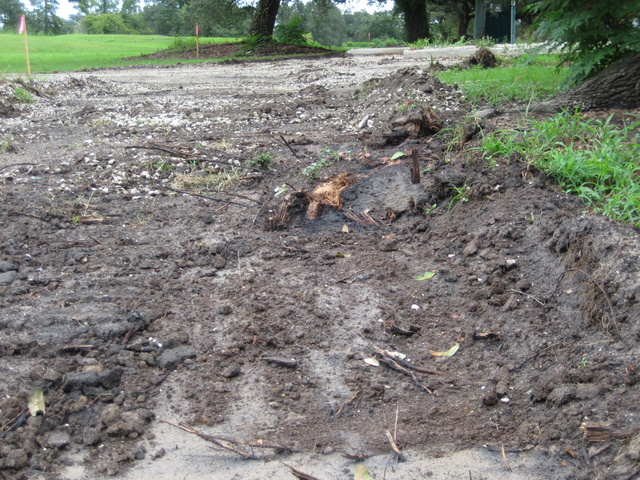
Close-up of root damage next to a mature oak on Harrison Ave in City Park. This path was carved by a bulldozer to build a sidewalk where none existed before. Paths can be built without harm. Somebody screwed up big time.