The City of Opelousas Faces a Grim, Self-inflicted Fiscal Crisis

Our modest household pays a paltry twenty-nine cents a day in property taxes for the privilege of owning a home in Opelousas. Before we moved here, we paid $4.56 a day in New Orleans, nearly sixteen times more. In 2023, city leaders proposed a significant millage increase to fund infrastructure and transform their ability to deliver badly needed services. It would’ve raised our cost of living here to a still-low $1.16 a day. However, it faced externally funded anti-tax opposition and an apathetic electorate and failed by 250 votes.

Nevertheless, the city continued with its expensive plans to use bond debt financing to construct limited-use, artificial turf high school sports fields in its loveliest public park. We’ve been trying for more than a year to help city leaders grasp the folly of the scale of these plans.

But it gets worse, much worse.

On March 3, the Monday before Mardi Gras, the mayor’s office abruptly called (and then canceled) a special meeting of the council as part of an effort to provide a legally required public notice for something none of us saw coming—a one-cent sales tax that provides what I estimate to be $5 million, or nearly a quarter of the city’s annual budget, expires in May 2025 and requires a vote of the people for renewal. That this fact was not made public sooner is a painfully big question. But we are where we are, and a successful vote for renewal, now scheduled for July, seems a long shot.

If the city loses the referendum, a quarter of its $20 million annual budget will disappear. In fact, since the tax officially expires in May, that loss will already be underway.

The lack of news and information regarding this looming fiscal disaster is disturbing. And one can only hope the administration will launch a strong campaign to raise awareness and support. But if the headwinds against the millage are any indication, convincing the poor people of this town to tax themselves on everyday purchases when the state is already doing so without their vote, is a longshot.

On March 11, the day of the regularly scheduled council meeting, I sent an email to city leaders in Opelousas. I received no reply. This is what I said:

To the Mayor and City Council:

I believe in the future of Opelousas. We all need to do our parts for that future to be bright.

We won’t always agree, but if you act transparently and with assertive outreach and public participation, we can help this city thrive together. 

I also know that if citizens like me don’t shout “Look out!” when we see you driving off a cliff, we’re as responsible as you when things go wrong.

The extravagant plans for South Park are a fiscal cliff, and the car is speeding without enough hands on the wheel. 

I realize that the mayor and ODDD have invested substantial time and money, and feel like we must stay the course. You’re trapped in the classic sunk cost fallacy. But if (when?) the sales tax referendum fails, investing millions in a limited-use, high school sports stadium and track could be a fatal blow to the city’s finances and threaten our future. 

Nothing about this stadium project meets the criteria of good governance. As I explained in a prior email, the design is a toxic, injury-inducing threat to the health and well-being of the young athletes it’s meant to serve and the surrounding neighborhoods and watershed. It will produce adverse health outcomes, the opposite of what you all want to see happen. 

I’m sorry to write that, but as a lifelong public servant and activist for public participation and good government, I feel qualified to tell you. 

There have been no proper public hearings or input, no transparency, and no clamor by the public for this investment. In fact, the vast majority of people we’ve encountered oppose this project and see it as at the expense of improving our water systems and roads. This perception runs deep and will fuel opposition to the sales tax renewal.

South Park plans are the most significant non-infrastructure investment in the city’s 300-year history. Yet that expenditure only benefits a tiny fraction of the general population of Opelousas. 

As a poor town, we cannot afford to overspend on South Park or anything else, as the chaos in Washington, DC, continues to shake the foundations of our government, education systems, healthcare, and social safety nets. Cuts to the Department of Education combined with Louisana’s new voucher program will seriously undermine OHS and its ability to have strong athletic programming.

Even the anticipated construction costs are now in jeopardy as the price of aluminum is up 70% since January, thanks to tariff threats. With the additional interests and costs of bonds, the final bill for the stadium will easily exceed ten million dollars. And without feasibility studies to determine demand, income potential, operational costs, insurance, and maintenance, we’re wearing blinders as we head for the cliff. 

In addition to the lack of adherence to good governance, legal questions arise due to fundamental gaps in how the city is supposed to operate. These questions could open the city to undesired scrutiny and meddling by politically opposed factions.

The City of Opelousas has not had an appointed Parks and Recreation Commission since 2019, despite its legal mandate to oversee all aspects of park management. Without this oversight, current plans lack the transparency and due process required for significant public investments.

The solution is for the City to immediately reappoint the Parks and Recreation Commission to ensure transparent and lawful oversight of all park-related projects.

The mission of the ODDD is to foster commercial growth and economic revitalization downtown. Investing millions in a limited-use high school sports facility—particularly one that may not be accessible to the general public—raises questions about how such an expense aligns with the district’s goals.

As a concerned citizen, I expect all public funds to be used in a manner that is transparent, legally sound, and beneficial to the entire community. The City risks potential litigation, financial mismanagement, and public backlash without a clear legal basis for this expenditure.

It gives me no pleasure to call you all out on this situation. But here we are. It’s not too late to scale back the stadium plans to save millions of dollars and still have an above-average football facility. 

The people of Opelousas need and deserve a city that serves everyone by first providing public safety, dependable infrastructure, and clean water. Without transparency, outreach, and public participation, you will not successfully deliver on that responsibility. You have the power to steer us in a better direction. And it starts with reigning in extravagant spending. 

We’re all in this together. Thank you for your public service! Please do better! How can I help?
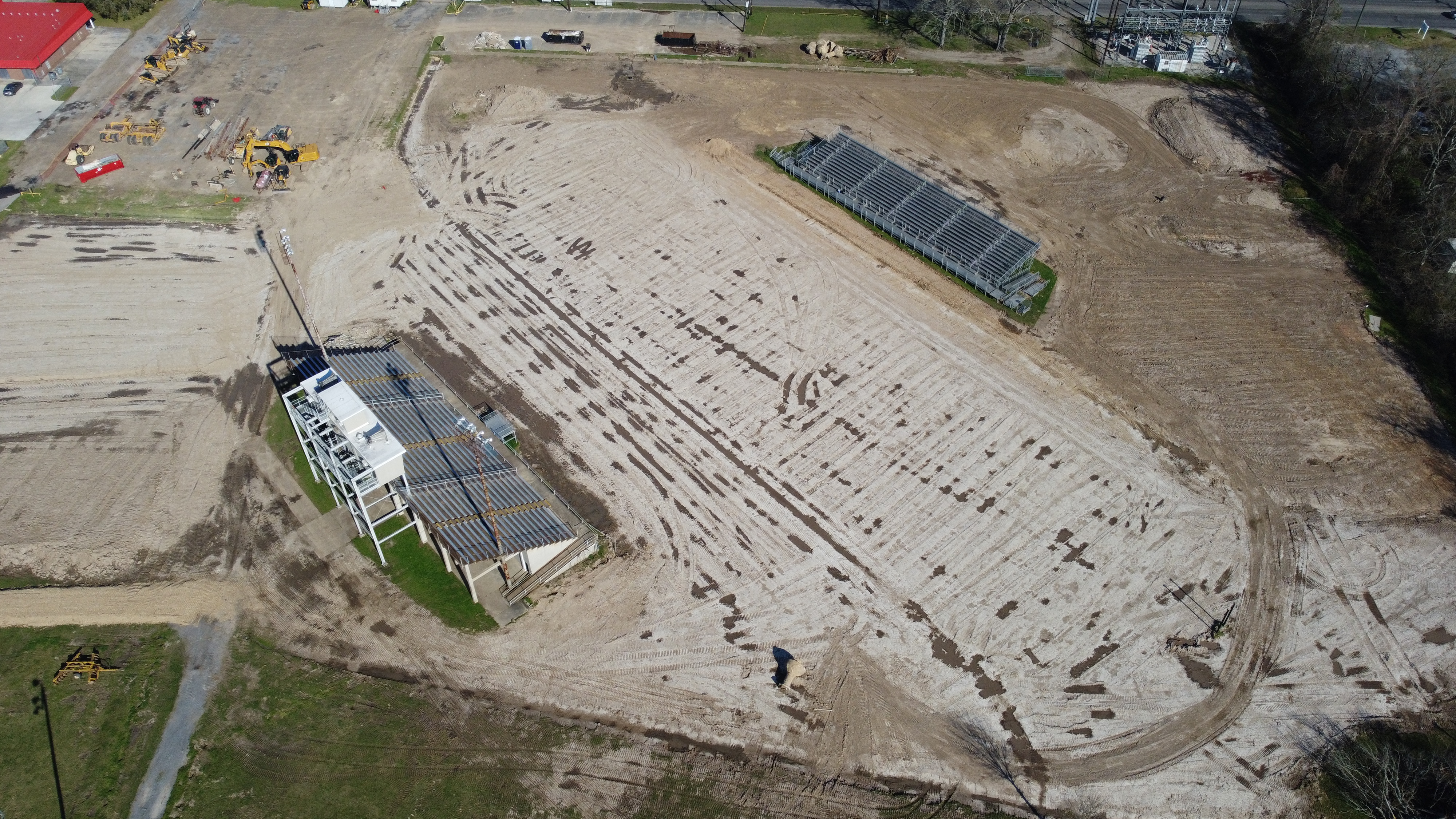
Construction at Gardner Stadium in Opelousas, a facility that serves two of the city’s five (!) high schools. The largest non-infrastructure public investment in the city’s history, estimated to cost more than $10 million. As seen on March 10, 2025

Bas Clas Releases New CD “Love Food Sex Peace” with Special Show at Chickie Wah Wah in New Orleans

BasClas2013CDMainCover

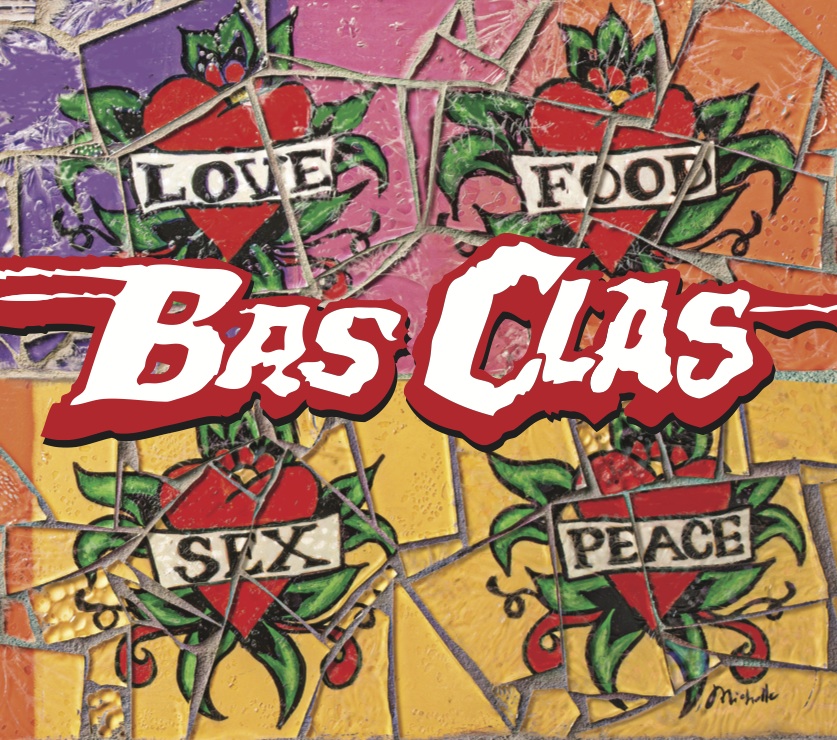
Santa made the rounds early this week, delivering the latest Bas Clas CD Love Food Sex Peace to audiences in New Orleans. The 7 song disc features five new songs and two tunes familiar to longtime fans. As with the band’s previous release Big Oak Tree, an Offbeat Magazine Top 50 CDs of 2012 and a nominee for their Best of the Beat awards as Best Rock Album, “LFSP” was recorded at the legendary Dockside Studio and engineered by Grammy-winner David Farrell. Produced by Bas Clas, David Farrell and Steve Nails, the new CD features guest musicians Eric Adcock on keyboards, Jonno Frishberg on fiddle, Roddie Romero on accordion, and Dickie Landry on sax. Backing vocalists include Leslie Smith, Mike Picou, and on the song “Goodnight,” harmony ninjas Susan Cowsill, Alexis Marceau, and Sam Craft. The CD cover art is derived from a stained glass piece by the bassist Geoff Thistlethwaite’s wife Michelle Fontenot.

The band will make the disc available to the public at a special year-end show at Chickie Wah Wah in New Orleans on Friday, December 27. We’re blessed to be able to wrap up an eventful 2013 by releasing this CD at our last live gig of the year. The CD will be available at the Louisiana Music Factory, CD Baby and on iTunes in the coming days.

Dear America,

20 million barrels of oil. 20 million. That’s what the USA uses every day. And nearly 50% of that oil is being burned each day as motor fuel. As of Monday, June 7, the BP Macondo well has spewed in the vicinity of 2,000,000 barrels with no end in sight. That’s the equivalent of 10% of one day’s oil use in the US.

“That’s what we need to get through the day!” exclaimed John Hofmeister (German for “yard master” to you etymological folks) the former head of Shell on a recent Larry King Show. In prior media appearances Hofmeister promoted his oil skimming ideas, his experiences in keeping a culture of safety at Shell, and his book. On King’s show he reverted to the Company Man and showed his Chamber of Commerce side, indulging in a couple too many Gripes on Behalf of the Oil Companies. He evaded James Carville’s challenge to explain and justify the cozy relationships Big Oil cultivated with government, including regulatory agencies and personnel, which will prove to be a major factor in the chain of events.

Then came T. Boone Pickens. He was visibly stressed. But he was clear as a bell. His overriding message, “It’s not time to panic.” He emphasized that we need to focus on stopping the well and dealing with the humanitarian and environmental response. When we get ahead of these demanding issues, then we can focus on inquiries and blame. But he knows it’s bad. “This event is like a 100 Year Storm.” He emphasized a military-like focus.

Which brings us to that ugly and horrible act of humanity: War.

For nearly 10 years we, our families, friends and neighbors have been paying the ultimate cost for our military actions around the world. The United States has been at war longer than World War ll, and as of June 7, longer than in Viet Nam, our longest war. We are paying the price in lives, money, energy and resources. Yet we blithely go about our days worrying more about phony celebrities, useless trends and pop culture than we do about being at war in foreign countries. We are sacrificing so much–lives, resources, energy, money, time–and we are so spoiled by all the power we wield with our smart phones, fast cars, fast cards and fast food–that we are oblivious, like slowly cooking frogs, to our impending doom.

Whether is it our diet and diabetes, or our vapid, mobile lifestyles and growing environmental crises, we are in a massive state of denial that only a large-scale psychological and spiritual transformation effort can least-painfully change. But it appears we’re incapable of changing without very painful and tragic impetus.

Hell, if even the increasingly unnecessary maiming and death of our best and brightest in military service isn’t compelling us to act, then perhaps Nature will. Or will it?

The root cause of this situation is our demand for oil and our addiction to dirty fossil fuels. Though we built our consumer society on what appears to be “cheap” fossil fuels, the true cost has never been fully factored or equitably distributed.

For 150 years, modern civilization has depended upon exploitation, extraction, manufacturing and distribution of natural resources, usually directed from the less powerful to the more powerful.

And now this. The BP oil disaster is well on its way to being the worst singular petroleum catastrophe in world history, impacting far more than just Louisiana and the Gulf of Mexico.

The site of the BP Deepwater Horizon and areas impacted by the catastrophe are the uterus and placenta of the Gulf Stream. And a breathtaking array of biology upon which humans on multiple continents depend is threatened. We cannot determine how long it will take to recover, even after the well is stopped. Years? Decades? In whose lifetime will these land and water ecosystems return to the diversity and volume of April 2010?

Some 30% of the USA’s seafood comes from these estuaries.  But, that’s only measuring it in the USA. Many of the species most seriously affected by this spill migrate between continents. There could be shortages of fish products around the world.

But let us not lose sight of the biggest tragedy–us. This is a growing humanitarian crisis.

In Louisiana, Mississippi, Alabama, Florida and Texas, hundreds of thousands of jobs are threatened and tens of thousands of jobs are at a standstill or waiting to be told to stop. This means that thousands of families and households are not receiving income.

Second Harvest has been overwhelmed trying to bring food to families in Louisiana. With the assistance of Catholic Charities, the New Orleans Food & Farm Network and others, a growing number of volunteers are participating in distributing food to the hardworking, diverse patchwork of celebrated cultures of people who define the character of Louisiana to the world but who are not emotionally prepared to be dependent upon charities.

As efforts mount, words get stronger. Beth Galante calls us to action in the May 2010 Global Green newsletter, “The humanitarian crisis is the first priority – every single coastal resident has had their job destroyed or damaged for the foreseeable future, from the fishermen to the local restaurant staff to the hotel maids, and it is imperative that aggressive action ensures that they can keep food on their families’ tables, make mortgage and credit card payments, and get rapid access to comprehensive mental health care services.”

Why are these things happening? Why is this how we are going to spend the 5th Anniversary of the tragedy of the failed levees after Katrina? Fundamentally because a perfect storm of stupidity has swept this country for the past few decades. We’ve had all the information, all the warnings we needed to make changes. We are lost in consumerism. We are not saving energy. We are not taking the steps needed to reduce our impact. We are indeed living in The Age of Stupid. We are at war on two fronts, sacrificing our friends, families and economy to the mighty Oil God. And we won’t change our ways. We are ultimately at war with ourselves.

Will this event change us? There is no doubt that Louisiana is now forever changed, perhaps for generations. But will the USA change its ways and reduce our dependence upon dirty fossil fuels? 11 dead in the Gulf and 15 dead in the mines in 2010 don’t seem to matter much. More than 5000 of our finest sacrificed in Iraq and Afghanistan seems to make no difference. We blithely drive, shop and waste and waste and waste. We gossip about pop “stars” ruining their lives while our own are ruined by ignorance,  inactivity, bad food and the resulting obesity, diabetes, heart disease and cancer. The fact that the current generation is the first in modern times to be expected to live shorter lives than their parents doesn’t even seem to be changing people’s attitudes much. We are speeding pedal to the metal into a dead end.

So I have a request to the USA: pray. No, I’m not a religious person. But I am desperate. And in desperation, most folks suddenly find God. Besides, other than cutting your driving by at least 20% and pledging to do better, there’s not much you can do.

So, Dear America, pray. And pray hard and for a long, long time. It might not slow the oil. But at least it will slow you down.