
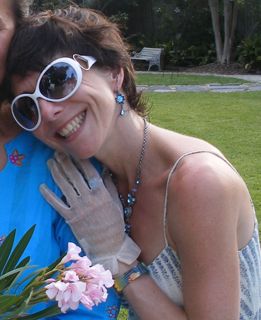
UPDATED 1/10/09: Note: When I originally wrote this, many facts were unclear. Now that more information is available, I have re-written parts of this piece to reflect more accurately the chain of events and overarching realities that have come to light. This being a blog and not a printed publication, it is a living document and one that can be improved and edited to improve its veracity. I hope that’s what I’m doing. Regardless, I cannot possibly capture all the truths at work here. Suffice to say, Cayne turned to the system for help and it killed her.
Update: Jan 13, 2009-Shoeless Eric was with the family at Cayne’s bedside when the decision was made to remove her from life support. He’s created a moderated group site where you can find more information about what happened and what is going to happen: http://health.groups.yahoo.com/group/caynemiceli
Here is Cayne’s MySpace page, updated on the day she sought medical treatment.
Update Jan 14, 2009: Karen Dalton-Beninato’s blog on Huffington Post today is about Cayne. It’s a beautiful piece and features a piece Cayne wrote.
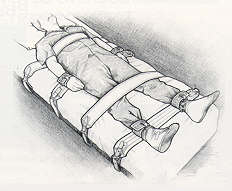
The lack of psychiatric beds, health care resources and basic human rights in New Orleans produced yet another tragedy. After being treated at Tulane Medical Center with a powerful steroid, prednisone, for her severe asthma, my friend Cayne Miceli believed she was having an adverse reaction to the drug. She sought to be re-examined and/or admitted and was turned away because the hospital felt it had done its job, and because she had no insurance. Unable to contain her frustration, her emotional state aggravated by the steroids, she flew into a rage and was taken away to jail. She allegedly attempted suicide and was put into 5 point restraints, aggravating both her mental state and her ability to breathe. She reacted badly to the restraints and was further subdued by two jail personnel. Subsequently, she “became unresponsive.” Jail staff intubated and “revived” her so that her “actual” death occurred at University Hospital with the decision of her family to remove her from life support. The facts are still unclear and may not be clarified for a while. But one thing is clear: the system failed her.
Cayne was a vivacious but troubled soul. She had a magical quality that connected her deeply to New Orleans. She was a survivor like the rest of us. She was full of life.
Cayne wasn’t afraid to reach out when she needed support. When she sought medical assistance for her asthma, it wasn’t done lightly. She has lived with asthma for many years. Cayne knew she needed help and did the best she could to get it. In Post-Katrina New Orleans, she found no room for her illnesses.
New Orleans without Charity Hospital is a city without compassion. That we continue to have too few psychiatric beds is unacceptable. That we continue to be haggling over the rebuilding of our health care infrastructure is abominable.
New Orleans is a city filled with Cayne Miceli’s, uncounted troubled and traumatized souls who keep things together most of the time. But when their lungs, hearts and minds can take no more, New Orleans provides no shelter, no bosom into which to retreat because Charity Hospital has not been rebuilt.
I now officially join the voices of those opposed to the tearing down of houses to build a new, fantasy hospital. Charity sits unused and ready to be restored while victims, the detainees–die lonely deaths in jail, our default system for handling the mentally troubled.
The people who seek to extend this process because they refuse to fix Charity Hospital have blood on their hands. I will remind them. Then again, maybe we all have blood on our hands these days.
Save Mid City/Save Charity Hospital
Note: Jan 10, 2009: It’s clearer to me now that health and justice systems are in a dance of death lottery that can start when you say “I need help!” or merely, “I can’t breathe!”
It’s also clear to me that if someone at Tulane had said, “OK, we’ll examine you again,” instead of “call the police,” Cayne would probably still be with us.
Now that we know more about Cayne’s horrible experiences and death, the lack of beds is only part of this problem.
In Post-Katrina New Orleans, we live with layers and layers and layers of problems, of missed opportunities, of disorganization and incompetence that infect the system from within our “rebuilt” homes to the halls of power in Washington DC. I pray we see that improve in 2009.
I also learned that I have a dear friend whose brother suffered gross mistreatment in a local jail. That this isn’t the first asthmatic to die in a local jail. That the last person to die on that torturous medieval restraint system died a medieval torture death: dehydration.
It’s bad enough my country justified torture. Now I know that my community tortures, too. 
And I’ve learned that best estimates put those shining new hospitals opening in 2016.
At the current rate of death and disablement happening in area jails, I’m probably going to personally know several more victims before the next seven years pass.
Our jails and prisons are maiming and killing too many people who often haven’t even been arraigned. And now our hospitals can’t recognize the symptoms of the drugs they administer and dump their patients on the police? Suffice to say I find this unacceptable/abusive/you fill-in-the-blank.
We’re losing basic human rights. I hope we’re waking up.
As Cayne so often said when she reached a stopping point in the conversation: “Yeah, yeah, yeah. Peace & Love! Peace & Love!”
<Sigh>.

 NOLAmotion Blog
You must be logged in to post a comment.