Lavish Dreams, Empty Coffers: A Reckoning in Opelousas

By Stephen C. Picou (May 1, 2025) For over a generation, Opelousas has relied on a one-cent sales tax to fund nearly a third of its annual operating budget. That tax expires on May 31, 2025, and reinstatement requires a yet-to-be-scheduled public vote. This week, the mayor called for a special meeting of the City Council to continue public notice in support of a ballot initiative to renew the tax. But it’s a classic scenario of too little, too late to stop the cut, because this situation should have been addressed years ago.

How did we end up in this position? It’s not complicated. All city leaders had to do was read the Legislative Auditor’s annual financial report, which plainly states that the tax will expire in 2025. However, those entrusted to plan responsibly repeatedly overlooked this fact.

Over the past fifteen years, under the heading of Sales and Use Tax, the audit shared the following: “Proceeds of the 1% sales and use tax was initially levied by authority of a special election held on April 5, 1975, and was extended through May 31, 2025.” This statement does not hide in footnotes or small print; it is part of the main body of the report. Yet, until March of this year, no one at City Hall flagged it as an urgent concern.

One glaring reason for this oversight is clear: for the past three years, city leaders have been consumed by an ambitious and costly plan to transform serene and bucolic South City Park into a busy, commercially supported, paved-over, high-end sports complex. Fueled by city funds and special sales tax revenue from the Opelousas Downtown Development District (ODDD), this project became their fixation, while more pressing fiscal responsibilities were neglected. 

Some of us expressed serious concerns early on, warning that the plan was overpriced, poorly justified, and pushed forward with little transparency or public input. Instead of addressing our concerns, officials dismissed them—and us.

In November, as it became clear that substantial cuts to federal funding for social safety nets were imminent and could devastate Opelousas, the mayor rejected calls to prepare the city by reducing costs on South Park initiatives. He insisted on “staying the course” with the extravagant park development plans, the most expensive non-infrastructure project in the 300-year history of Opelousas.

In the days leading up to Mardi Gras, someone—whose identity remains unknown—must have finally reviewed the annual Louisiana Legislative Auditor report on the city’s finances and discovered the impending May 31 fiscal cliff. It wasn’t until April that the council could initiate the required public notice period.

When the tax expires on May 31, potentially severe cuts will soon follow. Who and what might be on the chopping block are issues that have yet to be discussed publicly.

Though I, too, was unaware of the looming expiration, my advocacy for fiscal prudence during these trying times was timely but insufficient. My analysis, rooted in extensive experience in government, community planning and outreach, economic development, and support for public parks and the environment, was that the city could not afford the costly plans for South Park, and that expenses to improve Gardner Stadium could easily be reduced by more than half while still meeting the needs of the schools.

For more than a year, I politely and professionally presented my questions and observations to the ODDD month after month. Initially, I was ignored. However, in recent months, as I uncovered and revealed details they kept from the public, I have faced scorn and derision. Last month, during an outdoor public event, a board member yelled at me, calling me negative, a liar, and an asshole, in front of city managers who chuckled like schoolyard bullies. I found the incident disheartening and unacceptable. That board member should resign or be removed.

Louisiana has the second-worst poverty rate in the continental US, exceeding eighteen percent. Nearly a million residents live below the poverty line. In Opelousas, the poverty rate is thirty-four percent, and in one Census Tract, home to more than 4000 people, the rate surpasses fifty percent. South Park is not in that tract; the much-neglected North Park is.

Due to special taxing districts like the ODDD, Opelousas has one of the highest sales tax rates in the country. The ODDD is mismanaging this revenue along with its responsibilities. They meet far from downtown at a location outside their district and operate with insufficient transparency and inadequate public input. Millions are being funneled into South Park without the legally mandated guidance of the still-unappointed Parks and Recreation Commission. What has transpired over the past few years, while they and the mayor were distracted by their envy and ambitions for a high-end sports complex like the one in much wealthier and fast-growing Youngsville, is nothing short of a travesty.

In his second term, the mayor is responsible for this situation and for failing to read the annual reports that clearly outline the pending sales tax expiration. Unfortunately, the phrase “the buck stops here” has taken on a new and painful meaning in his case. The bucks are stopping. What happens next is unclear, but we will all suffer due to the failure to prioritize investment in the basic functions of this needy, crumbling town. 

People in Opelousas are not clamoring for pickleball; they need food, affordable housing, clean water, good schools, healthcare, and job opportunities. Building state-of-the-art, limited-use sports facilities in a poor town with crumbling infrastructure, rather than investing in infrastructure and business development, is like putting a fur coat on a starving person dying of heat stroke.

Opelousas is a unique and special place. Our history, cultural mix, and location make it a desirable place to live. With the right infrastructure investment and leadership mix, this city can be a great place. However, this can only be achieved when the people elect city (and parish) leaders who strive for greater transparency, are guided by science and data, follow the law, read the audits, and incorporate the public’s voice. It’s up to all of us to do better! 
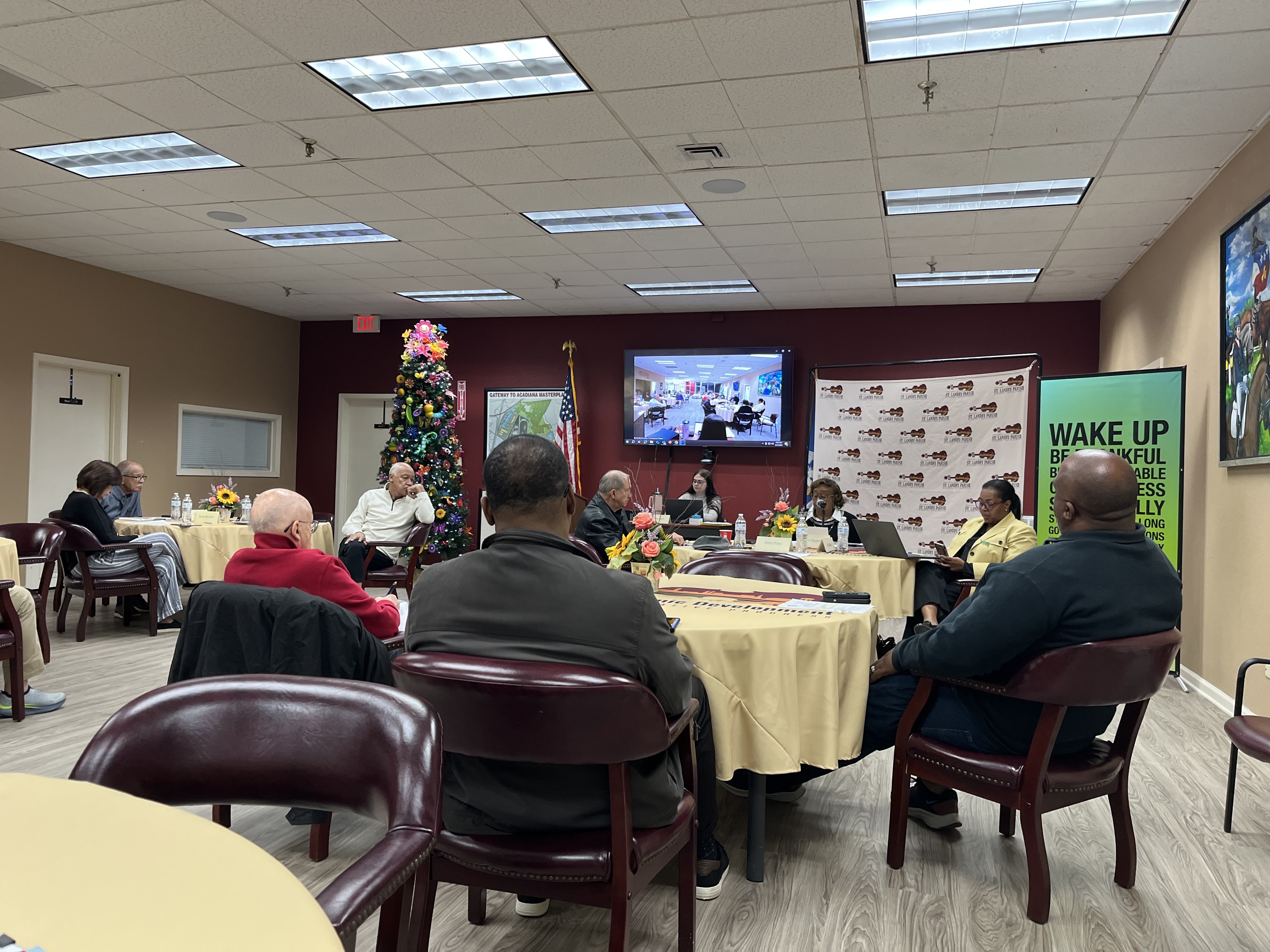
March 21, 2025, meeting of the Opelousas Downtown Development District. Held on the last Friday of the month at 9 am, outside the ODDD boundaries in the offices of the St. Landry Economic Development District (SLEDD), in the old Daily World building on the I-49 service road, nearly three miles by car from downtown.

The City of Opelousas Faces a Grim, Self-inflicted Fiscal Crisis

Our modest household pays a paltry twenty-nine cents a day in property taxes for the privilege of owning a home in Opelousas. Before we moved here, we paid $4.56 a day in New Orleans, nearly sixteen times more. In 2023, city leaders proposed a significant millage increase to fund infrastructure and transform their ability to deliver badly needed services. It would’ve raised our cost of living here to a still-low $1.16 a day. However, it faced externally funded anti-tax opposition and an apathetic electorate and failed by 250 votes.

Nevertheless, the city continued with its expensive plans to use bond debt financing to construct limited-use, artificial turf high school sports fields in its loveliest public park. We’ve been trying for more than a year to help city leaders grasp the folly of the scale of these plans.

But it gets worse, much worse.

On March 3, the Monday before Mardi Gras, the mayor’s office abruptly called (and then canceled) a special meeting of the council as part of an effort to provide a legally required public notice for something none of us saw coming—a one-cent sales tax that provides what I estimate to be $5 million, or nearly a quarter of the city’s annual budget, expires in May 2025 and requires a vote of the people for renewal. That this fact was not made public sooner is a painfully big question. But we are where we are, and a successful vote for renewal, now scheduled for July, seems a long shot.

If the city loses the referendum, a quarter of its $20 million annual budget will disappear. In fact, since the tax officially expires in May, that loss will already be underway.

The lack of news and information regarding this looming fiscal disaster is disturbing. And one can only hope the administration will launch a strong campaign to raise awareness and support. But if the headwinds against the millage are any indication, convincing the poor people of this town to tax themselves on everyday purchases when the state is already doing so without their vote, is a longshot.

On March 11, the day of the regularly scheduled council meeting, I sent an email to city leaders in Opelousas. I received no reply. This is what I said:

To the Mayor and City Council:

I believe in the future of Opelousas. We all need to do our parts for that future to be bright.

We won’t always agree, but if you act transparently and with assertive outreach and public participation, we can help this city thrive together. 

I also know that if citizens like me don’t shout “Look out!” when we see you driving off a cliff, we’re as responsible as you when things go wrong.

The extravagant plans for South Park are a fiscal cliff, and the car is speeding without enough hands on the wheel. 

I realize that the mayor and ODDD have invested substantial time and money, and feel like we must stay the course. You’re trapped in the classic sunk cost fallacy. But if (when?) the sales tax referendum fails, investing millions in a limited-use, high school sports stadium and track could be a fatal blow to the city’s finances and threaten our future. 

Nothing about this stadium project meets the criteria of good governance. As I explained in a prior email, the design is a toxic, injury-inducing threat to the health and well-being of the young athletes it’s meant to serve and the surrounding neighborhoods and watershed. It will produce adverse health outcomes, the opposite of what you all want to see happen. 

I’m sorry to write that, but as a lifelong public servant and activist for public participation and good government, I feel qualified to tell you. 

There have been no proper public hearings or input, no transparency, and no clamor by the public for this investment. In fact, the vast majority of people we’ve encountered oppose this project and see it as at the expense of improving our water systems and roads. This perception runs deep and will fuel opposition to the sales tax renewal.

South Park plans are the most significant non-infrastructure investment in the city’s 300-year history. Yet that expenditure only benefits a tiny fraction of the general population of Opelousas. 

As a poor town, we cannot afford to overspend on South Park or anything else, as the chaos in Washington, DC, continues to shake the foundations of our government, education systems, healthcare, and social safety nets. Cuts to the Department of Education combined with Louisana’s new voucher program will seriously undermine OHS and its ability to have strong athletic programming.

Even the anticipated construction costs are now in jeopardy as the price of aluminum is up 70% since January, thanks to tariff threats. With the additional interests and costs of bonds, the final bill for the stadium will easily exceed ten million dollars. And without feasibility studies to determine demand, income potential, operational costs, insurance, and maintenance, we’re wearing blinders as we head for the cliff. 

In addition to the lack of adherence to good governance, legal questions arise due to fundamental gaps in how the city is supposed to operate. These questions could open the city to undesired scrutiny and meddling by politically opposed factions.

The City of Opelousas has not had an appointed Parks and Recreation Commission since 2019, despite its legal mandate to oversee all aspects of park management. Without this oversight, current plans lack the transparency and due process required for significant public investments.

The solution is for the City to immediately reappoint the Parks and Recreation Commission to ensure transparent and lawful oversight of all park-related projects.

The mission of the ODDD is to foster commercial growth and economic revitalization downtown. Investing millions in a limited-use high school sports facility—particularly one that may not be accessible to the general public—raises questions about how such an expense aligns with the district’s goals.

As a concerned citizen, I expect all public funds to be used in a manner that is transparent, legally sound, and beneficial to the entire community. The City risks potential litigation, financial mismanagement, and public backlash without a clear legal basis for this expenditure.

It gives me no pleasure to call you all out on this situation. But here we are. It’s not too late to scale back the stadium plans to save millions of dollars and still have an above-average football facility. 

The people of Opelousas need and deserve a city that serves everyone by first providing public safety, dependable infrastructure, and clean water. Without transparency, outreach, and public participation, you will not successfully deliver on that responsibility. You have the power to steer us in a better direction. And it starts with reigning in extravagant spending. 

We’re all in this together. Thank you for your public service! Please do better! How can I help?

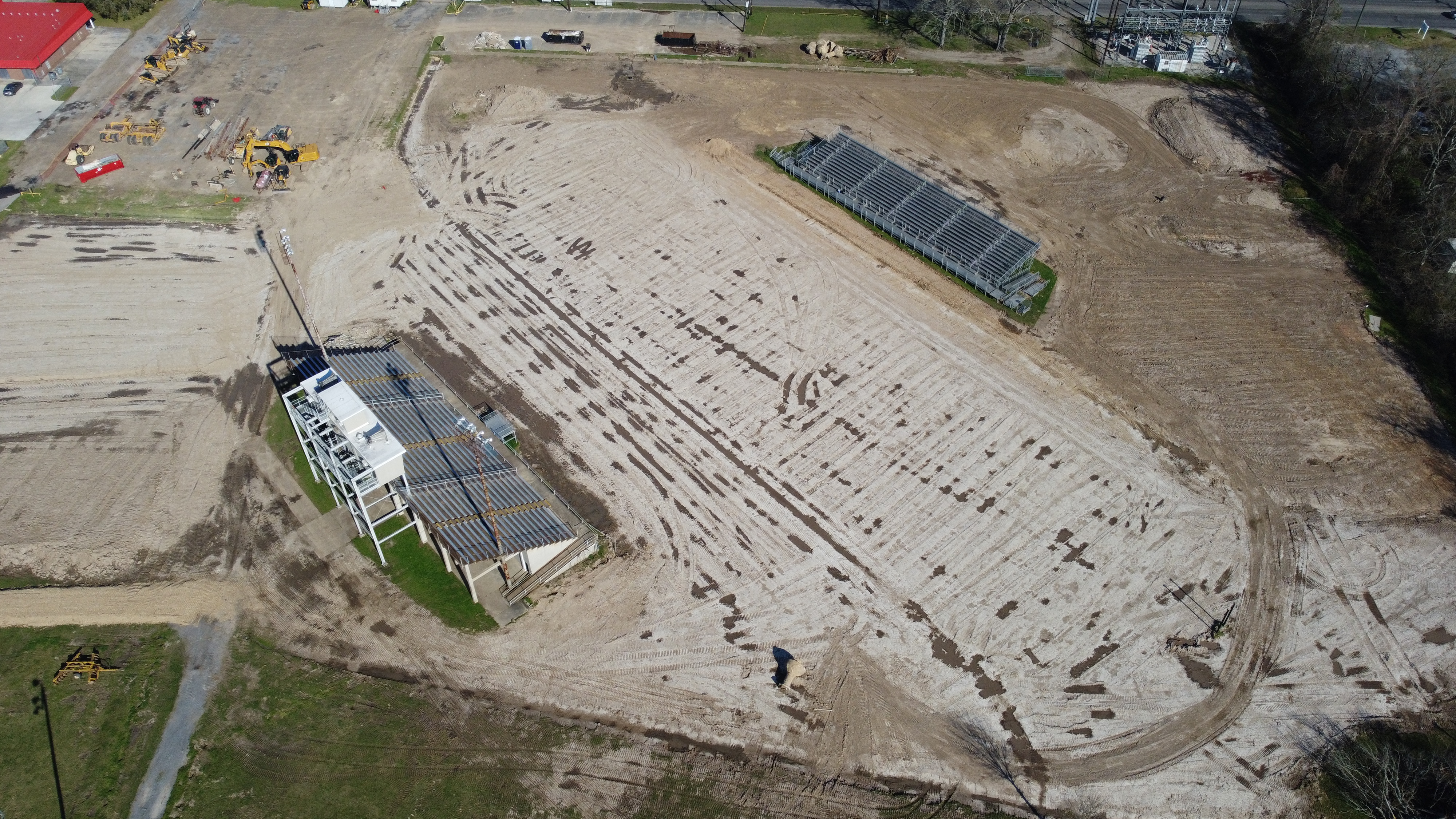
Construction at Gardner Stadium in Opelousas, a facility that serves two of the city’s five (!) high schools. The largest non-infrastructure public investment in the city’s history, estimated to cost more than $10 million. As seen on March 10, 2025

Artificial Turf Sports Fields are Unhealthy for Children and Other Living Things

A thinly researched, more than eight-million-dollar plan to significantly modify Gardner Stadium in Opelousas, Louisiana, calls for artificial turf, a product developed for indoor fields that, when installed outdoors, creates a potentially deadly mix of heat, impact injuries, and toxic chemical exposures that threaten the health of players, coaches, fans, and the environment. 

Construction bids exceeded eight million dollars, so the Mayor’s office is working to lower costs. Natural turf is a good place to start since it is more affordable and, in the long run, produces a healthier facility that is less likely to cause injury, heat stroke, and future legal liability for the city, the Opelousas Downtown Development District (ODDD), and the school district.

An artificial turf field is basically an asphalt parking lot overlaid with thin layers of plastic carpet. Initially developed for the world’s first large indoor stadium, the Astrodome, “astroturf” was created out of convenience, not scientifically designed to improve the game but to make sports possible on an indoor, paved surface. It was not crafted (and has not successfully been improved) to reduce injuries or enhance performance; it was designed to endure. 

A natural turf field is a living surface of soil and plants that cushions athletes and exposes children to a healthy mix of microbes, moisture, and oxygen. The grass and soil of a natural field absorb and filter rainfall; when it lands on paved, plastic grass landscapes, it becomes a poisonous soup that contaminates streams and groundwater.

Artificial turf exposes players to impact injuries, extreme heat, and toxic chemicals that outgas into the air and are directly absorbed by their bodies via inhalation and scrapes and scratches known as “turf burn.” This abrasiveness is why many professional football players wear fabric tape over their elbows.

Globally, the deadliest weather phenomenon is heat, which kills more people annually than storms, floods, or cold. In a rapidly warming world, artificial turf fields put children, coaches, and fans at greater risk for heat stroke that can permanently damage brains and other vital organs. These fields can easily reach deadly temperatures of 130 to 150 degrees or higher on a ninety-degree day, creating a potentially fatal scenario. Last August, there were thirty-five emergency calls for heat stroke at a single UL-Lafayette football game. 

It should come as no surprise that heat-related deaths of high school football players are happening, with five fatalities in just three southern states since July 2024. Those teenage boys died simply because they wanted to play football; they were failed by adults who had the responsibility to protect them.

Adding to heat risk is the fact that because the plastic turf is underlaid by asphalt, injuries like concussions, blown knees, and shattered ankles occur at a much higher rate than on natural grass. This rate of injuries is the primary reason why ninety-two percent of the members of the NFL Players Association voted last year to demand that all thirty NFL stadiums install real grass. Professional soccer players agree, and the World Cup is played on natural turf.

The health threats of synthetic turf fields are myriad. Plastic grass is flammable and impregnated with fire retardant, often a “forever chemical” proven to cause cancer. Shredded tires are spread over the turf to keep the “blades” up and add additional cushion. This infill also contributes to airborne microplastic pollution and yet more potential for cancer, lung and liver damage, and other developmental problems.

Because these harms are now more commonly known, the city could face future lawsuits by parents whose children become permanently impaired because artificial turf was chosen as a convenience even though professional footballers reject it as dangerous. 

The decision by the mayor and the ODDD to stick with the current plans is guaranteed to end the careers of high school athletes randomly for decades and add the potential for cancer and other diseases later in life. In the years to come, those teenagers who suffer concussions, blown knees, shattered ankles, and failing health will find that their suffering might have been prevented if the city and ODDD had done their research and listened to the science and the professionals.

Sports like football, baseball, and soccer were invented outdoors, where weather and field conditions add their wildcard impacts to the game. Children need contact with grass and soil to build their immune systems, and they deserve to play in as much safety as science, budgets, and our loving care allow. Keeping the grass in Gardner Stadium is a simple way to save money and protect future generations, and that’s what we should all expect from our public leaders. 

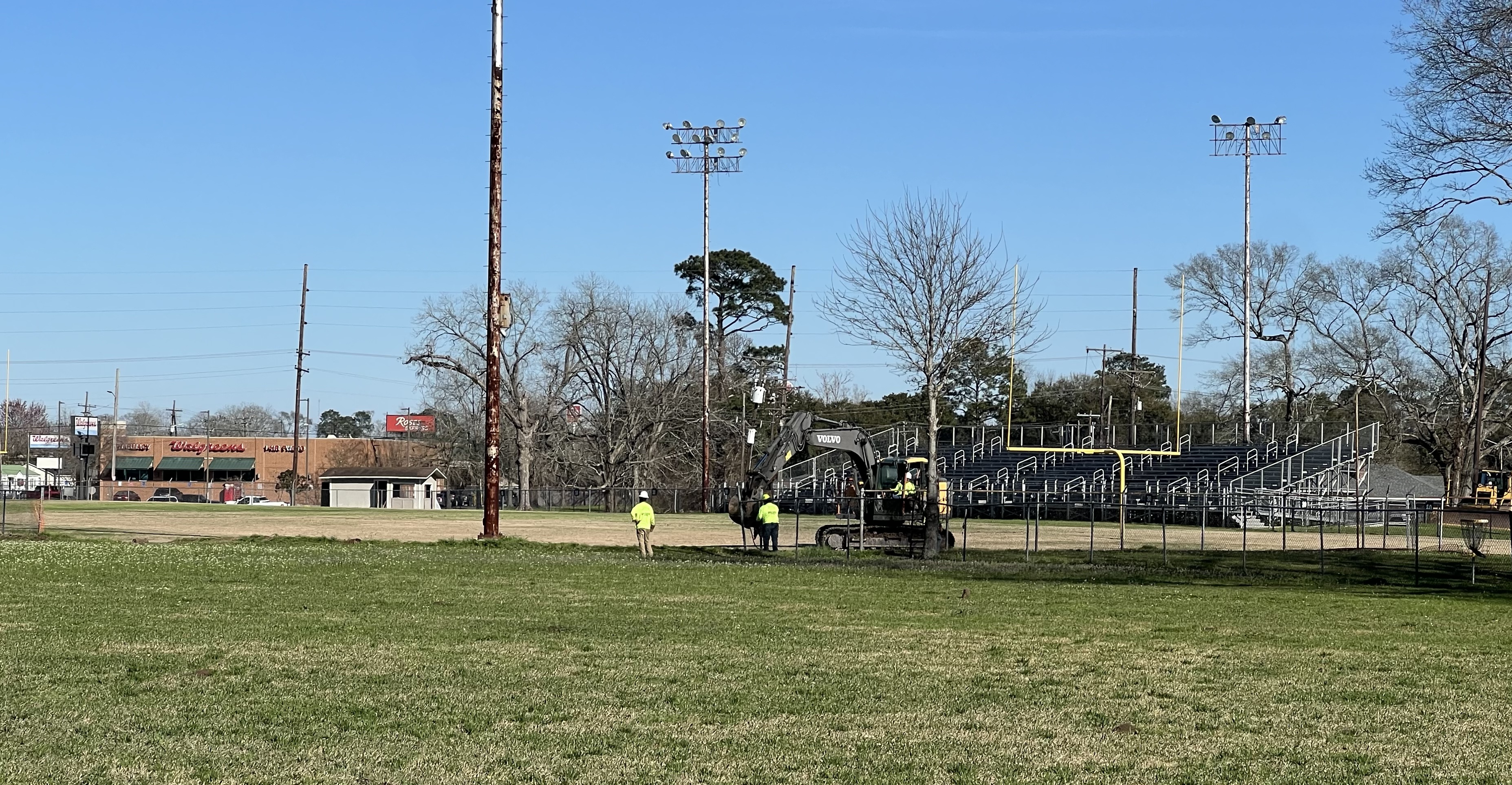
Workers removing fencing as construction begins on Gardner Stadium in Opelousas, LA, Feb. 17, 2025.

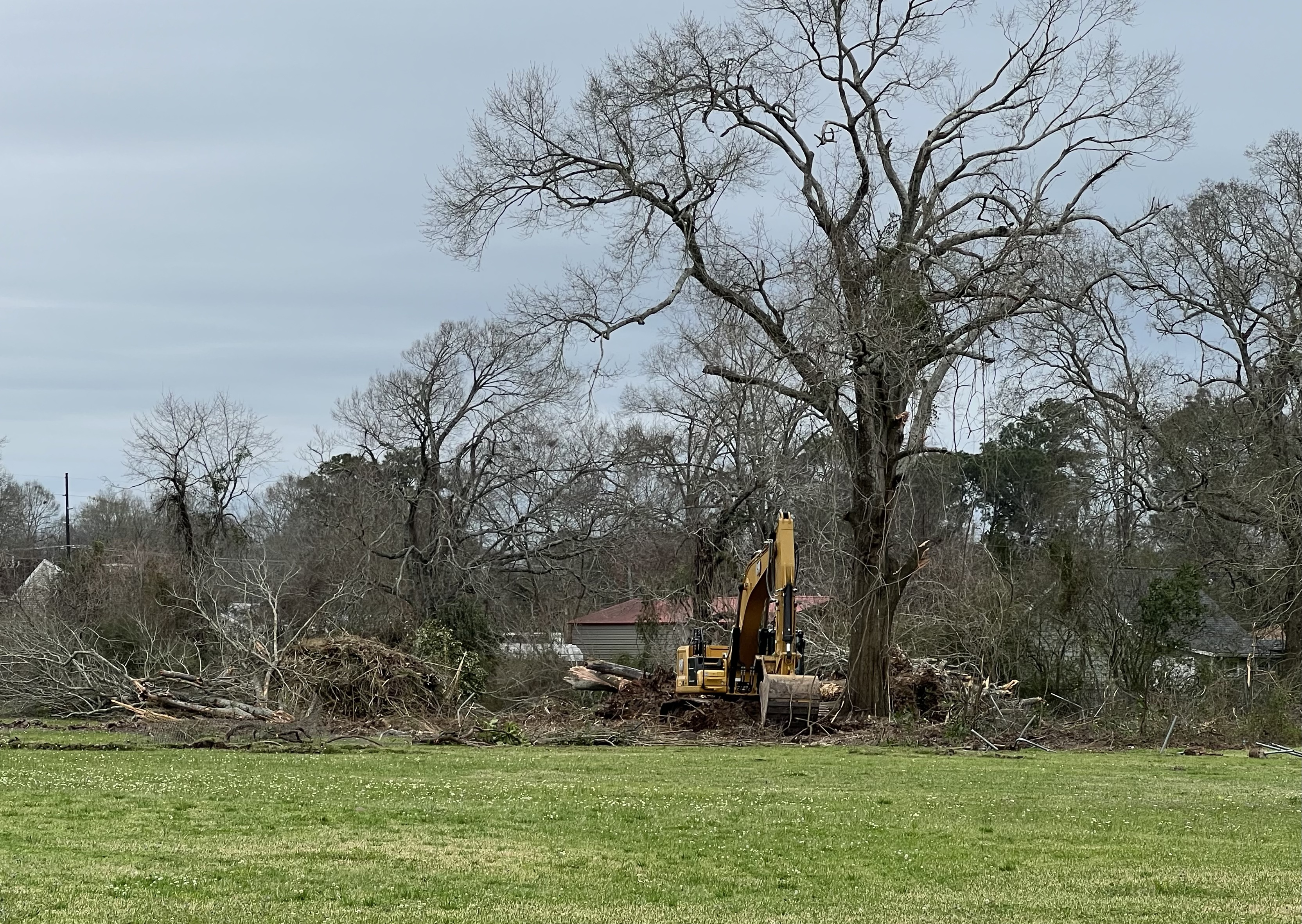
The first step always means loss of greenery. A stand of mature trees being destroyed by the construction at Gardner Stadium on Feb. 18, 2025.