The Most Predictable Crime — And How We Stop It Together

(Originally posted December 12, 2025. Updated Dec. 27)

NOTE: Thank you to the Opelousas Police Department for releasing a statement of warning and guidance for the public on their Facebook page that was shared as an online story by KLFY TV in Lafayette. The St. Landry Parish Sheriff’s Office responded to my email and prepared a Crimestoppers video admonishing people not to shoot guns in celebration and to report occurrences. Kudos to both agencies, but they need to create shareable links on their main webpages. The Sheriff’s page has no News or Press Release option in its menus, and OPD is similarly lacking in easy-to-find, shareable press releases.

Meanwhile, stupid people firing guns know no bounds. I’ll update this section with this year’s stories as I find them. See more information and stories at the end of this post under For more information.
December 26: Oklahoma man doing target practice in his backyard accused of fatally shooting woman blocks away

For 35 years, I’ve been doing a job I hate, a job I shouldn’t be doing, a job that rightfully belongs to someone else—one that, because it deals with the most predictable crime of the year, should be part of our public health, safety, and justice systems: warning the offenders, appealing to the public, monitoring the responses, and tallying the bullets fired in celebration on New Year’s Eve. Here we are again, on the brink of another New Year, and the public safety systems of Acadiana are not fully engaged.

I really don’t want to do this job; it’s sad to know that every holiday season, I’ll spend time popping everyone’s happy holiday bubble by explaining how one shot fired in celebration can destroy an innocent life, miles away. But that’s exactly how it happens.

In the first minutes of 1994 in New Orleans, as fireworks lit the sky over the river, a bullet fired in celebration from who knows where smashed through the top of the skull of Amy Silberman, a young publishing professional from Boston, killing her instantly. Here is her friend’s eyewitness account.

How happy she must’ve been, celebrating the New Year in the City of Dreams. For her friends and family, that moment of joy was instantly transformed into a nightmare because of a stupid fool firing a gun for fun. It’s sickening to reimagine the horror of her friends, the shock and pain of her family, and how their trauma resurfaced every New Year for the rest of their lives. But every year, that’s what I think about and why I’m writing. It doesn’t assuage my trauma to do this.

For two years prior, I warned that such a horrible thing would happen, and my pleas fell on mostly deaf ears. I tried to get local media to recognize that a story needed telling. I called the popular radio talk show, the local news media, the police. Until Amy died, nobody took me seriously.

That morning, when I woke up to the news (and the media that had ignored me in the prior weeks flocked to my doorstep with microphones and cameras), it was one of the worst days of my life. I cannot describe the helplessness and shame that washed over me as I felt responsible for failing to raise awareness and spark action. That feeling haunts me as I write this and see the same thing happening here.

I’ve spent half of my adult life warning that falling bullets kill. And I have seen in New Orleans how consistent public messaging, civic leadership, and community reporting can reduce this most predictable crime. In the years after Amy’s death, we lowered the gunfire rate by more than 70 percent. By 2000, the effort was so effective that I stopped recording shots altogether because so few were happening. It took a coalition of families, faith leaders, police, media, and citizens to make that happen.

Since 2023, I’ve lived in Opelousas, and I’m hearing the same chaos I experienced in New Orleans decades ago, compressed into a smaller city with far fewer people, yet with a much higher rate of gunfire per capita than in some of America’s largest cities.

Because so few people believed me and treated me like Chicken Little, in 1991, I began counting gunshots. That first year, I counted more than 1,500. I counted more than 3,300 shots in an hour and a half the night Amy Silberman died. I heard more in some of the years before.

Last New Year’s Eve, from my home near South City Park, I counted nearly 400 shots in only thirty minutes, with 300 fired in a ten-minute window between 11:58 p.m. and 12:08 a.m. That is a rate of 30 shots per minute — the equivalent of a small town turning into a free-fire zone every New Year’s.

For perspective, consider this: New Orleans, a city 23 times larger, now averages under 500 shots across the whole city on New Year’s Eve. Adjusted for population, Opelousas now experiences nearly 20 times more celebratory gunfire per resident than New Orleans ever did, even at its worst. Per square mile of audible area, Opelousas’ gunfire density is more intense than Kansas City, Washington D.C., or Oakland.

This is not a little problem in a small town. This is one of the highest per-capita rates of celebratory gunfire in America — and it is happening right here, in Opelousas neighborhoods, above Opelousas homes, and over Opelousas children.

It only takes one bullet to kill. I have said that line countless times, and I mean it literally. One shot. One angle. One moment of stupidity. We don’t get a second chance.

Why This Keeps Happening

Celebratory gunfire is not a “gun control issue.” It is a self-control issue. It is also one of the most predictable crimes in the world. Midnight. Every time zone. Every year. And yet, we still treat it as though nothing can be done. That is false — dangerously false.

What We Learned in New Orleans

New Orleans didn’t change because people magically became responsible. It changed because the community mobilized: civic leaders, the mayor, the NOPD, regional media, churches, neighborhood groups, and most importantly, ordinary citizens

We flooded the city each December with a simple message: Falling Bullets Kill! Citizens were urged to call it in. Report what you hear. Do not let this pass as “tradition.” People listened. The numbers fell; lives were saved. Here’s a link to a poster we created that told stories of people impacted by celebratory gunfire.

What Opelousas Must Do Now

If citizens do not report gunfire, there is little that the government and law enforcement can do. Opelousas cannot wait for the sheriff or the police department to solve this on their own. Every one of us must participate.

Here is what you can do — starting this year:

1. Call 911 when you hear gunfire.

Don’t assume someone else will do it. Don’t wait until it’s over. If you know the street, address, or the general direction, say so.

2. Talk to your neighbors before New Year’s Eve.

Let them know you’re calling in any shots you hear. Let the word spread that Opelousas is not looking the other way.

3. Share the message:

Falling Bullets Kill! One shot can end a life. Every bullet fired has an innocent destination.

4. Demand that our civic, religious, and neighborhood leaders speak up and take a stand.

This is not political. This is not controversial. This is basic public safety. (The sheriff of Caddo Parish stepped up in 2024.)

5. Demand that city and parish officials treat this as a real, annual public safety event.

It is predictable. It is preventable. And the plan should be announced every year, well before December 31.

What We Cannot Do

We cannot wait for tragedy. We cannot pretend this is normal. We cannot let another community bury a child, a visitor, or a passerby because someone wanted a few seconds of thrill and noise.

A Community Resolution

Let’s make a resolution — as a city, as a parish, and as neighbors:

This year, Opelousas will not accept a rain of bullets as the price of celebrating the New Year. We can fix this. And with enough voices, enough reporting, enough public pressure, and enough community resolve, we can make sure that Opelousas begins 2026 with something it has not had in years:

A truly safe and happy New Year.

Screenshot of a logo we created in 1994 for the New Year Coalition, an organization I co-founded in New Orleans that significantly reduced celebratory gunfire after the death of Amy Silberman. This image appeared on billboards around town.

For more information:

A Bullet and the Story of New Orleans’s Dangerous New Year’s Celebrations: A bullet found in an HNOC couryard sheds light on a Nwe Year’s Eve tradition with a deadly history (Historic New Orleans Collection, December 30, 2019

Falling bullet goes through boy’s face on New Year’s Eve (WWL TV, New Orleans, January 2, 2022)

A dangerous tradition: retrospective analysis of celebratory gunfire-related injuries in three tertiary hospitals (NIH, research in Turkey) https://pmc.ncbi.nlm.nih.gov/articles/PMC11065979/

Past incidents show falling bullets can still kill or injure someone (South Bend Tribune, July 2, 2025)

What goes up, must come down: The dangers of celebratory gunfire (Baylor College of Medicine, December 31, 2019)

Virginia boy’s death from falling bullet prompts search for culprit, scrutiny of celebratory gunfire (AL.com, Aug. 10, 2013. July 4 incident, shows how the problem is not limited to one holiday season.)
DON’T PAVE OUR PARK!

Opelousas Deserves a Voice Before the Bulldozers Roll Again

UPDATE December 1: The groundbreaking is yet to be scheduled.

Any day now, the City of Opelousas is planning to hold a ceremonial groundbreaking for the proposed “multipurpose community center” in South City Park. I plan to be there, but city leaders already know where I stand.

What matters now is whether you will be there, and what message they see when they look out at the crowd.

Because unless we speak up, Opelousas is on the verge of making an irreversible mistake: demolishing a historic WPA-era pool complex and paving over green space without public input, without transparency, and without meeting federal requirements that are supposed to protect communities from exactly this kind of reckless decision.

1. DEMOLITION WITHOUT REQUIRED FEDERAL REVIEW IS NOT LEGAL

The bathhouse and pool were built in 1939 by the Works Progress Administration—a historic public asset over 80 years old.

Any federally funded project that affects a historic structure must go through:

  • Section 106 review1 under the National Historic Preservation Act
  • Public notice and public comment
  • Consultation with the Louisiana State Historic Preservation Office2
  • Evaluation of alternatives (including sites that don’t require demolition)

None of this was done.

No public notice.

No hearings.

No historic review.

No alternatives analysis.

That is not just bad practice—it violates federal law attached to the funds they are using.

2. THE CITY CHOSE THE MOST EXPENSIVE AND RISKY SITE

If the goal is to build a gym or community center, there are multiple city-owned parcels that could host it with:

  • no demolition costs
  • no hazardous materials
  • no historic review
  • no environmental review
  • better drainage
  • lower site-preparation costs

Instead, the City chose:

  • a site requiring demolition of a sturdy WPA building
  • the removal of healthy, mature trees
  • potential drainage issues for surrounding areas and Bayou Tesson
  • more expensive foundations and earthwork
  • legal risk under federal environmental laws that could cause clawback of funding
  • a more costly construction path

Under federal law 2 CFR 200.404, all federally funded projects must demonstrate “reasonable costs.”3 Since this project is monitored monthly with payments disbursed via invoices rather than upfront, an audit six months from now could identify issues and halt funds, potentially requiring the return of spent funds.

As of today, the city has received no money from the state. The process for payments to the contractor will hinge on the city’s acceptance of invoices for work done, followed by the state agency’s approval and verification of work. With this system, checks to the contractor are issued by the city after the state disburses funds. It’s often a slow and complicated process with many approval and verification speed bumps. I have post-Katrina experience as a contractor on federally funded programs administered by the state to municipalities, and this multi-step process can lead to slow payments. I hope the Lafayette-based contractor realizes this.

3. THEY NEVER ASKED THE PUBLIC WHY WE USE SOUTH PARK, WHAT WE WANT OR NEED

There has been:

  • No park user survey
  • No citywide needs assessment
  • No analysis of youth sports demand
  • No demographic or enrollment trend data
  • No public workshops or listening sessions

Opelousas is making multi-million-dollar decisions without one shred of unbiased research. I’d refer you to the construction manual and bid documents that describe the project in detail, but the city never posted the request for proposals on their Advertisement for Bids page.

A project built on assumptions, whim, and envy for what wealthier communities have rather than evidence is destined to fail—and to cost taxpayers even more in the long run.

4. THE PARKS & RECREATION COMMISSION—REQUIRED BY LAW—HAS NOT MET FOR FIVE YEARS

The city charter requires an independent Parks & Recreation Commission to guide decisions on:

  • park investments
  • all planning and new facilities
  • public processes and input
  • setting annual budgets, programming and policies
  • maintenance and upkeep

This body has been dormant since 2019.

Instead, decisions impacting the future of our parks—and millions of dollars—are made by a small, insular group of people, with no citizen oversight, no transparency, and no accountability.

5. ALL OF THIS IS HAPPENING WHILE THE CITY FACES A $1.85 MILLION HOLE IN ITS BUDGET

The city lost $1.85 million in revenue due to a four-month lapse in sales tax collection—an internal control failure because no one on the city’s payroll read the Legislative Auditor’s report for 15 years.

Instead of correcting course, tightening spending, or creating a public plan to stabilize finances, city leaders are:

  • taking on new long-term operational costs
  • committing to expensive facilities
  • draining half of ODDD’s sales tax revenue for 10 years
  • ignoring the budget crisis

This is not resilience.

It is not planning.

It is financial mismanagement at the moment we can least afford it.

WHAT YOU CAN DO: SHOW UP!

At this month’s ODDD meeting, a ceremonial groundbreaking “hopefully on December 2 at 10am” was discussed, but I’ve seen no announcements, and it’s not happening on that day. Ideally, they’ll post the plan. Then again, I suspect they only want to alert the news media and the small group of city and regional leaders who want to pave South Park into a plastic grass sports complex like Youngsville’s. Watch Historic Opelousas and Opelousas Downtown Development District Facebook pages for an announcement, and if I learn more, I’ll update this post.

In the meantime, city leaders need to see that this community values:

  • parks
  • green space
  • historic places
  • fiscal responsibility
  • the input and voice of the public

This is not about politics.

This is about our home—our most beautiful and inviting neighborhood park—our future.

Post comments on social media. Talk to your friends and neighbors. Show up. Bring a sign. Bring friends. Bring your voice.

Here are some simple sign ideas:

“DON’T PAVE OUR PARK”

“SAVE SOUTH CITY PARK”

“NO DEMOLITION WITHOUT PUBLIC INPUT”

“WHERE IS THE PARKS & REC COMMISSION?”

“LISTEN TO THE COMMUNITY”

“HISTORY MATTERS”

“THIS IS NOT COST-EFFECTIVE”

Stand quietly, but talk to the people there. Stand respectfully. Stand firmly.

Let them see that Opelousas is about all the people, not just a select few. That parks are for people of all ages and abilities. Natural spaces and learning about nature and gardening are the prerequisites for children’s health and well-being, and are more critical to developing life skills than indoor competitive sports.

Let them see that decisions made about our parks must include the people who actually use them!

If we don’t show up, they will say no one cared.

But we do care.

And this is the moment to prove it!

  1. https://www.achp.gov/protecting-historic-properties/section-106-process/introduction-section-106 ↩︎
  2. https://crt.state.la.us/cultural-development/historic-preservation/section-106-review/index ↩︎
  3. https://www.ecfr.gov/current/title-2/subtitle-A/chapter-II/part-200/subpart-E/subject-group-ECFRea20080eff2ea53/section-200.404 ↩︎
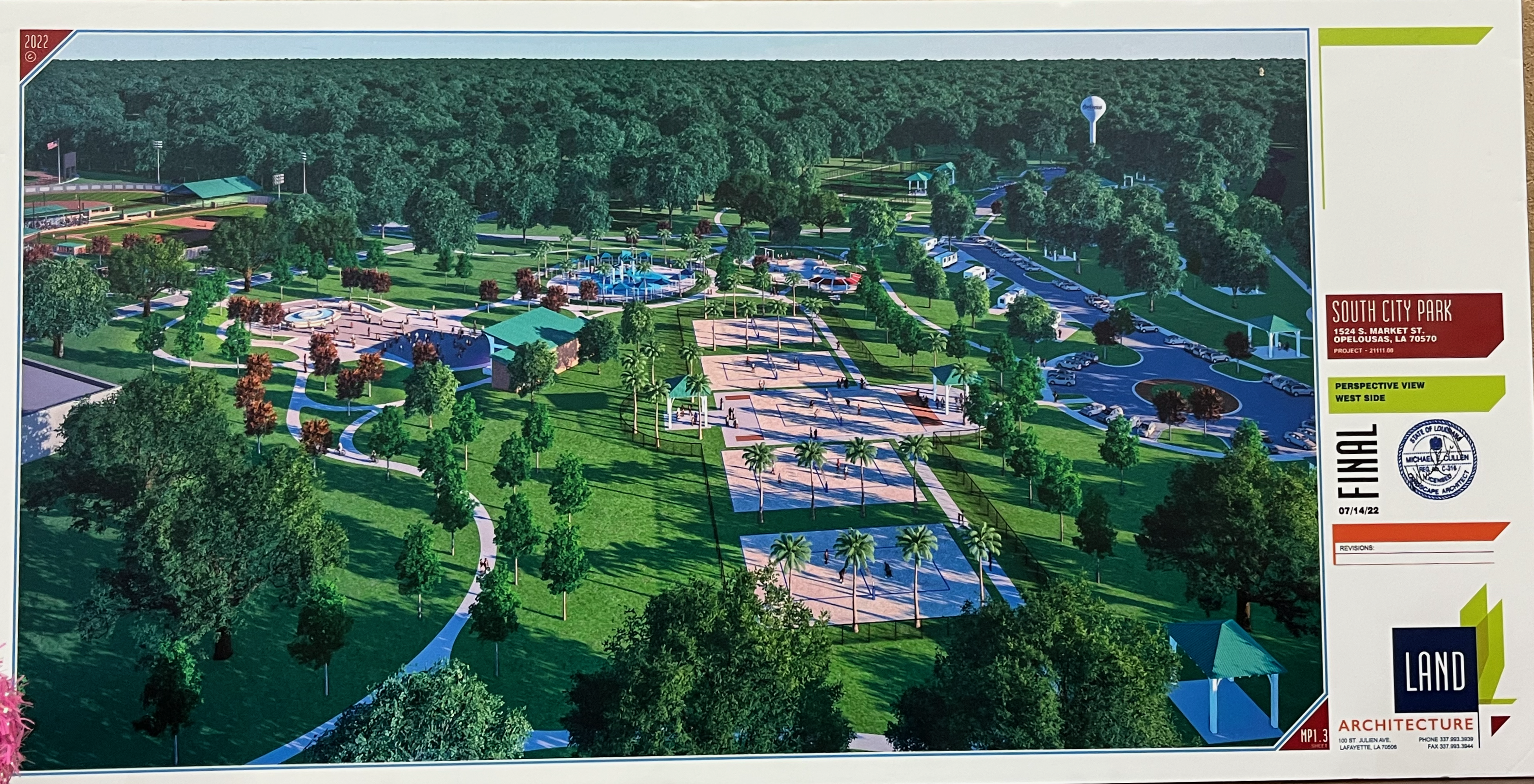
A photo by the author shows a south-facing rendering of the Conceptual Master Plan, created in 2022, which the city and ODDD continue to use while spending more money than ever in Opelousas’s 300-year history on non-infrastructure projects. This plan has never been published on the city’s or ODDD’s websites. To see it, you must visit the offices of St. Landry Economic Development on the I-49 Service Road, three miles from downtown. The plan proposes paving a large portion of the park’s natural green spaces for poorly researched sports facilities. Since no unbiased studies have been conducted, all decisions are based on whim and opinion rather than facts, surveys, or guidance from the legally mandated but unappointed Parks & Recreation Commission, the citizen-led “board of directors” for all public parks. This excessive spending and exclusionary planning reflect a severe neglect of duty by the city and ODDD.

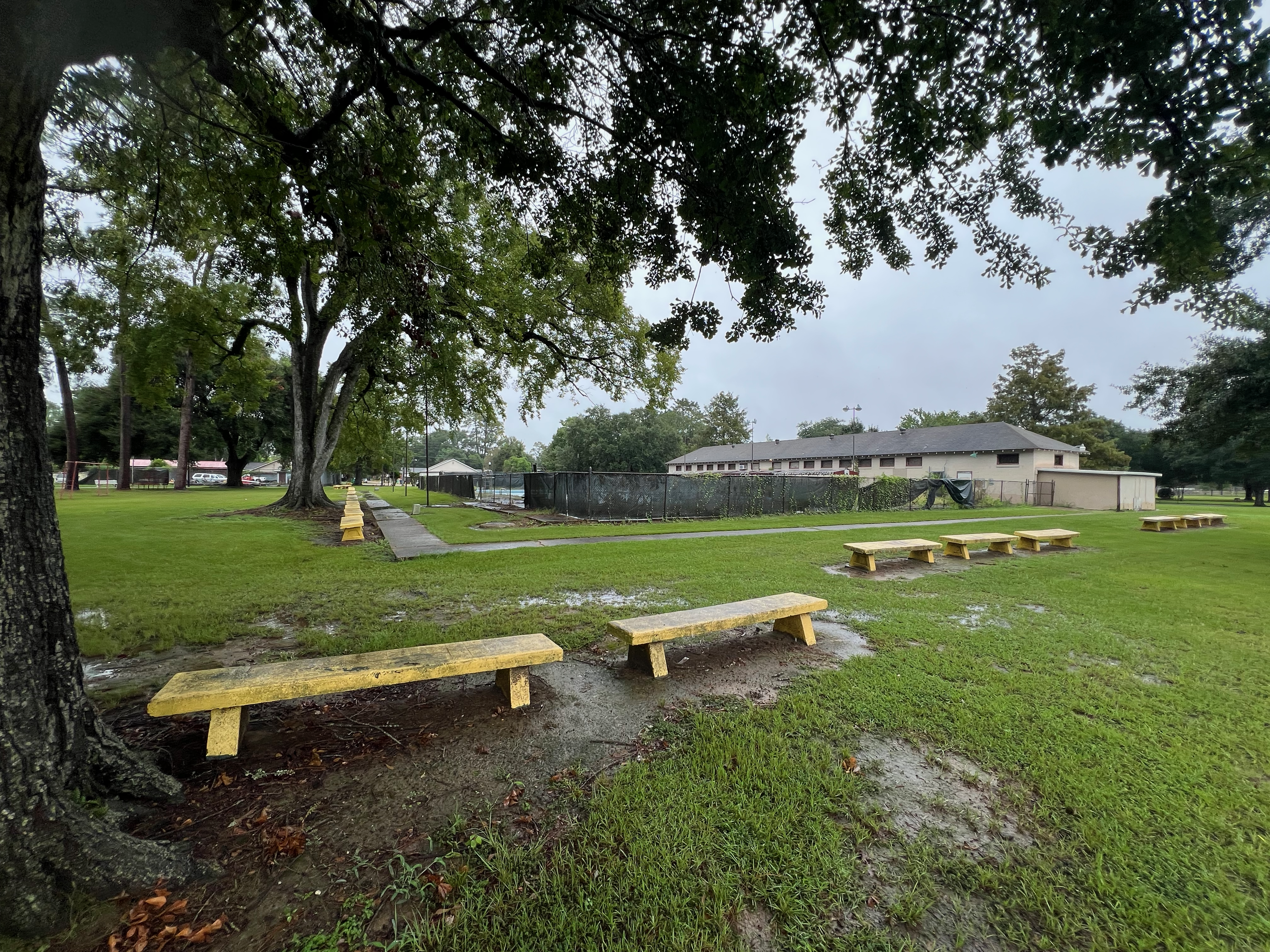
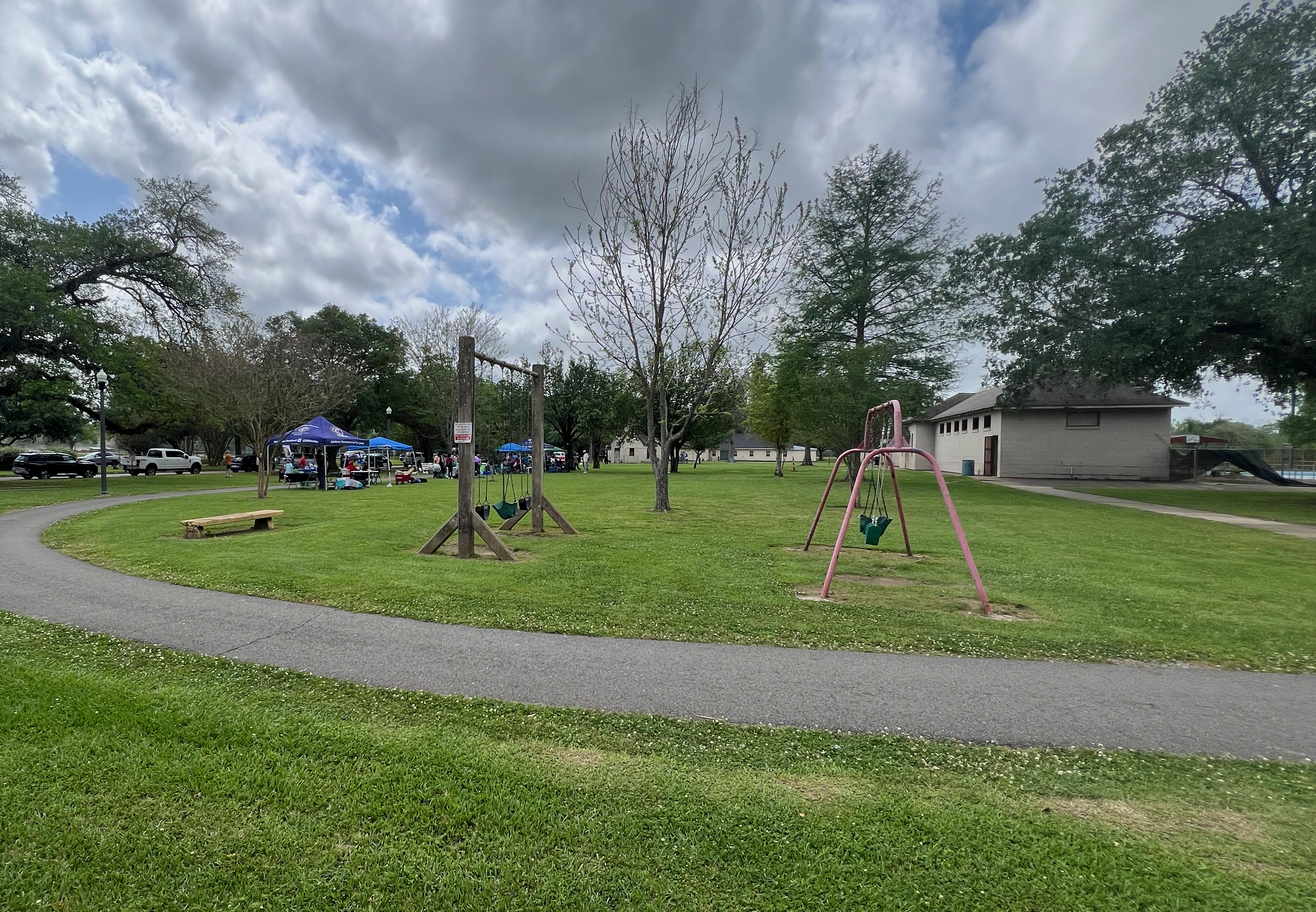
This part of the park is one of the most popular and well-utilized areas. These swingsets are for kids only, and the one on the left was built in 1939. Everything you see in this photo will be demolished.
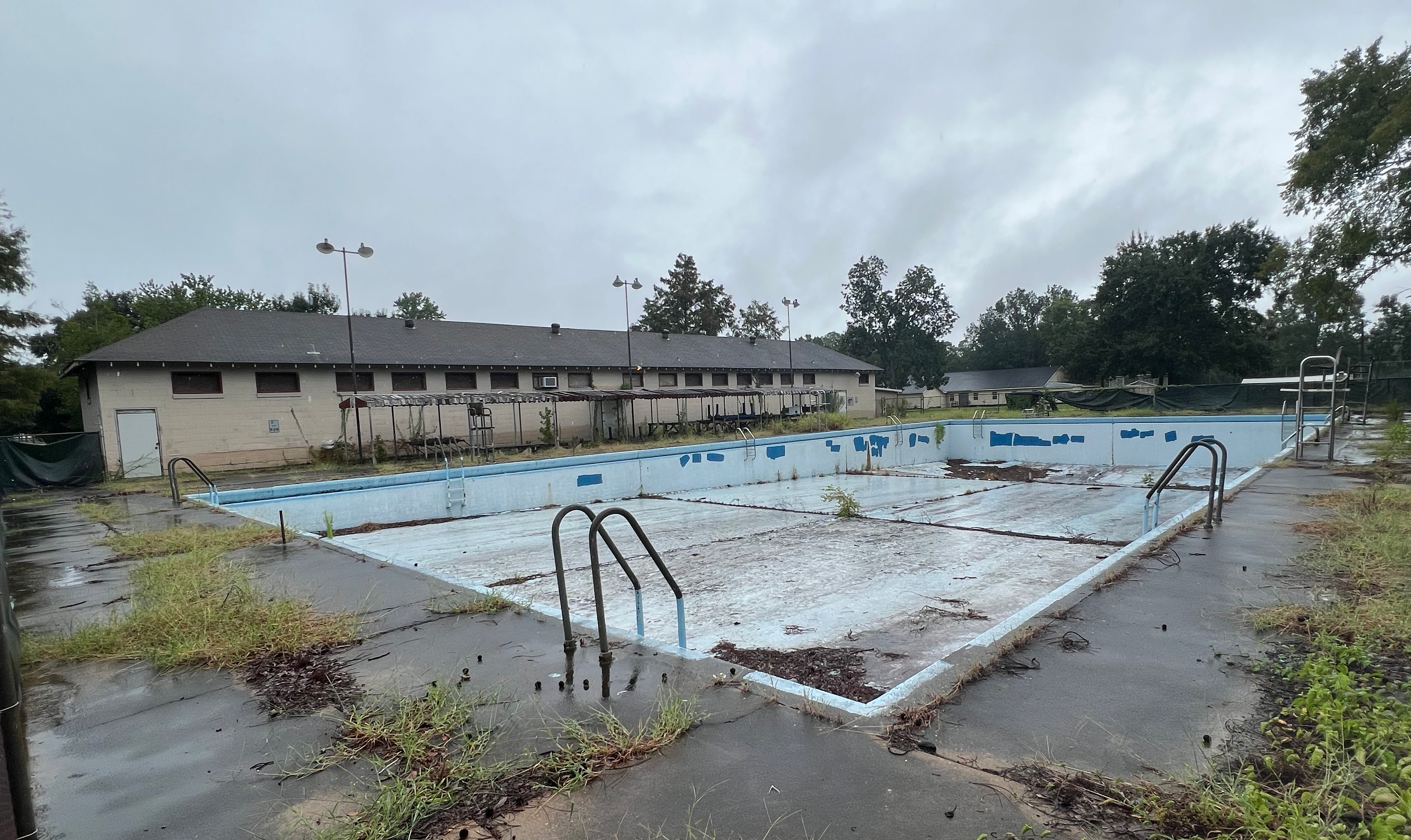
View of the current state of the pool. It’s in remarkably good shape, and there is no publicly available research indicating what it would cost to restore it. It is the largest pool in the city, and when it was constructed, it had its own well. The building is sturdy and in good condition. It was built with old-growth lumber and cinder blocks that are stronger than those available today. If demolished, it should be deconstructed and the materials salvaged.
Rear view of the pool complex. Everything in this photo will be demolished.
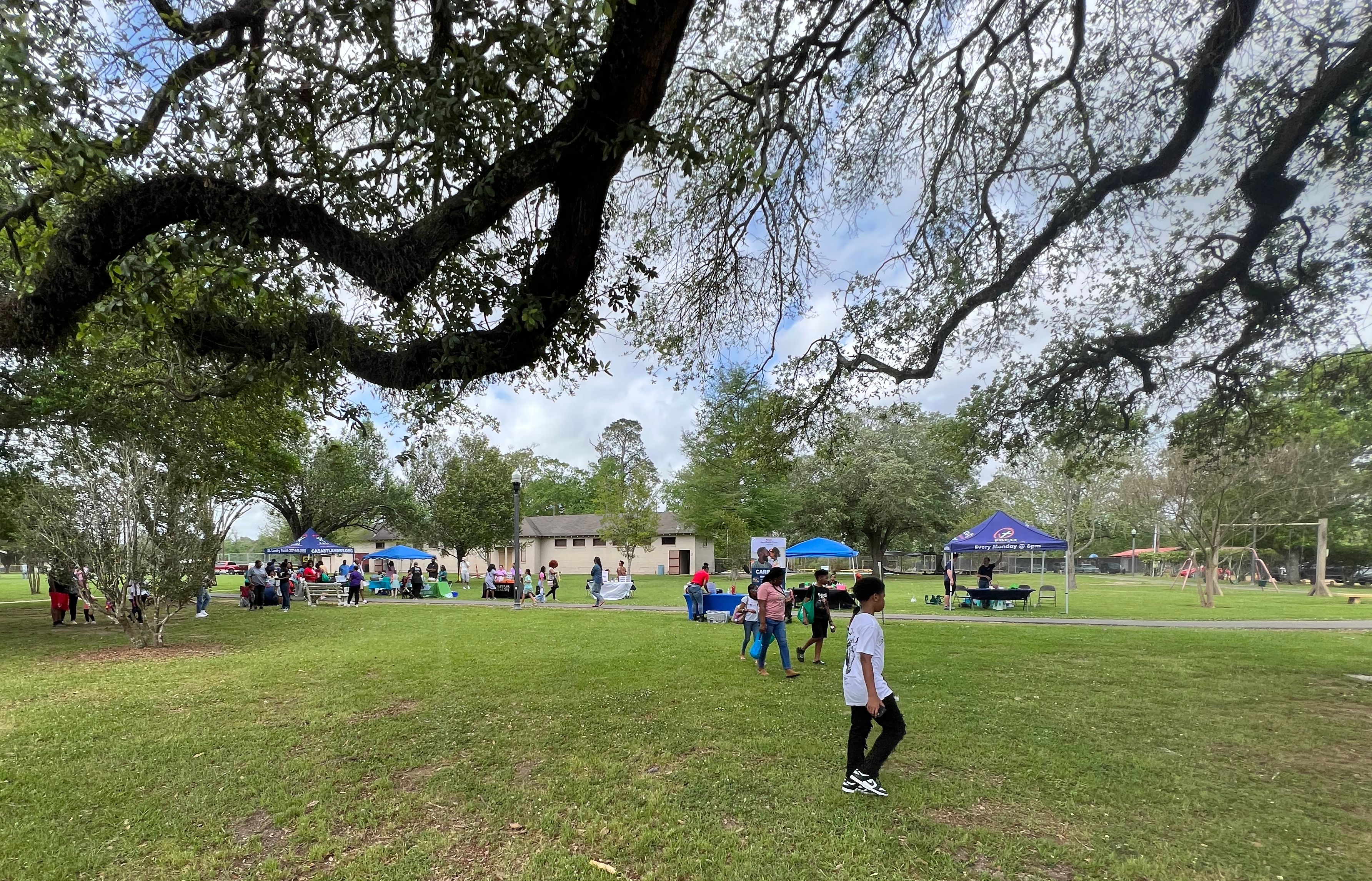
The site is popular for events and quiet contemplation. The walking path has become the most used feature in the park, attracting hundreds of walkers of all ages daily, many from nearby communities.

The Financial Cliff: Why Opelousas City Government Can’t Afford a 17,000 Square Foot Gymnasium

Design Failures, Federal Noncompliance Liabilities, and the Fiscal Reality We Can’t Ignore

Opelousas stands at the edge of a financial cliff. It’s not a metaphor. Between the city’s $1.85 million loss of sales tax revenue (updated 11-17 after City Council meeting), historic cuts to federal food assistance, inflation, rising insurance and housing costs, and a destructive federal shutdown, the economic floor is crumbling beneath our feet. This isn’t a short-term squeeze. It’s a systemic threat to the city’s future—and it’s being ignored in favor of ongoing, unaffordable vanity projects in South City Park.

The next step toward the financial cliff is the proposed “community center” now being hastily pushed forward without full public input, transparent financial planning, or credible alignment with its federal funding source. It stands as a symbol of bad planning, mediocre design, and poor governance. 

What was originally a 17,000-square-foot double gymnasium in the South Park Conceptual Master Plan for a sports complex was quickly rebranded as a multi-use community resilience center to comply with the federal Capital Projects Fund (CPF) guidelines.1 These guidelines require the facility to offer a variety of services and flexible spaces for technology access and community programming, all of which must be provided free of charge to the public. 

Federal CPF requirements emphasize digital equity and community technology access, but the current design lacks structured wiring, IT closets, or dedicated broadband access areas. There is also no indication that co-working, telehealth, or digital literacy spaces are included in the interior layout. Additionally, the application to the state fund manager depends on loosely verified claims of public-private partnerships to justify the grant. 

Federal funds like CPF are a bureaucratic minefield that only the hardiest of administrators handle well. At this week’s ODDD meeting, the paid lobbyist working on the project admitted they’ve been meeting weekly with the state to revise five sections of the application to meet US Treasury requirements, including design features and the production and proper retention of required support and verification documents.

Having experienced the floods and losses of Hurricane Katrina firsthand, I understand how challenging federal compliance can be. The scariest scenario is that if a failure or compliance violation is discovered after the center is built, the city could be responsible for repaying the funds. Given our history, it’s wise to assume this is a real risk going forward.

Despite being designed for sports, there are no showers, lockers, changing rooms, or much storage for equipment. Yet the city and ODDD believe this facility will attract travel league and other tournaments. With such significant design gaps, how can this building compete for tournaments when it lacks features every school gymnasium has? Since no unbiased research was conducted, no one truly knows if this facility could attract paying users. 

The project’s other design flaws are more than just cosmetic and will increase operational costs and expenses that were not estimated during the initial planning. Failure to specify high-efficiency HVAC systems and design, and using dark metal cladding in a hot climate like South Louisiana, will increase energy bills, strain long-term maintenance budgets, and weaken claims of environmental or financial sustainability. 

The plans also lack site-specific stormwater management features, even though the park is vulnerable to erosion when runoff drains toward Bayou Tesson. The building will generate nearly two acre-feet (more than 650,000 gallons) of runoff annually, yet features no window awnings, no rainwater buffers, and no designs that integrate the building’s voluminous runoff into the (mostly clogged) existing drainage system in ways that won’t overwhelm nearby streets and neighbors.

These choices reflect the same disregard that has defined this administration’s handling of parks, planning, and public trust: no Parks & Recreation Commission, no community workshops, no unbiased research, no cost-benefit analysis, and no meaningful space for public voice. Instead, the process has been top-down, opaque, and dismissive—a local government acting more like an autocracy than a steward of public dollars.

This isn’t just about bad design. It’s also about federal compliance and failures that could come back to haunt the city even after the money is spent. Based on federal rules outlined in 2 CFR Part 200 and Capital Projects Fund guidelines, this project likely fails to meet minimum standards for cost reasonableness, historic preservation, public input, and sustainability. It may also run afoul of Section 106 of the National Historic Preservation Act, given the landmark WPA bathhouse and pool slated for demolition.

Because federal funding requires most usage to be free, how will the city cover operational and maintenance costs, which are likely to exceed $100,000 a year (excluding staffing) and put further pressure on the budget?

This isn’t resilience or good governance. It’s a retreat from reality, the public, and financial responsibility.

In these increasingly challenging times, leadership involves more than ribbon-cuttings. It requires a commitment to truth, transparency, and long-term community well-being, with a priority of making Opelousas a well-managed place where people want to live. As I’ve stated before, too many of the individuals behind these costly plans do not reside here, and some of them are among the city’s and parish’s highest-paid employees. Is it too much to ask that we all share a vision of Opelousas as a place where people want to live, and let that guide us? 

Before another dollar is spent, this project must be reevaluated for compliance, relocated to a more appropriate and less destructive site, redesigned for efficiency, affordability, and sustainability, and re-grounded in the public interest it claims to serve.

Because the only thing worse than walking blindly off a cliff is dragging a city with you.

The footnote below is the language of (and links to) the US Treasury Department that describes what funds can be used for. Note that the pictures are screenshots from the public bid documents, which were not posted on the city’s Advertisements for Bids page. Like the South Park plans, the bid docs remain missing from the city’s website. These plans and this spending are being done without the legally mandated oversight of the yet-to-be-appointed by the mayor Parks & Recreation Commission. The construction bid proposals are due and will be opened at City Hall on October 30 at 2pm.

  1. Multi-Purpose Community Facility Projects: the construction or improvement of buildings designed to jointly and directly enable work, education, and health monitoring located in communities with critical need for the project. ↩︎
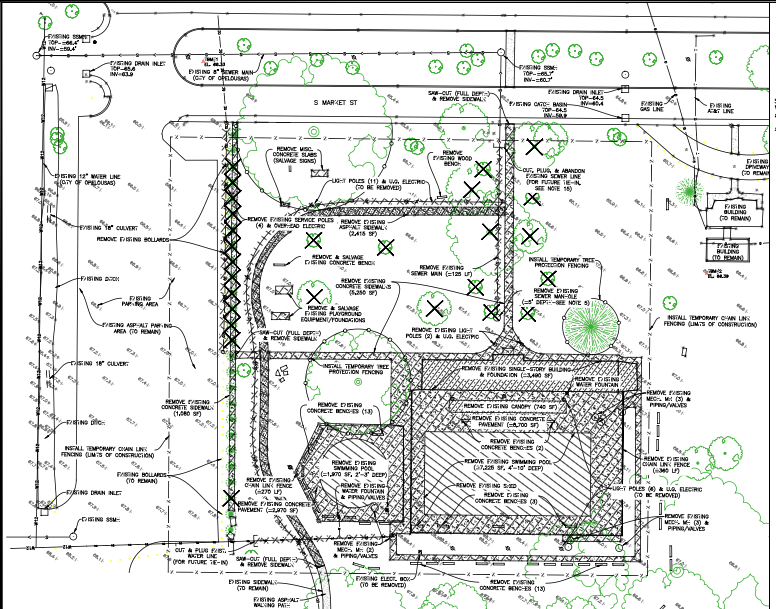
Site plan from public bid construction manual. Every X is a tree or shrub to be cut. Note the entire pool complex is set to be “removed” and the walking path re-routed.
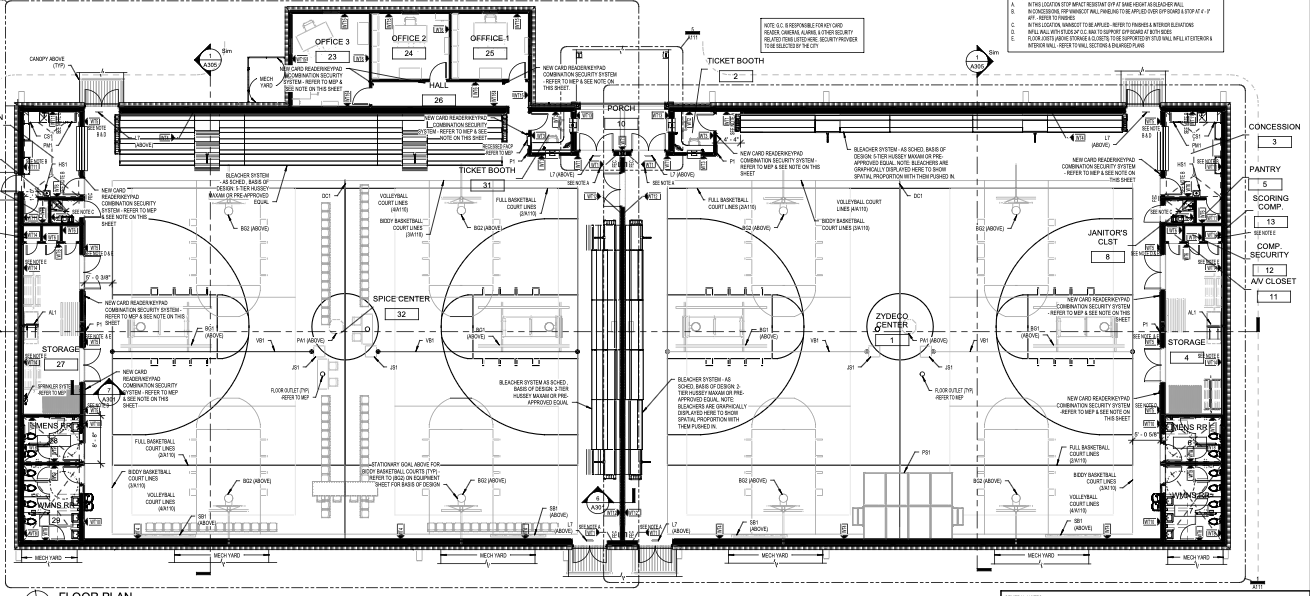
Floor plan from the public bid construction manual. Note the lack of lockers, showers, and storage. The bathrooms are small and there are no designated flexible areas to comply with federal guidelines that the building accommodate “work, education, and health monitoring.” It’s a gym, and lacks the functionality and flexibility of most school gyms, making its use for tournaments questionable.

The Real Game in Opelousas Isn’t Football — It’s Accountability

A Letter to the Opelousas City Council Regarding the Absence of a Parks & Recreation Commission, October 14, 2025

Councilman Gilbeaux (and Colleagues):

Thank you for raising the issue of the absence of a Parks & Recreation Commission at the last Council meeting. You were right to bring it forward. A functioning Commission is not a formality—it’s the mechanism that ensures fairness, transparency, and public participation in decisions that affect every neighborhood and age group.

Today, Opelousas faces difficult choices. The new 17,000-square-foot “community center,” essentially a two-court gym, will add substantial operating and maintenance costs to the city’s strapped budget, on top of the new stadium’s ten-year $632,000 annual bond payment. Together, those facilities could approach $900,000–$1 million in yearly obligations—before staffing or programming. And the timing couldn’t be much worse.

With the shutdown of the federal government well underway, Opelousas will suffer disproportionately compared to wealthier communities, making the ongoing capital investments in youth sports facilities, in an era of declining birth rates and enrollment, doubly troubling. Never before has citizen participation and oversight been more necessary. Here are conservative figures for you to ponder as you work to manage the city’s shaky budget:

IndicatorEstimateNotes
Population15,7502023 Census Data
Opelousas Median Household Income$28,000LA median $60,000, St Landry $42,000, US $80,000,
Poverty Rate35%Among highest in Louisiana
Percent of households under $30,00060%Most citizens are barely getting by
Renter Households57%Majority are cost-burdened
FY 2025 Budget Gap$1.4m to $2m 4 months of sales-tax shortfall
Stadium & Track Bond$632,000 / year10-year ODDD obligation
Total New O&M Burden≈ $900k–$1M / yearDebt + maintenance

Feeding families is economic development. The shutdown is already significantly impacting local food security and the local economy. Loss of SNAP and WIC dollars will exacerbate hunger, hurt local grocers, and shrink tax revenues. If the shutdown lingers, the impacts will be grave. Using conservative estimates of the number of people using SNAP and WIC, here’s how that looks:

Federal Nutrition Program Impact on Opelousas

ProgramEstimated Beneficiaries (City)Monthly Local Spending Loss in Local Economy6-Month Shutdown LossTotal Economic Activity Lost¹
SNAP≈ 4,500 individuals, 30% of the population (~1,700 Households)≈ $550,000 or under $125 per month per recipient≈ $3.3M≈ $5–6M
WIC≈ 2,000–2,500 participants≈ $250,000≈ $1.5M≈ $2.5–3M
¹Every $1 in benefits generates roughly $1.50–$1.80 in total local economic activity. Combined potential 6-month loss: ≈ $7–9 million—comparable to one full year of Opelousas’s sales-tax receipts.

An expensive-to-maintain and operate high school football and track stadium, along with an oversized basketball gymnasium, destabilizes our fragile economy and faltering budget. Paving South Park to transform it into a high-end limited-use sports complex will not cause anyone to stay here or to move here. Dependable infrastructure, clean water, good housing, and economic opportunities are what drive quality of life. 

Every dollar spent on South Park sports plans is a dollar not available to invest in youth development in life-skills programs, tutoring, trades apprenticeships, or arts, music, and culinary education, which often have higher “bang-for-buck” in communities where children lack access. And who can afford the $20 ticket price collected at last week’s games? Are projections (if they exist) based on potential ticket revenue? 

The ODDD, formed as a business development organization, mortgaged a decade’s worth of sales tax revenue, accruing more than a million dollars in interest and limiting the city’s ability to fund programs essential for building economic resilience and a better future for all Opelousas citizens. I call them the Opelousas South Park Sports Development District.

Over the ten years of that ODDD debt obligation, SLPSS student enrollment is projected to drop by 4,000. Due to the lack of citizen oversight and failure to conduct non-partisan research, the mayor and ODDD are planning and spending for a narrow demographic that not only doesn’t exist now but won’t exist in the future. The Opelousas they are building is based on memories and on desires to have what nearby wealthier communities have, not on a vision guided by science, data, and community input.

Re-establishing the Parks & Recreation Commission is a fiscally responsible way to realign priorities with community needs. It would give the Council a structured, citizen-based advisory process to guide maintenance, programming, and equitable access across all districts.

Right now, every major city project—from the stadium to the community center to City Hall to the library—is being designed by the same Lafayette firm hand-picked by the mayor. That’s not how public procurement is supposed to work. The Council and the people of Opelousas have had no opportunity to compare costs, credentials, or design philosophy. The total spent on these services remains hidden from public view.

This lack of process invites misuse and guarantees inefficiency. The first step in restoring accountability is to re-establish the Parks & Recreation Commission, followed by transparent procurement reform.

City government investment in high school sports is folly. High school sports are, and should be, the responsibility of school systems. We are all on this ship, and we all can help set a better course. Citizen participation is built into the city charter, if only the administration would adhere to it. Let’s do the right thing and reinstate the Parks & Recreation Commission.

Thank you again for your leadership on this issue. Please keep pressing for the Commission’s reinstatement—it’s an essential step toward building a more balanced and sustainable Opelousas.

Note: This post was updated on October 15, 2025 with information provided by the city accountant at last night’s meeting. The hole in the city budget, caused by the failure to hold a timely vote to renew the sales tax that expired on May 31, will likely reach $2,000,000 —a gap unlike any the city has faced in the modern era. This adds weight to the argument that adding more overhead via new, limited-use facilities that produce little or no income is fiscally and morally irresponsible.

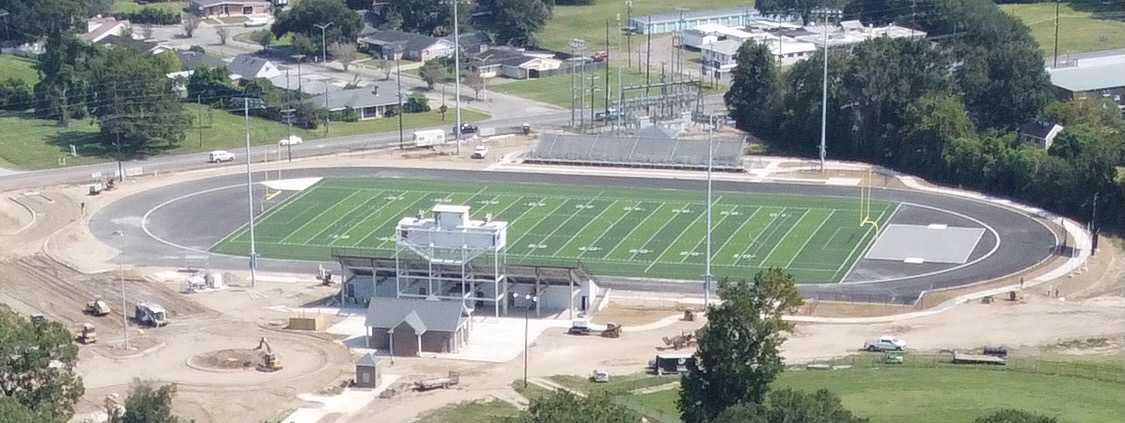
Donald Gardner Stadium on September 11, 2025. A $10,000,000 investment that represents the largest non-infrastructure expenditure in city history.

Bypassing the People, Bulldozing the Park

How Opelousas leaders are ignoring federal rules, silencing public input, and risking long-term damage to the city’s future.

(September 12, 2025)This week, city officials—including the mayor, the CAO, the parks director, ODDD leaders and SLED staff, State Representative Dustin Miller, and the project architect—hosted ConnectLA representatives at South City Park to showcase the proposed site of a new multipurpose center. What they toured, however, is a public green space the city now plans to clear-cut, and a historic public pool and bathhouse the administration aims to demolish. Any day now, the city is expected to release the RFP for demolition and construction. Yet the public has still not been shown the final plans, nor been allowed to weigh in.

This entire process is unfolding in violation of both the spirit and likely the letter of federal grant guidelines. Funding for the proposed facility is to come from ConnectLA’s Gumbo grant program, with dollars from the federal Broadband Equity Access and Deployment Program, which is intended to support community connectivity and broadband access. These funds are governed by strict federal standards 1 under 2 CFR Part 200 2, the National Historic Preservation Act (NHPA) 3, and the National Environmental Policy Act (NEPA) 4.

Federal rules require that costs be reasonable, necessary, and well-documented. Publicly owned properties must be planned and procured through a transparent, equitable process. Decisions to demolish existing infrastructure and natural amenities—like the mature trees and historic pool in South Park—require environmental and historic preservation review. Yet no such analysis has been conducted and shared publicly, and the city has selected a more expensive, destructive, and less inclusive path without justification. This puts the project at serious risk of violating federal cost principles, procurement standards, and preservation rules.

At the September council meeting, Councilman John Guilbeau asked why the legally required Parks & Recreation Commission still does not exist. The city attorney, whose primary office is in Lafayette, shrugged off the question, calling it merely an “advisory body.” That is an incomplete answer. According to the city code, the Parks & Recreation Commission is the public’s policymaking voice on all park matters. Without it, there is no lawful framework for planning, budgeting, or evaluating this facility.

This lack of legal structure coincides with a dangerously irresponsible economic context. The Opelousas economy is facing massive pressure from federal SNAP cuts, rising health insurance costs, inflation, and looming reductions in Medicaid and Medicare reimbursements. Local health care systems are already seeing cuts. Additionally, the city budget lost nearly $1 million in sales tax revenue over the summer due to the mayor’s and council’s failure to thoroughly read the annual city audit. Overall, as these effects increase over the coming months and years, our small economy could lose up to $3 million each month in purchasing power due to federal cuts, rising health insurance costs, inflation, and shifts in spending.

Meanwhile, newly released census data shows the national median household income is $83,730. In Opelousas, it’s less than $26,000. This gap is staggering. And it comes at a time when birth rates are declining and the city is not growing. Fewer children, fewer working-age adults, decreasing enrollment, and greater poverty mean we must spend public dollars with discipline and wisdom.

Instead, the mayor’s team has chosen a path of secrecy and spectacle. They plan to destroy a beloved, shaded section of South Park to build a sports-centered facility that may ultimately serve tournaments more than residents. They awarded several major city projects to a single Lafayette-based architect without transparency. They are adding debt and obligations without publishing operations budgets or maintenance costs. And they have never held a single citywide meeting to ask what residents want. (Here’s how a similar situation played out for New Orleans City Park.)

This is not how a poor city builds trust. It is not how public money should be spent. And it is not compliant with federal law.

Before any demolition occurs, the City of Opelousas must:

  • Reinstate and activate the Parks & Recreation Commission.
  • Halt all demolition and site clearing activities until a full environmental and legal review is completed.
  • Release the full project designs, budgets, and justification documents.
  • Explain the selection process and total payments to the project architect.
  • Conduct public meetings in every district to gather input and assess alternatives.

South Park is not a blank canvas for out-of-town architects and a small group of politicians and ODDD board members. It is one of the few remaining green spaces in the heart of the city—a space that serves people of all ages and abilities, families, seniors, walkers, artists, and outdoor gatherings of all kinds.

Opelousas doesn’t need another sports monument. It needs housing, jobs, clean water, safe streets, and a responsive government.

Let’s stop this demolition before it starts. And let’s rebuild the public process before we build anything else. 

Without your voice, they are empowered to change the park permanently, and we’ll never get back that beautiful space. Tell your neighbors. Tell the mayor and council members. Tell your legislators. Tell ConnectLA. This is our park. This is our city. You are the key to Opelousas being the best it can be!

Here are their email addresses:

Mayor Julius Alsandor: mayoralsandor@cityofopelousas.com
John Guilbeaux: jguilbeaux@cityofopelousas.com 
Delita Rubin-Broussard: drubinbroussard@cityofopelousas.com
Charles Cummings: ccummings@cityofopelousas.com 
Sherrel Roberts: sroberts@cityofopelousas.com
Chasity Davis: cdavis@cityofopelousas.com 
Marvin Richard: mrichard@cityofopelousas.com
City Attorney Travis Broussard: tbroussard@cityofopelousas.com
City Chief Administrative Officer Anthony Daniel: ADANIEL@cityofopelousas.com
ODDD Chair Lena Charles: lenafcharles@bellsouth.net
Rep. Dustin Miller: millerd@legis.la.gov
ConnectLA: connect@la.gov 

The most common way people give up their power is by thinking they don’t have any. Alice Walker

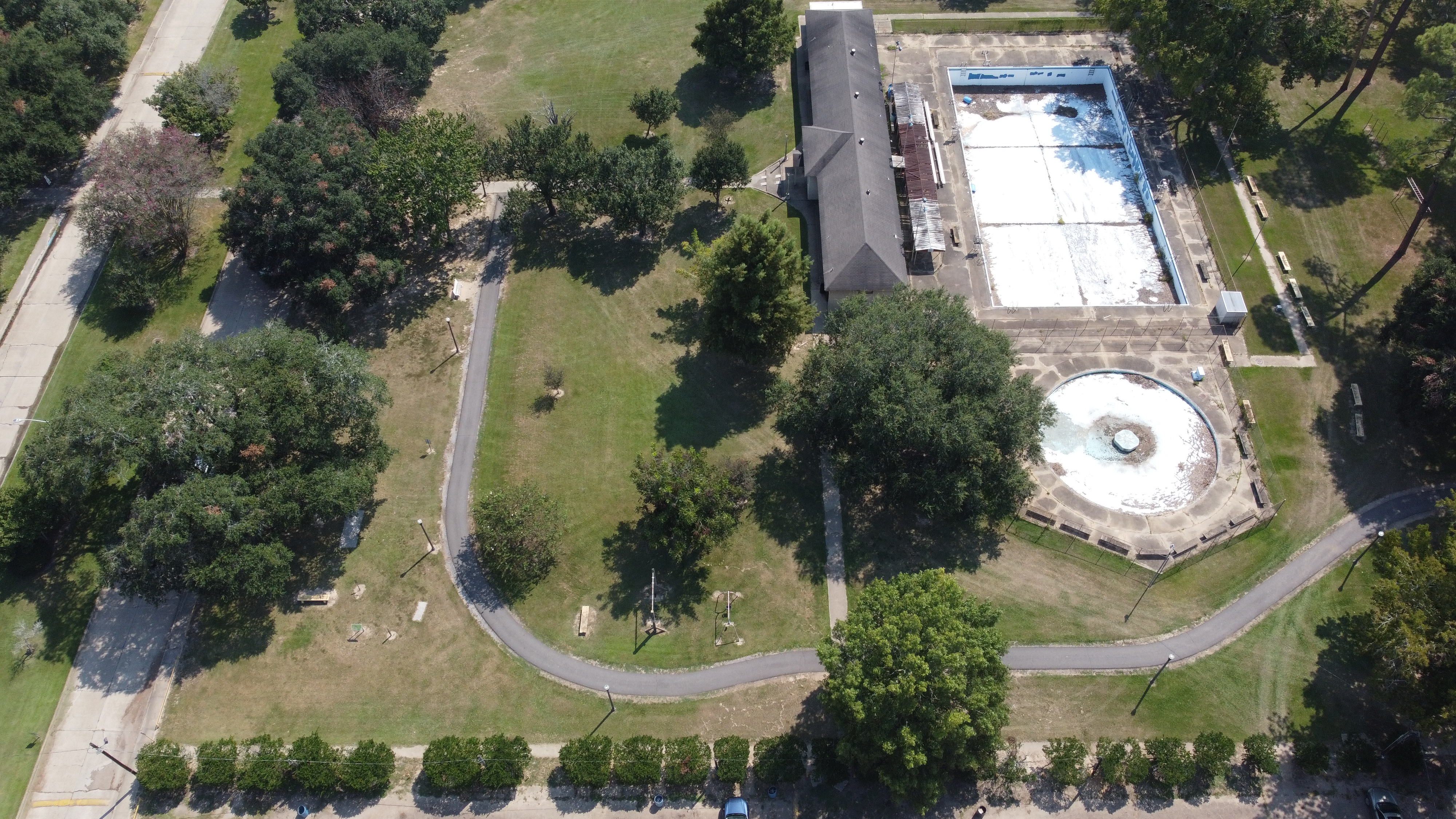
The vast majority of the trees and all of the shrubs lining the parking lot border, including two mature oaks, will need to be removed for the multipurpose center. The large live oak on the border of Market (left side of the photo), as well as one of the oldest oaks in the park behind the kiddie pool (actually another historic feature, a fountain that once stood downtown), will be negatively impacted by construction. The entire pool complex is planned to be demolished and filled, adding hundreds of thousands of dollars to the cost of the project, a potential violation of federal grant guidelines when less expensive sites are available. (Photo by author.)
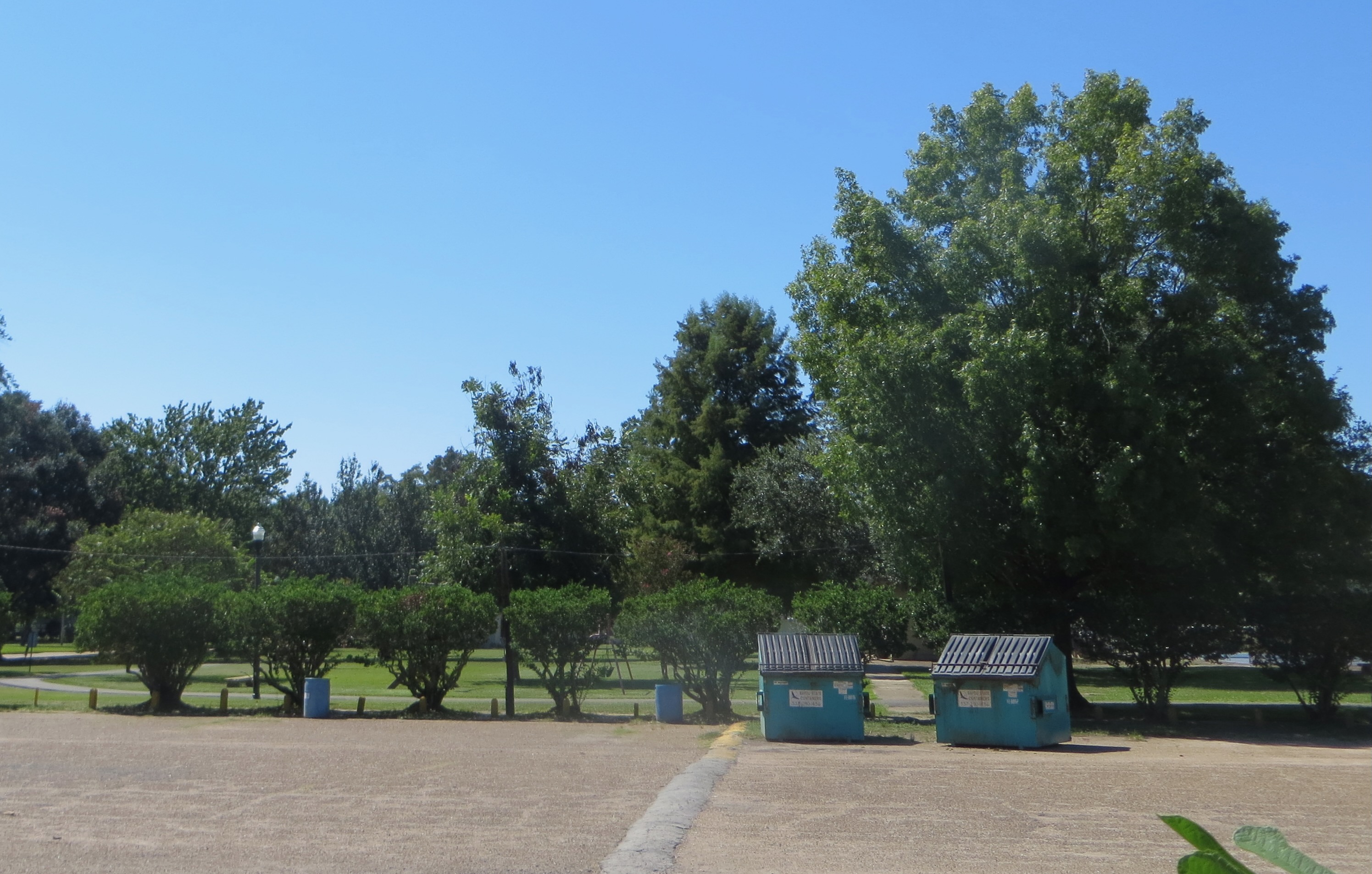
All of the trees and greenery here would be removed, including a mature, 50+ year old white oak, a similar age live oak and other healthy shade trees. This area is the most popular location in the park for annual community events, fairs, cookoffs, family reunions, and cultural traditions. The popular swing set for small children is also located in this area. (Photo by author.)
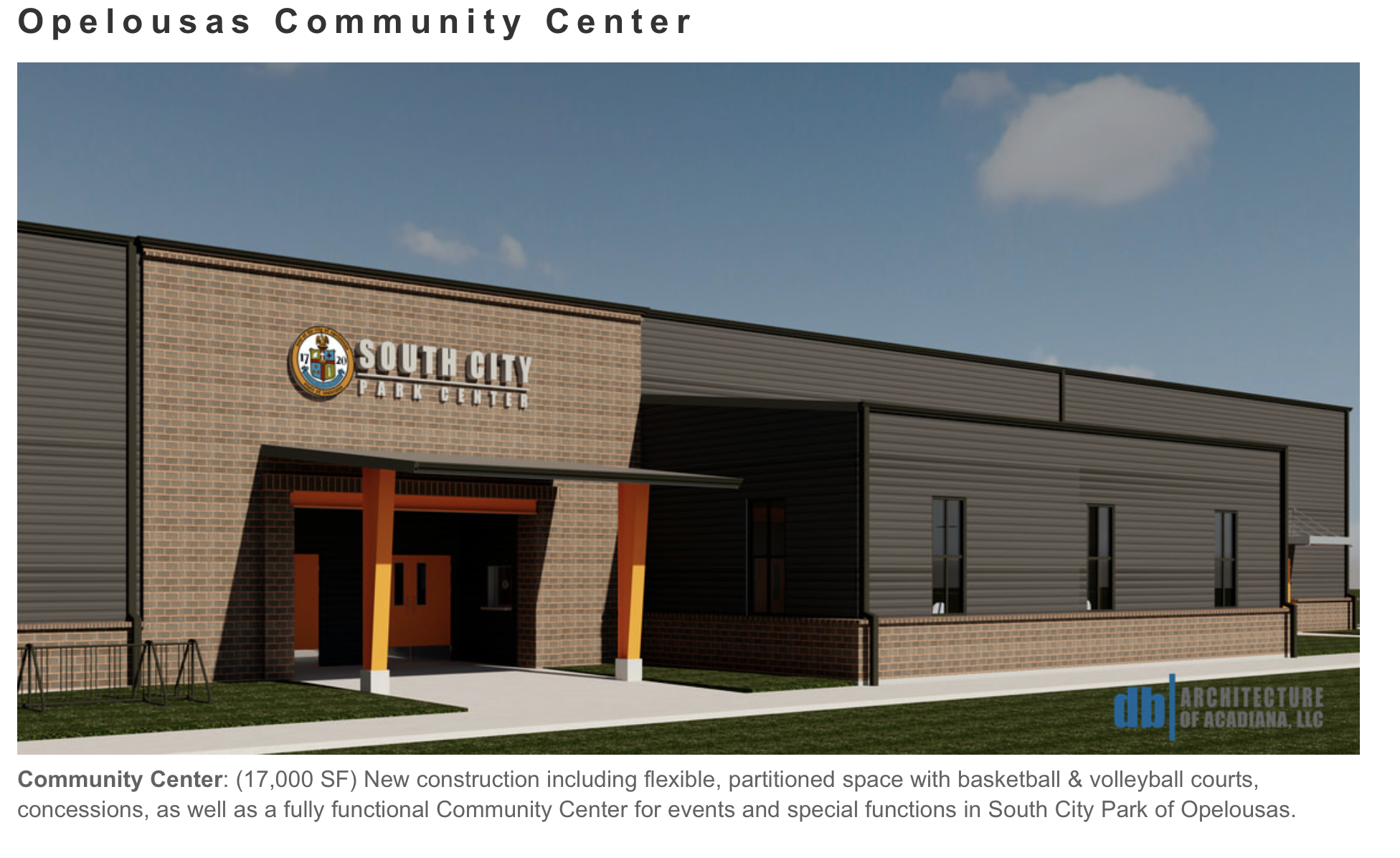
This is what would face the parking lot and loom over nearby homes. The dark colors will add energy costs due to heat gain and the industrial building design is out of character with the existing park flora and infrastructure. The architecture firm touts no sustainability, energy efficiency, or water management credentials, such as USGBC LEED (Leadership in Energy and Environmental Design), which indicate expertise in sustainability and thoughtful management of building impacts on sites, energy use, resource management, and nearby neighborhoods. Use of this site will radically impact the popular walking trail. Would you rather walk behind this building, or among shade trees, grass, and nearly century-old, sturdy historic buildings? (Screenshot from Lafayette-based DB Architecture’s webpage. This image is yet to appear on any city or ODDD website.)

Footnotes:

  1. Publicly Owned Property and Procurement Standards
    Since all properties in South Park are publicly owned, the decision-making process is subject to federal procurement rules emphasizing efficiency and economy. Without a strong, documented justification for demolishing historic assets and green space—rather than developing nearby vacant land—such actions may be challenged for violating these standards.
    ↩︎
  2. Federal Cost Principles (2 CFR Part 200)
    Federal awards require that all costs be “reasonable and necessary.” Choosing a significantly more expensive or environmentally damaging development site—when a viable, cheaper alternative exists—must be justified with evidence. Non-federal entities must maintain clear documentation explaining key decisions, including site selection.
    ↩︎
  3. Historic Preservation Requirements (NHPA Section 106)
    Federal agencies must consider the impact of funded projects on historic properties. Demolition of a historic building (including those eligible for—but not listed on—the National Register) requires a Section 106 review and may trigger mitigation requirements. “Anticipatory demolition” to avoid review can render the project ineligible for federal support.
    ↩︎
  4. Environmental and Green Space Considerations
    Federal grants often require environmental review under NEPA and EPA guidelines. These prioritize minimizing ecological damage and encourage the use of vacant or underutilized properties. Destroying public green space and mature trees—without clear benefit—may violate the intent and spirit of these regulations. ↩︎

A Shiny Stadium, a Crumbling City: Why Opelousas Must Follow the Law Before Spending Another Dime

Despite extreme economic uncertainty and without following the legal requirements of the city charter, the City of Opelousas is well underway with plans to demolish historic facilities, cut large trees, and spend millions on a multipurpose community center and stadium upgrades in South Park. That charter mandates the appointment of a Parks & Recreation Commission to provide oversight, public input, and manage all spending and activities. Yet this legally required body has been unappointed since 2019, meaning all these funds flow without proper legal or community review.

While South Park is set to receive more than $12 million to support a select group of young athletes, the public librarya vital community asset serving all ages and abilities—is crumbling. Current plans call for the library to receive just $500,000—far short of what’s needed for a comprehensive renovation or new facility.

Why Not a Community Center in the Center of the Community?

Among the dozens of vacant buildings downtown is the former Bordelon Motors across from City Hall. That site could be purchased affordably and redeveloped for a combined library and true multipurpose center, serving not just recreation but as a resilience hubdisaster shelter, public meeting space, and business incubator. This would truly be a “monument to the people of Opelousas,” as the mayor described the stadium. Wherever it’s built, the center should focus on real public needs, rather than being another limited-use sports venue constructed without oversight and driven by whim, ego, and unfounded hopes. Besides, there is no shortage of gymnasiums or high-end sports complex dreams in the region. These are the kinds of ideas and questions a Parks & Recreation Commission and caring city leaders need to discuss, in public.

A Youth-Sports Model the City Can’t Afford

Nationally, only 6% of high school athletes ever play in college—and even fewer receive scholarships. Meanwhile, the mayor, the ODDD, park leadership, and Rep. Miller are backing a youth sports–driven, multimillion-dollar blueprint that tears down historic facilities and paves much of South Park in concrete and plastic “grass” in the guise of economic development, banking on expensive tournaments, hopeful revenue streams, and high-end, high-maintenance facilities.

But Opelousas, with its 34% poverty rate and shrinking population, cannot support that dream. As the falling birth rate statewide impacts enrollment, the St. Landry Parish School District currently faces an estimated $7.9 million deficit, underscoring the misplaced focus on funneling dwindling public dollars into sports infrastructure while neglecting students and families who need education, food, healthcare, and social support. And the glaring fact is that high school sports should be financed and managed by school systems, not cash-strapped city government.

The Unplanned, Ongoing Cost That Nobody’s Talking About

Despite questions raised years ago about these projects, the city has yet to share any calculations of the cost of long-term operations and maintenance (O&M) for these proposed projects, nor has it specified where the funding would come from to support this new, ongoing expense. With nearly 30% of city revenue at stake in the upcoming August 16 sales tax referendum, its failure will trigger a budgetary disaster that will undermine all of the city’s current and future responsibilities.

Although my household supports the renewal of the sales tax, its passage faces strong opposition. The mayor is far too quiet in gaining support for the tax, and has not published a plan for how the cuts would affect services and staffing. Whatever his response to a reduced budget will be, here’s what I conservatively calculated as potential, and new, annual costs to operate and maintain the center and stadium. The sad truth is that estimates like this have not been shared or reviewed publicly to understand their impact on the city’s budget. These are sobering numbers.

Multi-Purpose Center (>5,000 sq ft, metal building with soaring ceiling in dark metal cladding)

  • Cooling and utilities: ~$35K–$50K/year
  • Insurance: ~$25K–$40K/year (Louisiana’s rates are sky-high)
  • Staffing: ~$50K–$80K/year
  • Repairs/Maintenance: ~$15K–$25K/year
  • Supplies/Equipment: ~$5K–$10K/year

Total: ~$130K–$205K/year

Donald Gardner Stadium (post-upgrades)

  • Utilities (lighting, scoreboard): ~$25K–$35K/year
  • Insurance: ~$15K–$25K/year
  • Maintenance: ~$20K–$30K/year
  • Event staffing: ~$10K–$20K/year

Total: ~$70K–$110K/year

Combined Operations & Maintenance Costs

Annual Total: ~$200K–$315K

Over 10 years, that’s $2M–$3.15M, in addition to approximately $1.4M in interest on the bond debt borne by the ODDD.

These recurring costs have no dedicated revenue source and will compete directly with other essential services, including police, streets, libraries, and social programs.

Ignoring the Charter Equals Breaking the Law

South Park spending is being conducted without the city charter’s required oversight by the Parks & Recreation Commission, thereby violating both our city code and the public trust.

This isn’t simply cutting corners—it’s illegal.

We Can—And Must—Expect Better

This isn’t about being for or against parks. It’s about expecting:

  • Transparency in all park expenditures.
  • Appointment of the Parks & Recreation Commission—now.
  • Public hearings before approving major projects.
  • Priority funding for essentials: a safe, modern library; downtown revitalization; disaster resilience.
  • Publicly shared analysis of long-term operating costs for all proposed facilities.

If charter violations continue, I’m prepared to file a Writ of Mandamus (any Opelousas lawyers out there want to join me?) to compel legal compliance before a penny more is spent.

Take Action—Protect Our City’s Future

Things are happening quickly. Your voice matters. Contact your council member, the mayor’s office, the ODDD, and your neighbors and tell them:

Before any further demolition in South Park and spending on the multipurpose center happens, the mayor must appoint and seat the Parks & Recreation Commission, as required by law, to oversee his spending.”

We need compassionate, lawful leadership that utilizes science and community data to guide plans and spending. We expect our city leaders to do the right thing to represent us all, not carelessly spend based on the ego-driven “I want” of a few. Otherwise, Opelousas will continue to crumble and lose population, and people will wave at a shiny stadium as they leave for good.

Note: updated 8/12/25 to more accurately project bond interest based on the verbal monthly financial report given at the July ODDD meeting.

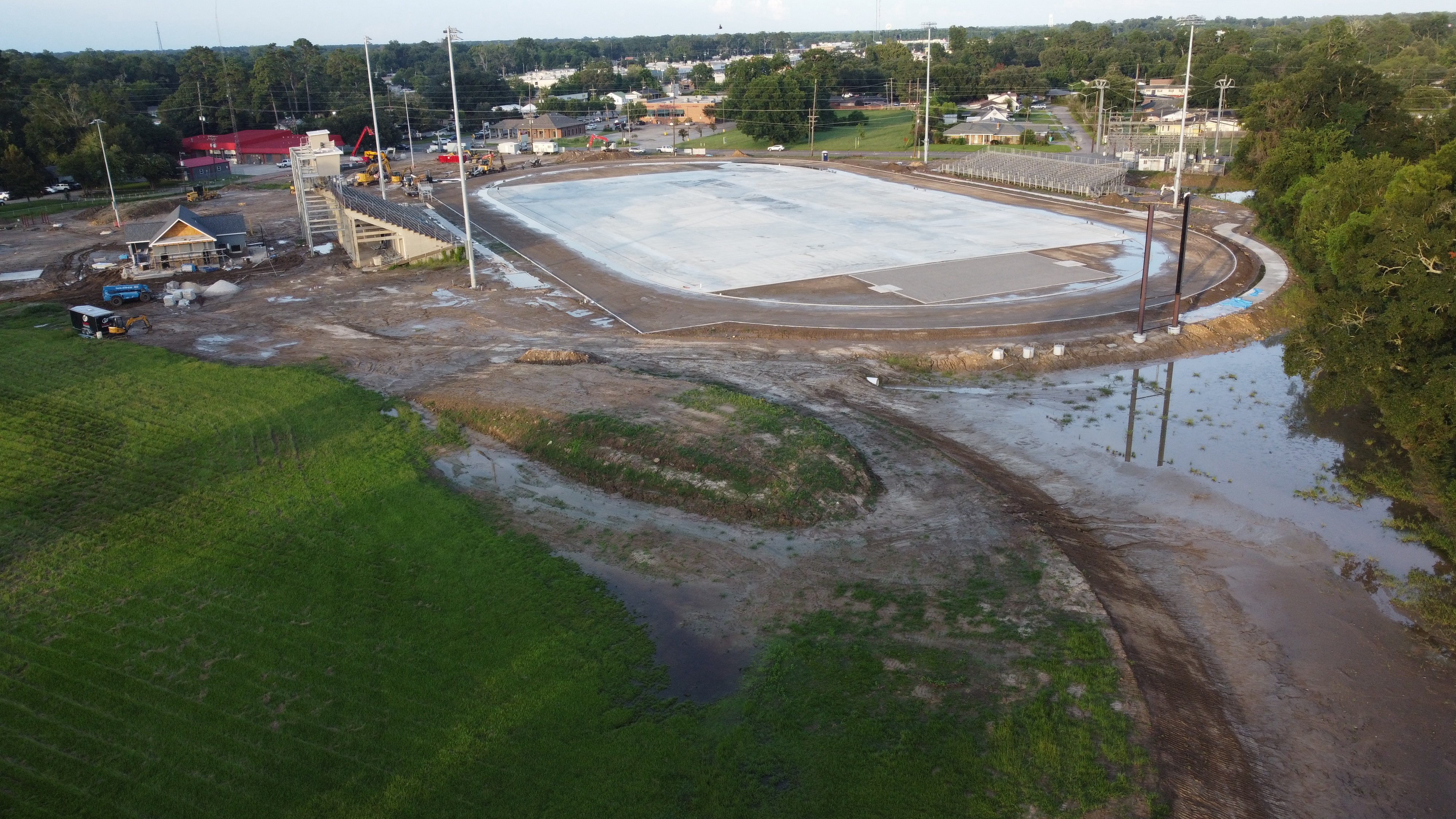
Concrete playing surface in place at Gardner Stadium, July 18, 2025. The end result is akin to playing tackle football on a parking lot covered by a thin layer of toxic plastic grass sprinkled with shredded tires.
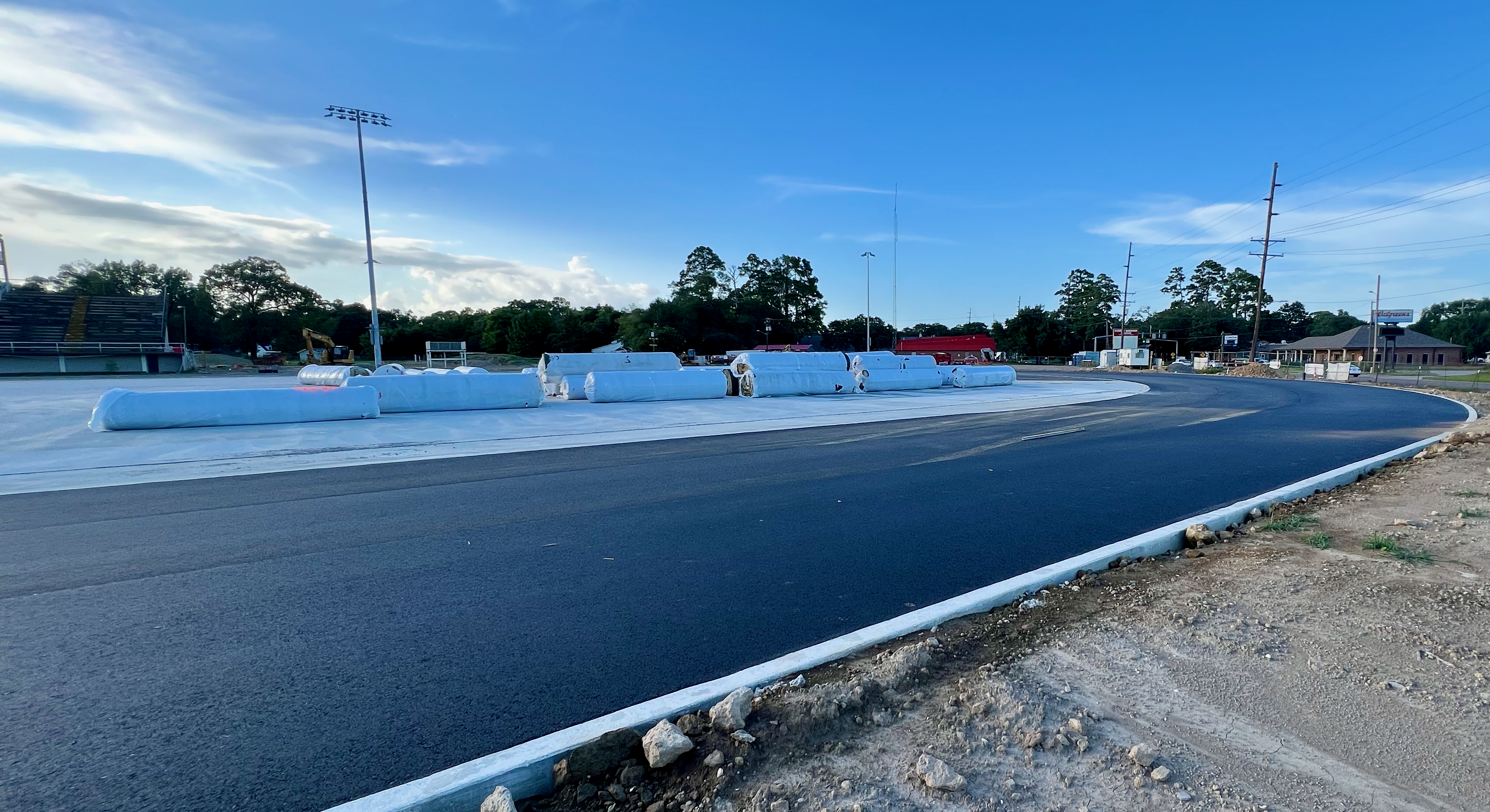
Black asphalt running track and rolls of plastic “turf” ready to be installed at Donald Gardner Stadium, July 27, 2025.

The City of Opelousas Faces a Grim, Self-inflicted Fiscal Crisis

Our modest household pays a paltry twenty-nine cents a day in property taxes for the privilege of owning a home in Opelousas. Before we moved here, we paid $4.56 a day in New Orleans, nearly sixteen times more. In 2023, city leaders proposed a significant millage increase to fund infrastructure and transform their ability to deliver badly needed services. It would’ve raised our cost of living here to a still-low $1.16 a day. However, it faced externally funded anti-tax opposition and an apathetic electorate and failed by 250 votes.

Nevertheless, the city continued with its expensive plans to use bond debt financing to construct limited-use, artificial turf high school sports fields in its loveliest public park. We’ve been trying for more than a year to help city leaders grasp the folly of the scale of these plans.

But it gets worse, much worse.

On March 3, the Monday before Mardi Gras, the mayor’s office abruptly called (and then canceled) a special meeting of the council as part of an effort to provide a legally required public notice for something none of us saw coming—a one-cent sales tax that provides what I estimate to be $5 million, or nearly a quarter of the city’s annual budget, expires in May 2025 and requires a vote of the people for renewal. That this fact was not made public sooner is a painfully big question. But we are where we are, and a successful vote for renewal, now scheduled for July, seems a long shot.

If the city loses the referendum, a quarter of its $20 million annual budget will disappear. In fact, since the tax officially expires in May, that loss will already be underway.

The lack of news and information regarding this looming fiscal disaster is disturbing. And one can only hope the administration will launch a strong campaign to raise awareness and support. But if the headwinds against the millage are any indication, convincing the poor people of this town to tax themselves on everyday purchases when the state is already doing so without their vote, is a longshot.

On March 11, the day of the regularly scheduled council meeting, I sent an email to city leaders in Opelousas. I received no reply. This is what I said:

To the Mayor and City Council:

I believe in the future of Opelousas. We all need to do our parts for that future to be bright.

We won’t always agree, but if you act transparently and with assertive outreach and public participation, we can help this city thrive together. 

I also know that if citizens like me don’t shout “Look out!” when we see you driving off a cliff, we’re as responsible as you when things go wrong.

The extravagant plans for South Park are a fiscal cliff, and the car is speeding without enough hands on the wheel. 

I realize that the mayor and ODDD have invested substantial time and money, and feel like we must stay the course. You’re trapped in the classic sunk cost fallacy. But if (when?) the sales tax referendum fails, investing millions in a limited-use, high school sports stadium and track could be a fatal blow to the city’s finances and threaten our future. 

Nothing about this stadium project meets the criteria of good governance. As I explained in a prior email, the design is a toxic, injury-inducing threat to the health and well-being of the young athletes it’s meant to serve and the surrounding neighborhoods and watershed. It will produce adverse health outcomes, the opposite of what you all want to see happen. 

I’m sorry to write that, but as a lifelong public servant and activist for public participation and good government, I feel qualified to tell you. 

There have been no proper public hearings or input, no transparency, and no clamor by the public for this investment. In fact, the vast majority of people we’ve encountered oppose this project and see it as at the expense of improving our water systems and roads. This perception runs deep and will fuel opposition to the sales tax renewal.

South Park plans are the most significant non-infrastructure investment in the city’s 300-year history. Yet that expenditure only benefits a tiny fraction of the general population of Opelousas. 

As a poor town, we cannot afford to overspend on South Park or anything else, as the chaos in Washington, DC, continues to shake the foundations of our government, education systems, healthcare, and social safety nets. Cuts to the Department of Education combined with Louisana’s new voucher program will seriously undermine OHS and its ability to have strong athletic programming.

Even the anticipated construction costs are now in jeopardy as the price of aluminum is up 70% since January, thanks to tariff threats. With the additional interests and costs of bonds, the final bill for the stadium will easily exceed ten million dollars. And without feasibility studies to determine demand, income potential, operational costs, insurance, and maintenance, we’re wearing blinders as we head for the cliff. 

In addition to the lack of adherence to good governance, legal questions arise due to fundamental gaps in how the city is supposed to operate. These questions could open the city to undesired scrutiny and meddling by politically opposed factions.

The City of Opelousas has not had an appointed Parks and Recreation Commission since 2019, despite its legal mandate to oversee all aspects of park management. Without this oversight, current plans lack the transparency and due process required for significant public investments.

The solution is for the City to immediately reappoint the Parks and Recreation Commission to ensure transparent and lawful oversight of all park-related projects.

The mission of the ODDD is to foster commercial growth and economic revitalization downtown. Investing millions in a limited-use high school sports facility—particularly one that may not be accessible to the general public—raises questions about how such an expense aligns with the district’s goals.

As a concerned citizen, I expect all public funds to be used in a manner that is transparent, legally sound, and beneficial to the entire community. The City risks potential litigation, financial mismanagement, and public backlash without a clear legal basis for this expenditure.

It gives me no pleasure to call you all out on this situation. But here we are. It’s not too late to scale back the stadium plans to save millions of dollars and still have an above-average football facility. 

The people of Opelousas need and deserve a city that serves everyone by first providing public safety, dependable infrastructure, and clean water. Without transparency, outreach, and public participation, you will not successfully deliver on that responsibility. You have the power to steer us in a better direction. And it starts with reigning in extravagant spending. 

We’re all in this together. Thank you for your public service! Please do better! How can I help?

Construction at Gardner Stadium in Opelousas, a facility that serves two of the city’s five (!) high schools. The largest non-infrastructure public investment in the city’s history, estimated to cost more than $10 million. As seen on March 10, 2025

Can Opelousas Afford to Spend Millions on Sports?

NOTE: This editorial was originally published on the St. Landry Now website on December 6, 2024.

Opelousas faces a daunting future as funds for food, health care, housing, infrastructure, and education are expected to dwindle. It’s time for the city to batten down the fiscal hatches and prepare for future challenges, starting with paring down plans to turn South City Park into a high-end sports complex.

The Opelousas Downtown Development District (ODDD) is to be commended for its efforts to upgrade sports facilities in South Park. The all-volunteer seven-member board invested substantial time and money and arrived at an ambitious Conceptual Master Plan that transforms the park into a modern team sports playground.

However, it’s unlikely that many people have seen the details because the plans aren’t posted online for public review and input. So don’t feel bad if you’re unfamiliar. 

The proposed first phases include stadium upgrades that call for paving several acres of green space to install impermeable, toxic, heat—and injury-inducing artificial turf and constructing a new multipurpose gym large enough to accommodate two full-size basketball courts. The football stadium updates incorporate a new regulation running track and numerous facility improvements. 

Construction bids for the stadium ranged from eight to twelve million dollars. The multipurpose gym is yet to be bid, but is estimated to cost another three to five million dollars. Thus, the two facilities’ total cost ranges from eleven to seventeen million dollars.

If completed, either project would be the largest non-infrastructure public investment in Opelousas’s history.

The city’s Parks and Recreation Commission, a thirteen-member body legally responsible for overseeing all aspects of park management, has been unappointed since 2019. Thus, too few people contributed to the development of the plans. 

The City of Opelousas and ODDD are eager to spend on these minimally researched plans, not only without the oversight of a Parks and Recreation Commission but without conducting thorough feasibility studies on operational, staffing, and long-term maintenance costs, park user surveys, or assessing potential demand and unintended pitfalls.

The ODDD website says its mission is “serving as a catalyst for economic growth and development in Downtown Opelousas” and that it will “plan and develop the designated commercial district to its potential, through economic development and historic preservation.” Dedicating more than a decade of ODDD’s anticipated sales tax revenue to high school sports-oriented park improvements during these uncertain times is a departure from that mission and from the city-adopted Downtown Master Plan. As it stands, this investment could lead to future financial stress for decades to come. 

Thanks to the new tax codes set by the Louisiana Legislature, in 2025, the top sales tax rate in the special taxing districts of Opelousas will hit an astronomical 11.75%, one of the highest sales tax rates in the nation. The big question is why the ODDD focuses so much of its time and future revenue on South Park and not on the business corridors it’s taxing and designed to help. 

We could save millions by working with the existing stadium, professionally restoring the natural turf field, and updating the scoreboard, lighting, lockers, and general facilities. Additionally, we should identify long-term funding strategies to establish a system for better field maintenance.

To put it plainly, for a poor community with crumbling infrastructure and struggling schools to invest future sales tax revenue in multimillion-dollar, limited-access amateur sports facilities that require the demolition of historic structures and the loss of green space is an unlikely path to community economic prosperity.

Parks should serve all people, no matter their age or infirmity. The parks and people of Opelousas deserve investment, but first, the Parks and Recreation Commission should be reinstated to ensure the development of transparent and equitable plans that benefit everyone.

The ODDD is focused on South Park at the city’s behest. Now that you’ve learned more about these plans, how would you direct the spending of millions of your sales tax dollars? Now is the time to let the mayor, council, and ODDD know.

Artificial Turf Sports Fields are Unhealthy for Children and Other Living Things

A thinly researched, more than eight-million-dollar plan to significantly modify Gardner Stadium in Opelousas, Louisiana, calls for artificial turf, a product developed for indoor fields that, when installed outdoors, creates a potentially deadly mix of heat, impact injuries, and toxic chemical exposures that threaten the health of players, coaches, fans, and the environment. 

Construction bids exceeded eight million dollars, so the Mayor’s office is working to lower costs. Natural turf is a good place to start since it is more affordable and, in the long run, produces a healthier facility that is less likely to cause injury, heat stroke, and future legal liability for the city, the Opelousas Downtown Development District (ODDD), and the school district.

An artificial turf field is basically an asphalt parking lot overlaid with thin layers of plastic carpet. Initially developed for the world’s first large indoor stadium, the Astrodome, “astroturf” was created out of convenience, not scientifically designed to improve the game but to make sports possible on an indoor, paved surface. It was not crafted (and has not successfully been improved) to reduce injuries or enhance performance; it was designed to endure. 

A natural turf field is a living surface of soil and plants that cushions athletes and exposes children to a healthy mix of microbes, moisture, and oxygen. The grass and soil of a natural field absorb and filter rainfall; when it lands on paved, plastic grass landscapes, it becomes a poisonous soup that contaminates streams and groundwater.

Artificial turf exposes players to impact injuries, extreme heat, and toxic chemicals that outgas into the air and are directly absorbed by their bodies via inhalation and scrapes and scratches known as “turf burn.” This abrasiveness is why many professional football players wear fabric tape over their elbows.

Globally, the deadliest weather phenomenon is heat, which kills more people annually than storms, floods, or cold. In a rapidly warming world, artificial turf fields put children, coaches, and fans at greater risk for heat stroke that can permanently damage brains and other vital organs. These fields can easily reach deadly temperatures of 130 to 150 degrees or higher on a ninety-degree day, creating a potentially fatal scenario. Last August, there were thirty-five emergency calls for heat stroke at a single UL-Lafayette football game. 

It should come as no surprise that heat-related deaths of high school football players are happening, with five fatalities in just three southern states since July 2024. Those teenage boys died simply because they wanted to play football; they were failed by adults who had the responsibility to protect them.

Adding to heat risk is the fact that because the plastic turf is underlaid by asphalt, injuries like concussions, blown knees, and shattered ankles occur at a much higher rate than on natural grass. This rate of injuries is the primary reason why ninety-two percent of the members of the NFL Players Association voted last year to demand that all thirty NFL stadiums install real grass. Professional soccer players agree, and the World Cup is played on natural turf.

The health threats of synthetic turf fields are myriad. Plastic grass is flammable and impregnated with fire retardant, often a “forever chemical” proven to cause cancer. Shredded tires are spread over the turf to keep the “blades” up and add additional cushion. This infill also contributes to airborne microplastic pollution and yet more potential for cancer, lung and liver damage, and other developmental problems.

Because these harms are now more commonly known, the city could face future lawsuits by parents whose children become permanently impaired because artificial turf was chosen as a convenience even though professional footballers reject it as dangerous. 

The decision by the mayor and the ODDD to stick with the current plans is guaranteed to end the careers of high school athletes randomly for decades and add the potential for cancer and other diseases later in life. In the years to come, those teenagers who suffer concussions, blown knees, shattered ankles, and failing health will find that their suffering might have been prevented if the city and ODDD had done their research and listened to the science and the professionals.

Sports like football, baseball, and soccer were invented outdoors, where weather and field conditions add their wildcard impacts to the game. Children need contact with grass and soil to build their immune systems, and they deserve to play in as much safety as science, budgets, and our loving care allow. Keeping the grass in Gardner Stadium is a simple way to save money and protect future generations, and that’s what we should all expect from our public leaders. 

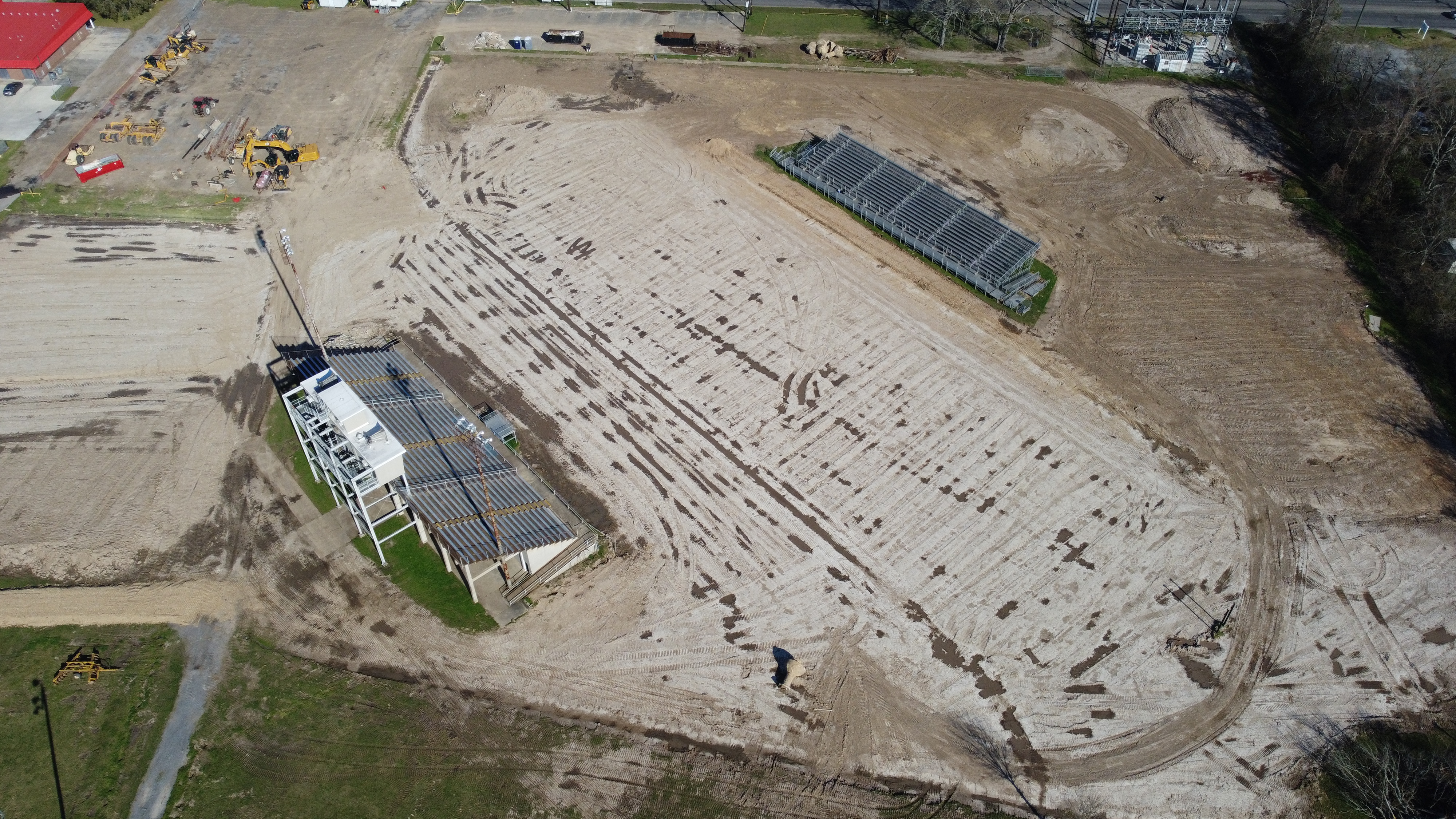
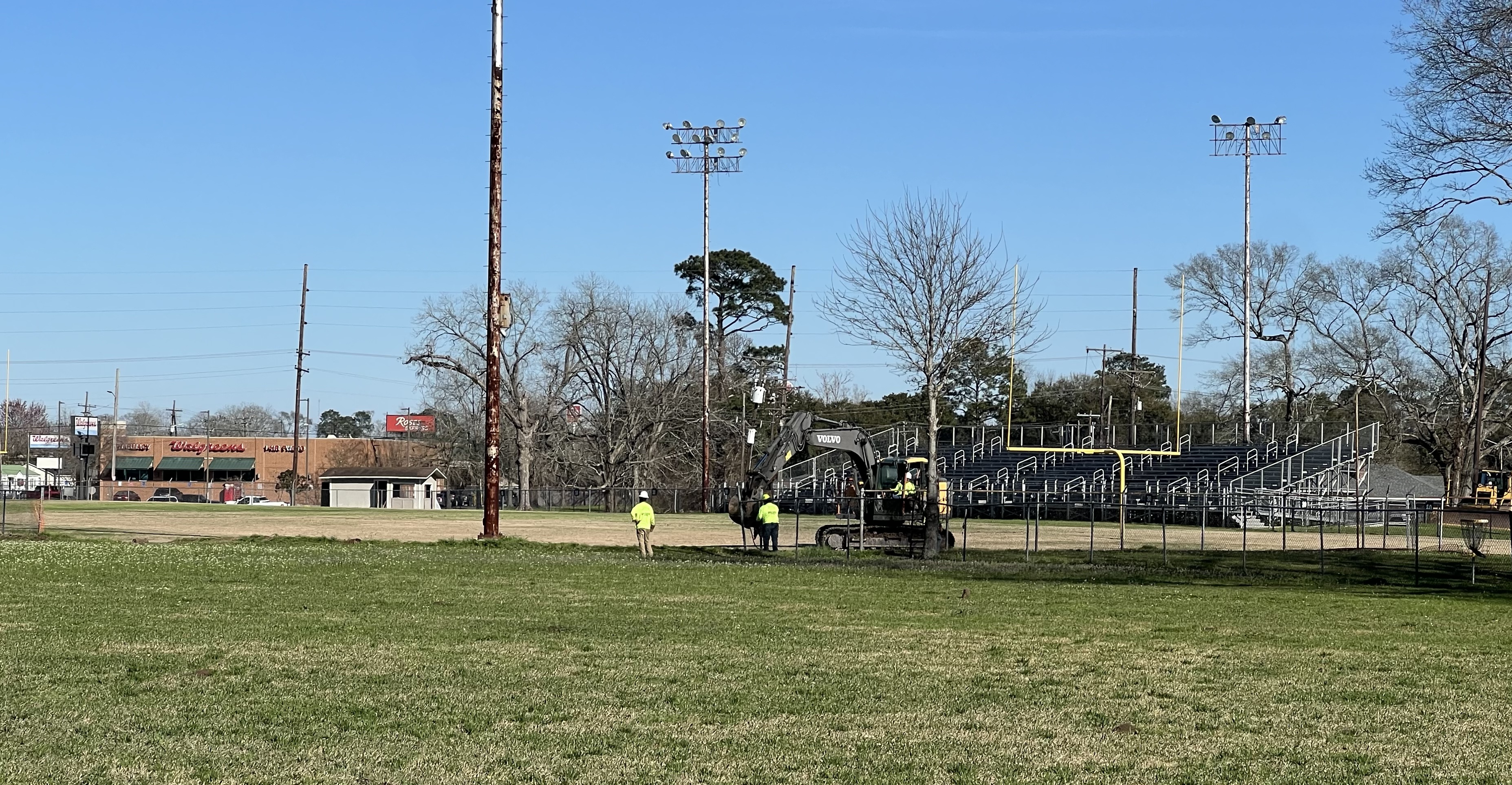
Workers removing fencing as construction begins on Gardner Stadium in Opelousas, LA, Feb. 17, 2025.

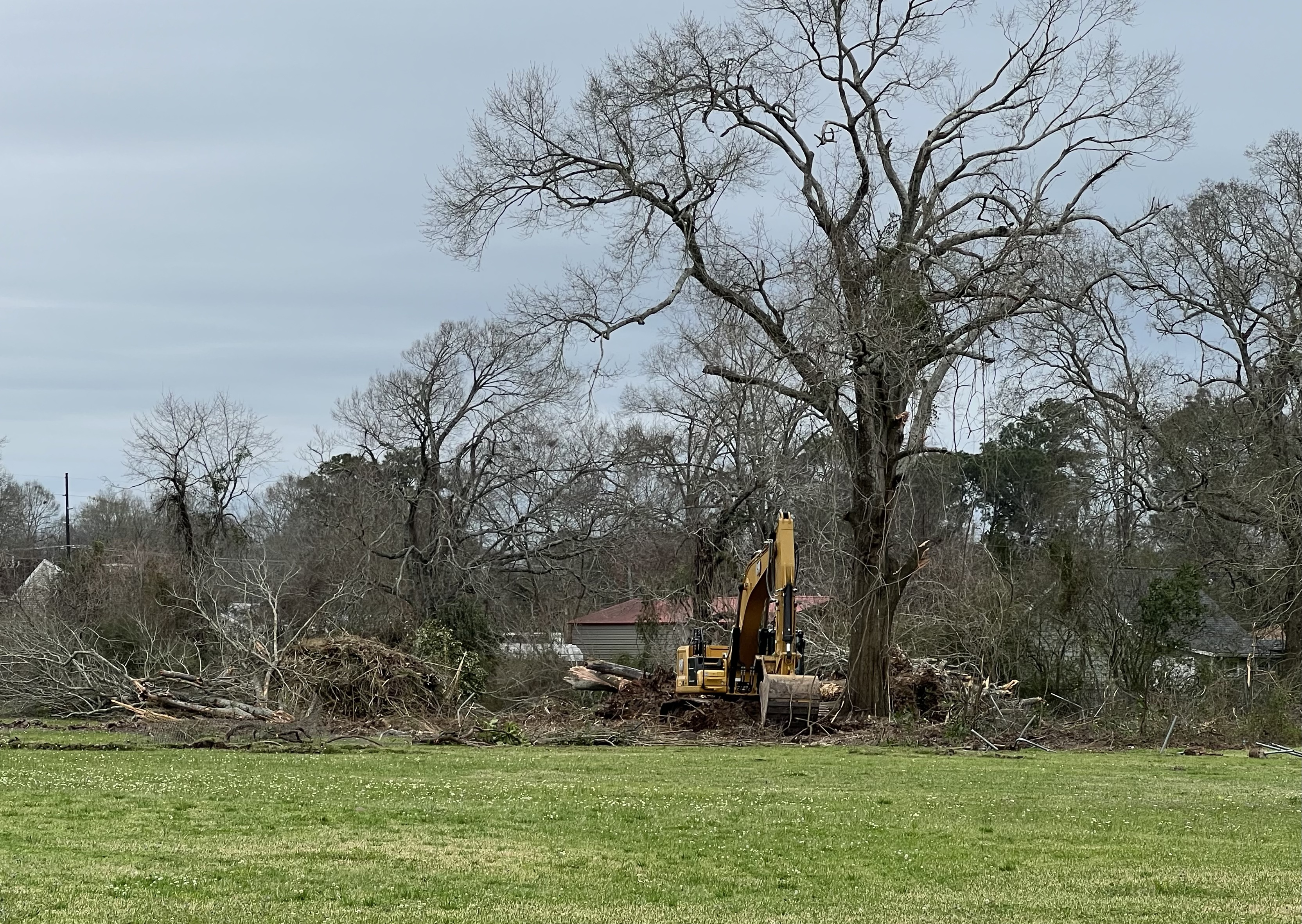
The first step always means loss of greenery. A stand of mature trees being destroyed by the construction at Gardner Stadium on Feb. 18, 2025.

2023 Update #1: A climate migration in the works

Managing multiple websites is challenging. Between this one, my work, my music, and the plethora of (increasingly fetid) social media, it can be overwhelming. I’ve stopped posting on FB, though I spend too much time perusing it for the rare gem of information from people I care about. And the mixed bag cesspool that Twitter has become? Well, I’m not alone in lamenting its state. So this long overdue update is the first step in reorganizing my online presence and the availability of things I’ve written and plan to write. And do I ever have a lot to say!

Between the hate-fueled headwinds of the latest rise of fascism and white supremacy to the rapid decline of the biosphere, these are tough times and only getting tougher. When viewed through the eyes of my aging body, today’s trends are quite depressing. However, I haven’t lost my desire to be force for good, and this post is a reiteration of why this website exists.

So much has happened to all of us since the start of the pandemic, and so much is happening to our planet this year that I almost don’t know where to start. So I will keep this post focused on personal news, though I have a music update as well.

First, I want to let y’all in on our plans. In December 2022, we sold our beloved home of 17 years because I have no confidence that my basic income can handle rising insurance rates or the risk of losing everything to another storm or flood. We’ve been renting a much smaller house in the same block while looking for a place to buy on higher ground in Acadiana, specifically in Opelousas, the state’s 3rd oldest city. We consider ourselves to be climate migrants, albeit with the wherewithal to do it voluntarily.

It’s painful to move from a city I love like no other. As of July 4 I’ve lived in New Orleans for 32 years (and with Grasshopper for 20), and nowhere else have I felt so connected to a place or so much a part of a living landscape and community. I’m awed to say that over the years I’ve added a few fibers and threads to the rich quilt of New Orleans/Bulbancha history, and I’m grateful beyond words for the people, experiences, and quality of life I’ve been blessed to have in this unique city.

We grieve as we plan this departure, but we must leave our emotional comfort zone and push ourselves to continue to make a difference where we believe we can, something we’re all having a hard time with as the climate bounces into unknown territory.

It’s not just the climate risks that triggered this decision; it’s also that our work here has grown up. For more than a decade, Grasshopper and I did our best to catalyze the movement to embrace integrated water management, green infrastructure, and the water economy. Myriad organizations, state and regional government, and people have now coalesced around the power of water, and the momentum is growing. Over the years that we were public figures, what Tim Williamson once called “the Johnny Appleseeds of the water movement,” we had inconsistent and inadequate financial support. And in 2017, after we released “The Louisiana Water Economy: Our Shared Destiny,” we pivoted to focus on building our company, Adaptation Strategies.

I don’t want to sound maudlin because I know I’m privileged and fortunate to be in the position I’m in, but I am sad and anxious, feelings that haunt us all as we age and as the world burns. But I have a lot more to say and do. So I plan to use this site to encompass a broader perspective of my writing, past and future, and this post is a first step. And Grasshopper’s idea for re-branding this blog works: NOLAmotion now stands for New Orleans-Opelousas Louisiana (I know, that’s NOOLA but that doesn’t sit right with me).

Grasshopper and I remain committed to Louisiana, and this move will allow us to work on other issues that we’ve long wanted to address regarding health, aging, the environment, and the well-being of smaller towns. Plus I’ll be closer to Dockside Studio, where Bas Clas continues to make music. In fact we recently released a live recording from 1988 and have more to come. If all goes as planned, we’ll be building relationships between New Orleans and Opelousas, so you’ll have friends only two hours away. For now, thank you for reading this, and stay tuned!