
Opelousas Taxing Districts Expanding With Little Public Input

By Stephen C. Picou
We are one of the poorest cities in Louisiana and have one of the highest sales tax rates in the USA. At approximately 12% (depending on where the purchase is made), Opelousas is more expensive to shop in than nearly anywhere else in the country. Why? Because of special taxing districts, specifically Central St. Landry Economic Development (CSLED) and the Opelousas Downtown Development District (ODDD), each of which collects a 1% tax in its coverage area. 

Exactly where you pay those taxes (or whether they overlap in certain stores) is hard to determine because neither agency makes that information easily accessible. The ODDD website shows a map, but doesn’t indicate which businesses collect the tax. In fact, under a Q&A section, the ODDD misrepresents the number of businesses with this statement: “There are only six existed [sic] businesses that are included in Special Taxing Districts.” Yet more than a dozen businesses currently collect the tax, including grocery stores, pharmacies, fast-food restaurants, and auto-parts retailers. It takes a public records request to find out the details.

According to meeting agendas and reporting in St. Landry Now, CSLED plans to expand to Sunset/Grand Coteau and continue north of Opelousas along the I-49 corridor. ODDD wants to add Creswell Lane and more of the businesses in town. They’re not proactively presenting this information to local civic organizations, news outlets, or the public, and are taking action with the barest adherence to state Open Meetings guidelines. No fact sheets, no research papers, no public forums. 

I’m no more against taxes than I am against guns. I simply don’t want either in the hands of people with too little self-control. Raising sales taxes in a town as poor as Opelousas is irresponsible; for an economic development entity to do so during these tumultuous, inflationary times is cruel and harmful. 

The most oppressive tax burden on struggling households is not income tax; it’s sales tax. The price of groceries has risen by more than 33% since 2019. If these were more prosperous and optimistic times, this tax increase might not hurt as much. But times are getting much harder for the poor, and too many of us are running out of options.

Anticipated cuts to federal food and medical safety-net programs, such as SNAP, Medicaid, and Medicare, are now impacting families, and additional reductions written into federal law are scheduled to take effect after the upcoming midterm elections. Louisiana is among the states most affected.

For Opelousas, this means less money for food and reduced access to medical care. It means more hungry people. It means untreated illnesses. It means businesses that depend on discretionary income, like restaurants, home improvement, and entertainment, will see lower revenue.

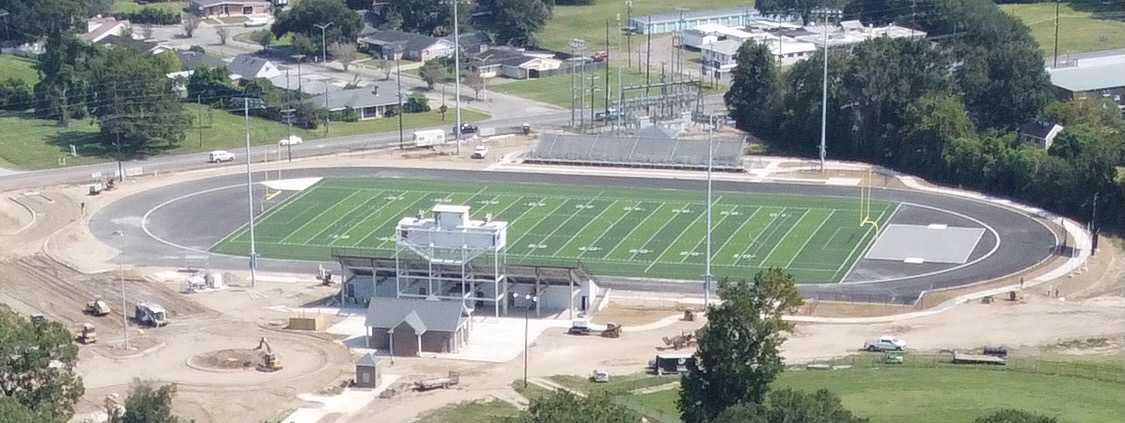
Meanwhile, the ODDD has committed roughly half of its annual sales tax revenue to debt service associated with the renovation of Gardner Stadium, including $1.4 million in interest and overhead. Payment of that debt will continue for approximately 9 more years until the bond is paid in full. That’s $1,800 a day, every day through 2035, not counting utilities, insurance, maintenance, staffing, and other operating costs borne by the city government, which, if estimated, have not been shared publicly. All for a high school sports stadium that should be (at least partially) owned and operated by the school system and that sits empty for more than 300 days a year, baking in the increasingly hot weather. It is the most expensive non-infrastructure expenditure in Opelousas history

Now, ODDD and CSLED want to expand their taxing authority. And you and I only have a voice if we have the time and ability to drive three miles from downtown to meetings on weekday mornings, when those of us lucky enough to have a job are at work.

The bottom line is this: economic development should improve the lives of the people who already live here while creating opportunities for those who may choose to join us. That’s the standard by which every public investment, and every tax increase, should be judged.

As climate risks, insurance costs, and housing prices reshape migration patterns, inland communities like Opelousas have a compelling opportunity to attract new residents and businesses. That opportunity depends on affordability, competent public infrastructure, and confidence in local leadership. Higher sales taxes move us in the opposite direction, and we’ll struggle to convince families and businesses to bet their future on our unique town.

The decisions we make today will shape Opelousas for decades. Let’s make this a place where people choose to live, not simply because it’s affordable, but because we’re doing things together that make our unique city a great place to be for people of all ages.
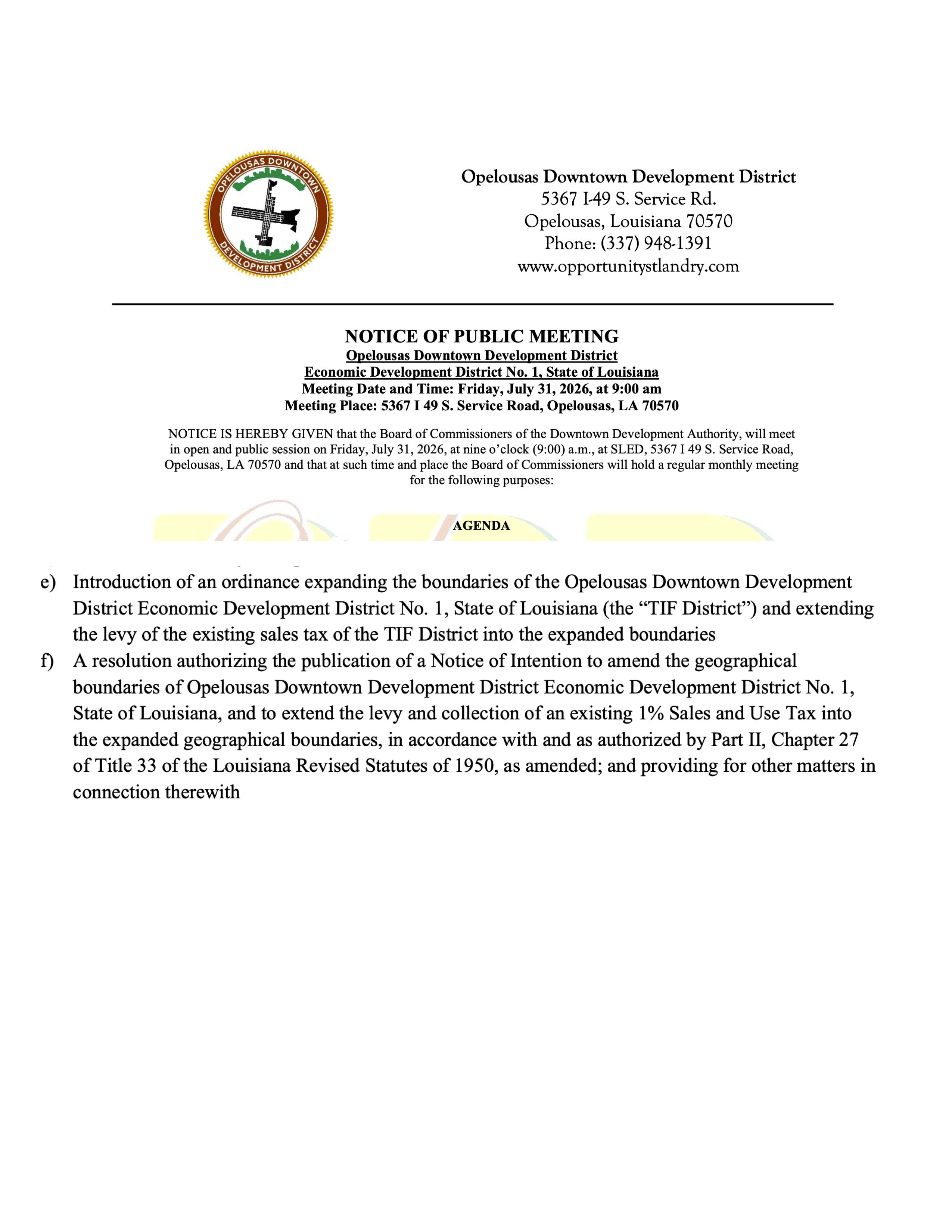
Excerpt from July 31, 2026 ODDD Agenda. Due to issues relating to legal language and descriptions, this item was deferred. A special meeting was anticipated, but as of August 12, has not been set. The regular August meeting is set for Friday, August 21.

The Real Game in Opelousas Isn’t Football — It’s Accountability

A Letter to the Opelousas City Council Regarding the Absence of a Parks & Recreation Commission, October 14, 2025

Councilman Gilbeaux (and Colleagues):

Thank you for raising the issue of the absence of a Parks & Recreation Commission at the last Council meeting. You were right to bring it forward. A functioning Commission is not a formality—it’s the mechanism that ensures fairness, transparency, and public participation in decisions that affect every neighborhood and age group.

Today, Opelousas faces difficult choices. The new 17,000-square-foot “community center,” essentially a two-court gym, will add substantial operating and maintenance costs to the city’s strapped budget, on top of the new stadium’s ten-year $632,000 annual bond payment. Together, those facilities could approach $900,000–$1 million in yearly obligations—before staffing or programming. And the timing couldn’t be much worse.

With the shutdown of the federal government well underway, Opelousas will suffer disproportionately compared to wealthier communities, making the ongoing capital investments in youth sports facilities, in an era of declining birth rates and enrollment, doubly troubling. Never before has citizen participation and oversight been more necessary. Here are conservative figures for you to ponder as you work to manage the city’s shaky budget:

IndicatorEstimateNotes
Population15,7502023 Census Data
Opelousas Median Household Income$28,000LA median $60,000, St Landry $42,000, US $80,000,
Poverty Rate35%Among highest in Louisiana
Percent of households under $30,00060%Most citizens are barely getting by
Renter Households57%Majority are cost-burdened
FY 2025 Budget Gap$1.4m to $2m 4 months of sales-tax shortfall
Stadium & Track Bond$632,000 / year10-year ODDD obligation
Total New O&M Burden≈ $900k–$1M / yearDebt + maintenance

Feeding families is economic development. The shutdown is already significantly impacting local food security and the local economy. Loss of SNAP and WIC dollars will exacerbate hunger, hurt local grocers, and shrink tax revenues. If the shutdown lingers, the impacts will be grave. Using conservative estimates of the number of people using SNAP and WIC, here’s how that looks:

Federal Nutrition Program Impact on Opelousas

ProgramEstimated Beneficiaries (City)Monthly Local Spending Loss in Local Economy6-Month Shutdown LossTotal Economic Activity Lost¹
SNAP≈ 4,500 individuals, 30% of the population (~1,700 Households)≈ $550,000 or under $125 per month per recipient≈ $3.3M≈ $5–6M
WIC≈ 2,000–2,500 participants≈ $250,000≈ $1.5M≈ $2.5–3M
¹Every $1 in benefits generates roughly $1.50–$1.80 in total local economic activity. Combined potential 6-month loss: ≈ $7–9 million—comparable to one full year of Opelousas’s sales-tax receipts.

An expensive-to-maintain and operate high school football and track stadium, along with an oversized basketball gymnasium, destabilizes our fragile economy and faltering budget. Paving South Park to transform it into a high-end limited-use sports complex will not cause anyone to stay here or to move here. Dependable infrastructure, clean water, good housing, and economic opportunities are what drive quality of life. 

Every dollar spent on South Park sports plans is a dollar not available to invest in youth development in life-skills programs, tutoring, trades apprenticeships, or arts, music, and culinary education, which often have higher “bang-for-buck” in communities where children lack access. And who can afford the $20 ticket price collected at last week’s games? Are projections (if they exist) based on potential ticket revenue? 

The ODDD, formed as a business development organization, mortgaged a decade’s worth of sales tax revenue, accruing more than a million dollars in interest and limiting the city’s ability to fund programs essential for building economic resilience and a better future for all Opelousas citizens. I call them the Opelousas South Park Sports Development District.

Over the ten years of that ODDD debt obligation, SLPSS student enrollment is projected to drop by 4,000. Due to the lack of citizen oversight and failure to conduct non-partisan research, the mayor and ODDD are planning and spending for a narrow demographic that not only doesn’t exist now but won’t exist in the future. The Opelousas they are building is based on memories and on desires to have what nearby wealthier communities have, not on a vision guided by science, data, and community input.

Re-establishing the Parks & Recreation Commission is a fiscally responsible way to realign priorities with community needs. It would give the Council a structured, citizen-based advisory process to guide maintenance, programming, and equitable access across all districts.

Right now, every major city project—from the stadium to the community center to City Hall to the library—is being designed by the same Lafayette firm hand-picked by the mayor. That’s not how public procurement is supposed to work. The Council and the people of Opelousas have had no opportunity to compare costs, credentials, or design philosophy. The total spent on these services remains hidden from public view.

This lack of process invites misuse and guarantees inefficiency. The first step in restoring accountability is to re-establish the Parks & Recreation Commission, followed by transparent procurement reform.

City government investment in high school sports is folly. High school sports are, and should be, the responsibility of school systems. We are all on this ship, and we all can help set a better course. Citizen participation is built into the city charter, if only the administration would adhere to it. Let’s do the right thing and reinstate the Parks & Recreation Commission.

Thank you again for your leadership on this issue. Please keep pressing for the Commission’s reinstatement—it’s an essential step toward building a more balanced and sustainable Opelousas.

Note: This post was updated on October 15, 2025 with information provided by the city accountant at last night’s meeting. The hole in the city budget, caused by the failure to hold a timely vote to renew the sales tax that expired on May 31, will likely reach $2,000,000 —a gap unlike any the city has faced in the modern era. This adds weight to the argument that adding more overhead via new, limited-use facilities that produce little or no income is fiscally and morally irresponsible.

Donald Gardner Stadium on September 11, 2025. A $10,000,000 investment that represents the largest non-infrastructure expenditure in city history.