
The return of the Parks & Recreation Commission offers Opelousas a chance to reconnect people, place, and purpose.
How long has it been since you touched water in a bayou or lake, or walked barefoot in the grass? Would you let your child play in Bayou Tesson, Bayou Yarbor, the Vermilion River, or any body of water in the immediate vicinity of Opelousas? Where would you feel comfortable spreading a blanket on the ground for a picnic or walking barefoot?
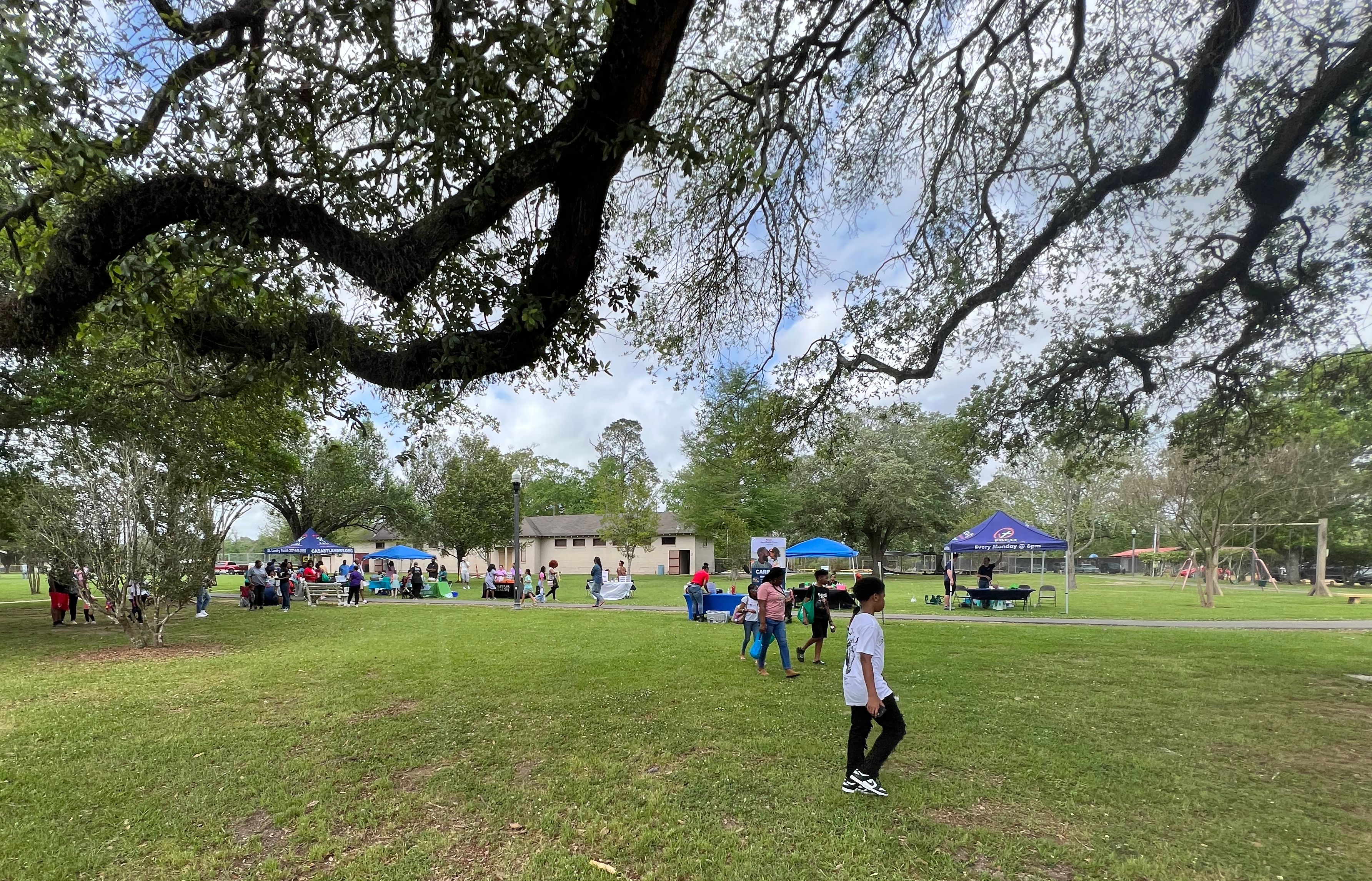
I raise these questions not as a newcomer but as a native of St. Landry Parish, having grown up fishing in Two O’Clock Bayou and swimming in the outflow canals of rice pumps. I am passionately connected and committed to what remains of Louisiana’s remarkable natural and cultural heritage.
As an adult, I have spent much of my life thinking and writing about what that connection means and what happens when we let it erode. In Lafayette and New Orleans, I advocated for urban tree canopies not as ornament but as essential infrastructure in a hot, changing climate, and as essential connections to the history of people and place. I believe trees, parks, and healthy waterways make cities more livable and desirable places to live. They nurture corridors of life in a landscape that is otherwise paved over and sealed shut.
Over the years, my writing has returned to parks again and again because they reveal what is possible when a city treats its public spaces as a legacy and shared inheritance.
That belief is what I carry with me here, back to the parish of my birth and to Opelousas.
In the rebuilding years after Hurricane Katrina (we lost everything, and it took two years to restore our house), I was appointed by New Orleans City Councilmember Susan Guidry to replace a retiring member of the founding board of the Lafitte Greenway (the inspiring landscape architecture professor and historian Lake Douglas), a park that, at the time, existed more as a possibility than a certainty.
Serving on the Lafitte Greenway board alongside civic leaders such as (the late) Edgar “Dooky” Chase lll, I learned something that has stayed with me: a park is never just a project. It is a long-term commitment to people, place, and the unseen systems that hold us together. The Lafitte Greenway is now one of the country’s newest and longest linear municipal parks, a place where imagination becomes reality, helping shape the future of New Orleans.
But more questions must be asked if we are to make parks what our community wants and needs them to be.
When you think about Louisiana, what do you see? Where did your most meaningful memories take place: indoors or outdoors? As a child, did you swim in a bayou, pond, or lake? Were you fortunate enough to take swimming lessons at a municipal pool? Did you go fishing at Bayou Courtableu, Chicot, or Miller’s Lake, and did the family have a fish fry with the catch? Today, fewer towns have public pools, those waterways are unsafe for swimming, and the fish are contaminated with mercury. The Louisiana of our memories is becoming harder to find.
These aren’t merely environmental questions. They point to something deeper — an increasingly scarce part of life: access to the outdoors and the natural world. For city dwellers, parks are often the only places where that access remains. As we pave and pollute the land, our connection to the living world fades, making healthy, shady green parks more important, not less.
Our connections to one another are fading, too. We are more isolated than previous generations. Air conditioning, the internet, polarized politics, and the slow disappearance of shared public life have led us to lose touch with one another. Parks offer a rare double opportunity: to reconnect with nature and with our neighbors.
The science behind connection is more profound than most people realize. Our bodies are made of atoms as old as the universe. We are mostly made of water that has been cycling through this planet for billions of years, and we walk and talk because of the mysterious cooperation of trillions of human cells and even more non-human ones.
With each breath, we exchange millions of microbes with our environment and each other. Humans emit roughly 35 million microbes per hour into the air around them, and stir up even more when we enter a room. When you smell someone, you are not just taking in a scent — you are inhaling airborne particles, cells, viruses, fungi, and bacteria, many carrying the unique DNA of their host. These microbes meet, and in the blink of an eye, exchange DNA through horizontal gene transfer, helping us continuously adapt to one another and the world we live in.
The environment is not “out there,” it is us and everything we do on this living planet. We are inseparable from the air, water, and soil around us — inseparable in ways mostly invisible to our eyes, yet those invisible microbes and molecules hold absolute power over whether we live healthy lives or not.
When we are in a room full of people, or sitting among the trees, we are sharing and absorbing microbes, becoming more human and more natural. It’s a magical, spiritual reality we mostly ignore and take for granted.
The richest source of microbial life is healthy soil, where a single teaspoon can contain billions of diverse organisms—the foundation of everything that grows above ground, including us. A truly thriving park starts with healthy soil that supports native plants and trees, wildlife, and people.
All you need to do to “become one with Nature” is go outside. The more plants around you, the more deeply you connect with life. In Japan, people practice shinrin-yoku or forest bathing—spending time in dense forests as a form of therapy—and it works, because outdoor air is generally healthier than indoor air, and because nature soothes the mind as much as the body.
Parks give us that. They provide space to celebrate and restore local landscapes, engage in team sports, art, and music, participate in community gardens, pursue education, enjoy picnics, experience moments of contemplation, and take simple walks. The best parks give people of all ages and abilities the chance to improve their physical and mental health, and sometimes, simply the chance to sit somewhere that is neither home nor work, and collect their thoughts.
What’s possible in our parks is limited only by our desire to get involved in how our local government manages these precious public assets.
In Opelousas, that voice was effectively silenced in 2019 when the Parks and Recreation Commission (PRC) was not reappointed by the incoming administration. In March, the city took the first step toward restoring it by passing an ordinance that reduced the PRC’s membership from 13 to 7, giving each council member the power to make one appointment, with the mayor appointing the chair.
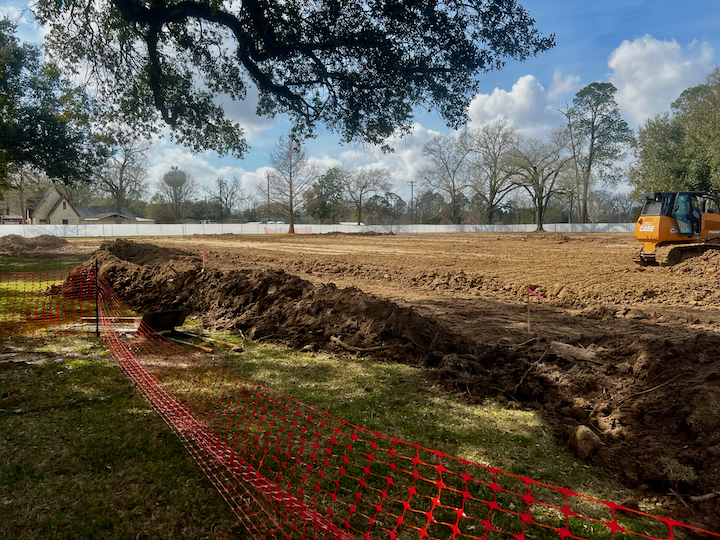
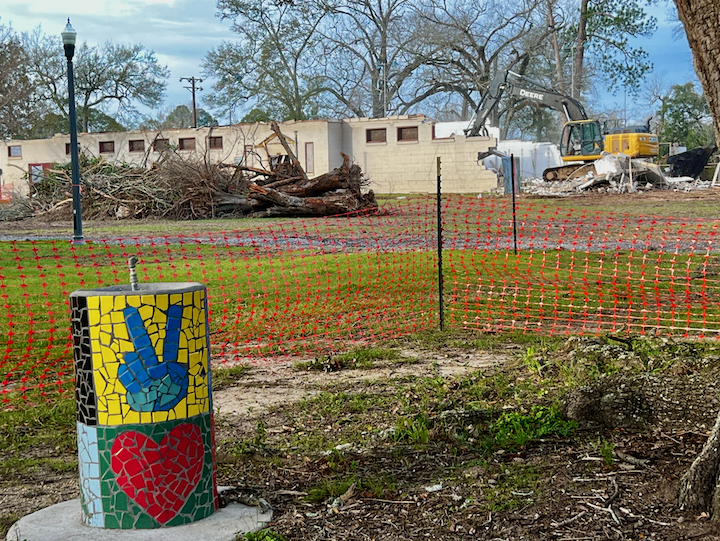
What comes next remains uncertain—there is little or no institutional memory about how to proceed—but it needs to happen quickly, because Opelousas is losing precious green space with every passing month.
So I’ll close where I began. Would you let your child touch the water in Bayou Tesson? Would you spread a blanket on the grass in your neighborhood and have a picnic? Getting the Opelousas Parks and Recreation Commission back on its feet is how we start making those questions easier and less painful to answer, for our children, ourselves, and our world. Tell city leaders to get the Parks and Recreation Commission in place so you can have a say in what our parks will be for generations to come.


You must be logged in to post a comment.